A laser counter-drone system joins expanded defenses
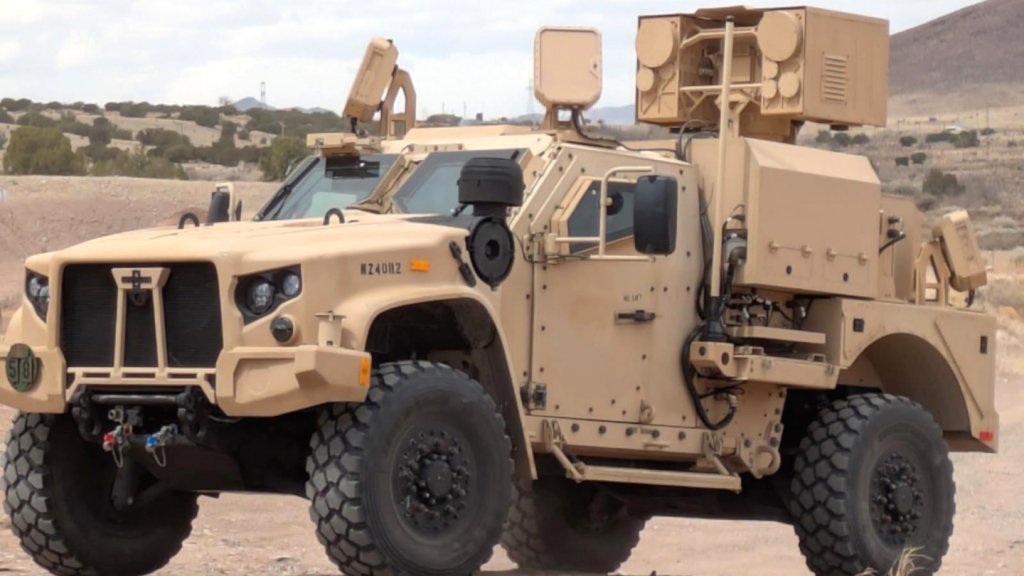
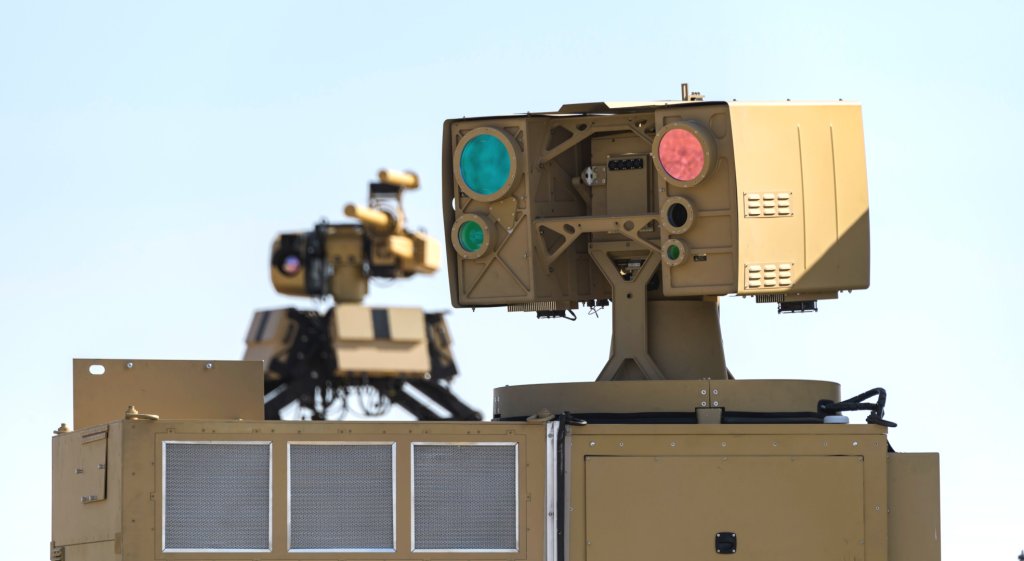
At least one AeroVironment LOCUST laser counter-drone system has been deployed as part of the air-defense array around President Donald Trump’s Mar-a-Lago estate in Palm Beach, Florida, according to photographs taken on October 31.
The system, mounted on a 4×4 Joint Light Tactical Vehicle, appears in photographs by Getty Images photographer Andrew Harnik. The images also show Humvee-based AN/TWQ-1 Avenger short-range air-defense systems on a floating platform in Lake Worth Lagoon near the edge of the estate.
The deployment puts a directed-energy weapon alongside more conventional air-defense equipment at a high-profile domestic security site. It is also the latest reported real-world use of a LOCUST system as the US military expands its counter-unmanned-aircraft capabilities.
Layered defenses around the estate
The exact date when the JLTV-mounted laser arrived is unclear. The source report says the system was first identified in one of Harnik’s photographs by Laser Wars, which confirmed the deployment.
The Avengers on the lagoon platform had reportedly been deployed a little more than two weeks earlier. Additional Avenger systems were also positioned around Donald J. Trump International Airport, about three miles west of Mar-a-Lago, according to the report.
Other elements of US counter-unmanned-aircraft-system Fly-Away Kits have been set up nearby. Those elements include Ku-band radar, electronic-support measures, jammers and 360-degree infrared search-and-track systems. Together, the equipment represents a layered approach: sensors can help identify potential threats, electronic systems can contribute to countering them, and the Avenger and laser systems provide different means of engagement.
Why a laser matters in a counter-drone role
LOCUST is part of a growing US military inventory of laser directed-energy systems designed for counter-drone missions. The source report says versions of the system have been seeing steadily greater use in recent years, including deployments along the border with Mexico.
Counter-drone missions have become an important test case for directed-energy weapons. Small unmanned aircraft can be difficult to address with systems designed for larger, faster or more conventional airborne threats. A laser system is intended to offer a different option within a wider defensive network, rather than operate in isolation.
The reported Mar-a-Lago deployment is therefore significant less as a demonstration of a wholly new technology than as a visible application of a capability moving into more operational settings. The laser is not described as replacing the other systems at the site. Its appearance beside Avenger launchers, radar, electronic-support measures, jammers and infrared sensors underscores the value placed on combining multiple detection and response tools.

Operational use is growing, but hurdles remain
Practical laser-directed-energy weapons have made substantial progress in recent years, the report notes. At the same time, the technology continues to face hurdles that have limited wider adoption.
The Mar-a-Lago deployment does not resolve those broader challenges, and the report does not specify the operating conditions, rules of engagement or duration of the system’s use. It does show that the military is employing LOCUST in an active security posture alongside established short-range air-defense equipment.
Its installation also illustrates the changing nature of site defense. Protection against airborne threats no longer consists only of conventional missile or gun systems. It increasingly involves systems intended to detect, track, disrupt and, where necessary, defeat small unmanned aircraft.
- At least one LOCUST system was visible in October 31 photographs.
- The system was mounted on a Joint Light Tactical Vehicle.
- Humvee-based Avenger air-defense systems were also positioned near the estate.
- Nearby counter-UAS equipment reportedly includes radar, electronic-support measures, jammers and infrared search-and-track systems.
The security buildup comes amid the approach of the midterm elections and signs, cited in the report, that major hostilities with Iran could be possible. The source does not establish a specific reason for the LOCUST deployment or state when it began.
What is clear from the photographs is that a counter-drone laser has become part of the defensive mix at Mar-a-Lago. For the US military, the placement offers another concrete example of directed-energy counter-drone technology appearing in real-world protective deployments, while remaining embedded in a larger, layered air-defense system.
This article is based on reporting by twz.com. Read the original article.
Originally published on twz.com