Pyongyang's role in the war appears to be widening again
North Korea's support for Russia's war against Ukraine appears to be moving into a new phase, with a Ukrainian intelligence official saying Pyongyang has now deployed a missile unit to western Russia in addition to the troops, ammunition and other weapons it has already provided. If confirmed, the move would mark another expansion of North Korea's direct military contribution to Moscow's campaign.
According to the source text, the reported missile unit consists of about 90 North Korean personnel and could be equipped with up to 120 ballistic missiles and six launchers for attacks on Ukraine. The Ukrainian official said the unit is expected to be based in Russia's Voronezh region. A source familiar with the issue told Reuters that the United States is aware of the North Korean deployment.
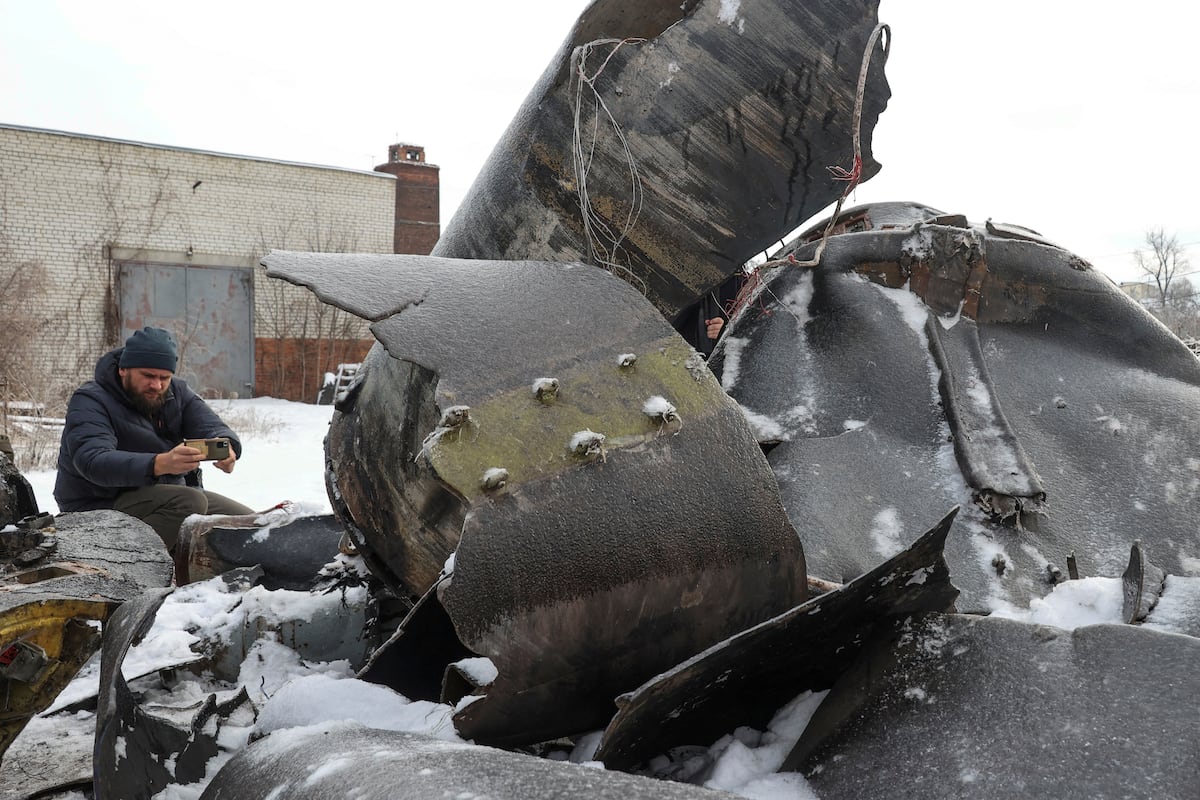
The report also says 40 North Korean missiles have already been supplied, and that at least two were launched at Ukraine last week during a deadly strike. Reuters, however, could not independently verify the Ukrainian assessment. That caveat matters: some of the newest details remain reported claims rather than independently established facts.
From indirect supplier to active participant
Even with that uncertainty, the broader trend is clear from the source material. North Korea is no longer just an arms supplier in the background. It has become a visible military partner for Russia, sending personnel as well as weapons. The article describes this as Pyongyang's most significant involvement in a war since the 1950s.
That involvement has unfolded in stages. Ukrainian and South Korean estimates cited in the report say North Korea sent around 14,000 to 15,000 soldiers to Russia's Kursk region in 2024. Those troops helped Russian forces repel a Ukrainian ground incursion. In April 2025, Russia and North Korea confirmed that North Korean troops had fought Ukrainian forces in Kursk.
That public confirmation was a turning point. It moved the relationship beyond allegations and intelligence leaks into acknowledged wartime cooperation. Russia's top military commander praised the North Korean role after Moscow said it had retaken Kursk territory, while Pyongyang said the deployment was ordered by Kim Jong Un.
The Ukrainian official cited in the source text said around 9,500 North Korean troops remain in Kursk but are not directly involved in operations against Ukraine. Even so, their continued presence underscores that North Korea's participation is not a one-off episode. It has become an ongoing military commitment tied to the war's wider logistics and territorial battles.
More personnel may be on the way
The report links the missile-unit allegation to other signs of expanding cooperation. In July, Ukrainian President Volodymyr Zelenskyy said Russia wanted to bring in 30,000 North Korean troops and was preparing facilities in Voronezh to receive them. Reuters could not independently verify that statement either, but it aligns with the broader picture painted by the source: deeper integration of North Korean manpower into Russian war planning.
Earlier indications pointed in the same direction. In June 2025, Russian Security Council Secretary Sergei Shoigu said North Korea would send 1,000 sappers and 5,000 military construction workers to Kursk to clear mines and help rebuild damaged infrastructure. South Korean lawmakers, citing a National Intelligence Service briefing that same month, said North Korea appeared to have begun recruiting personnel for an additional deployment to Russia.
The exact status of those engineers, deminers, construction workers or extra troops remains unclear in the source text. It says it is not known how many have arrived or whether they have been used in combat roles. That ambiguity is part of the story: the relationship appears to be broadening across multiple categories of military support, but many specifics remain difficult to verify in real time.
The weapons pipeline is already substantial
Where the evidence is less ambiguous is in the scale of North Korea's material support. The source text says Pyongyang has supplied Russia with millions of artillery and mortar rounds, ballistic missiles, long-range artillery and multiple-launch rocket systems. That mix matters because it addresses different parts of Russia's battlefield needs, from sustained bombardment to longer-range strike capability.
For Russia, North Korea offers a practical wartime advantage: a state willing to transfer large volumes of compatible munitions and additional military assets despite international isolation. For North Korea, the exchange appears to carry political and strategic value, and the source text says South Korean lawmakers linked the weapons support to economic cooperation and technical assistance from Russia.
That dynamic suggests the partnership is not purely transactional in the short term. It may also be building a deeper exchange of resources, know-how and diplomatic backing between two heavily sanctioned states. The source material does not specify what technical assistance may be changing hands, but it clearly situates military aid within a broader relationship.
Why the missile-unit report matters
If North Korean personnel are now directly attached to ballistic missile operations in western Russia, that would represent a more operationally integrated role than simply shipping weapons. It would mean North Korea is not only supplying hardware but also helping support a strike capability closer to the battlefield.
The reported location is also notable. Voronezh lies inside Russia and has been mentioned repeatedly in the source text as a reception point for North Korean personnel and facilities. That suggests Russia may be creating a more durable support structure for these deployments rather than handling them as ad hoc transfers.
Still, the limits of the reporting should not be ignored. The most consequential recent claims rely on Ukrainian intelligence and have not been independently confirmed by Reuters. The article itself preserves that distinction, and any interpretation of the latest alleged deployment has to keep it intact.
A war with widening external participation
The larger takeaway is that Russia's war against Ukraine is drawing in outside state support in increasingly direct forms. North Korea's role, as described in the source text, now spans troop deployments, ammunition, missiles, artillery systems and potentially specialized missile personnel. That is a far broader form of participation than many external backers have taken in the conflict.
For Ukraine and its allies, that adds another layer of complexity to a war already shaped by long supply chains, industrial strain and competing escalation risks. For North Korea, it signals a willingness to convert military inventory and manpower into geopolitical leverage. For Russia, it offers another source of support at a time when sustaining battlefield pressure depends heavily on external inputs.
The immediate question is whether the alleged missile-unit deployment will be independently confirmed. The strategic question is larger: whether North Korea is moving from a useful wartime supplier into a standing military partner in Europe's most consequential conflict in decades. The trajectory outlined in the source material suggests that line is becoming harder to draw.
This article is based on reporting by Defense News. Read the original article.
Originally published on defensenews.com