Lockheed pitches a cheaper Patriot missile for an expensive air defense problem
Lockheed Martin has introduced a lower-cost Patriot interceptor aimed at one of the most pressing problems in modern air defense: the mismatch between the price of advanced defensive missiles and the much lower cost of many of the threats they are used to defeat.
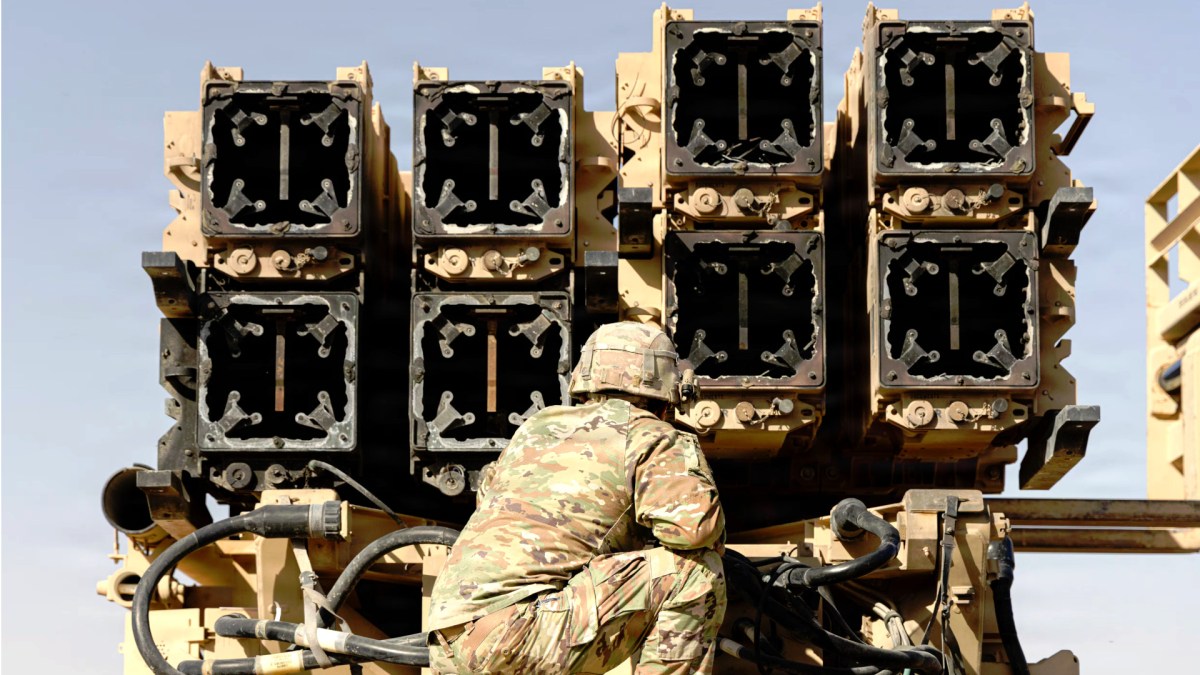
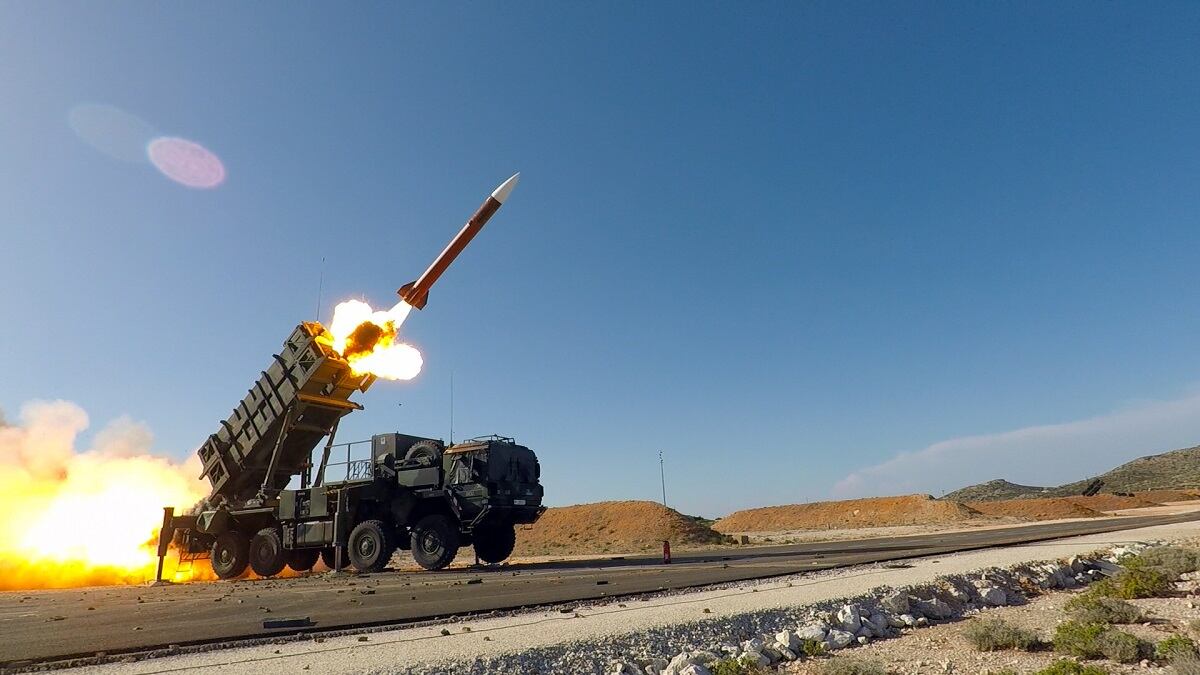
Announced July 20 at the 2026 Farnborough Airshow in London, the new missile is called the PAC-3 Adapted Capability Effector, or ACE. Lockheed said it will cost less than half as much as a PAC-3 Missile Segment Enhancement interceptor, known as the PAC-3 MSE, while remaining compatible with existing Patriot infrastructure and the U.S. Army’s Integrated Battle Command System.
The announcement lands at a moment when air and missile defense planners are under growing pressure to make their defensive inventories go further. The issue is no longer just whether systems like Patriot can intercept incoming threats. It is whether nations can afford to keep using high-end interceptors at scale against large numbers of far cheaper drones and missiles.
A cost gap that has become strategically hard to ignore
Defense News reports that PAC-3 interceptors cost an estimated $4 million apiece. By contrast, an Iranian Shahed drone typically carries a price tag of about $35,000. That disparity has become a central concern as the United States and its partners confront mass-produced munitions that can be launched in quantity.
The problem has been sharpened by recent operational demands. U.S. forces have reportedly used significant numbers of interceptors in the Middle East during Operation Epic Fury to counter relatively inexpensive Iranian drones. Experts cited in the source material warn that such usage raises a stockpile question as much as a tactical one: even if defenses are effective, can production keep up quickly enough to sustain a prolonged campaign?
That concern extends beyond U.S. operations. Patriot systems have also become a critical part of Ukraine’s defense against Russian attacks, helping make interceptor availability a multinational issue rather than a purely American procurement problem.
What PAC-3 ACE is meant to do
According to the source text, the PAC-3 ACE is designed to counter airbreathing threats, cruise missiles, and close- and short-range ballistic missiles. Lockheed said the missile’s compatibility with both the Patriot weapon system and the Integrated Battle Command System should help speed development because it can be fielded within an architecture already used by American and partner forces.
That matters because the value of a lower-cost interceptor is not only in unit price. It is also in how quickly militaries can integrate it without redesigning launchers, command systems, or broader air defense networks. A cheaper missile that requires a major new support ecosystem would solve only part of the problem. Lockheed’s pitch is that PAC-3 ACE can reduce cost while fitting into established systems.
The company also said the effort will be coordinated jointly with American and European partners, signaling that the missile is being framed as part of a broader allied demand signal rather than a niche domestic product.
Why the timing matters
The unveiling comes as the Pentagon and industry are already moving to expand Patriot-related production. Defense News notes that in April, the Pentagon agreed to a $4.7 billion contract with Lockheed Martin to accelerate PAC-3 MSE interceptor production. That move underlined the urgency of replenishing inventories and boosting output even before the new ACE variant was introduced.
At the same time, Lockheed said in April that the U.S. Navy was preparing to bring PAC-3 MSE interceptors to sea for use with the Aegis Combat System. That points to another trend in U.S. defense planning: using existing interceptor families more flexibly across services and platforms.
Seen together, those developments suggest the company is pursuing a two-track strategy. One track expands production and potential deployment options for the existing PAC-3 MSE. The other introduces a less expensive option better aligned with the economics of defeating cheaper, numerous threats.
The wider shift in missile defense thinking
The United States currently relies on a layered missile defense network that includes Patriot, the Navy’s Aegis Combat System with SM-3 and SM-6 interceptors, and the Terminal High Altitude Area Defense system. Each layer addresses different types of threats, ranges, and engagement conditions. But across that architecture, cost and magazine depth are becoming harder constraints.
For years, high-performance interceptors were judged primarily on capability: speed, guidance, probability of kill, and integration with radar and command networks. Those metrics remain vital, but recent conflicts have elevated a different measure as well: whether a country can afford to keep firing expensive interceptors against repeated low-cost attacks.
The ACE announcement shows how deeply that concern has entered procurement logic. The goal is no longer simply to build the most capable interceptor available. It is to create a family of interceptors with a more sustainable cost profile, especially for the class of threats that appears most likely to be used in quantity.
Implications for allies and future demand
Ukraine’s search for more interceptors and the creation of Freyja with nine other nations, described in the source text as a Patriot alternative amid a global shortage of anti-ballistic interceptors, illustrate the scale of allied demand. Countries want capable air defense, but they also want resilience against supply bottlenecks and the financial burden of prolonged use.
If Lockheed can deliver PAC-3 ACE with the promised price reduction and legacy compatibility, the missile could become attractive not just to current Patriot operators, but to governments trying to expand inventories without taking on the full cost of additional MSE rounds. Much will depend on performance, production timelines, and how governments decide to allocate different interceptor types across their layered defenses.
Still, the strategic rationale is already clear. Modern conflict has exposed an economic asymmetry in air defense that cannot be solved by buying only more of the same expensive missiles. By introducing a Patriot-compatible interceptor at less than half the cost of PAC-3 MSE, Lockheed is trying to answer that challenge directly.
Whether PAC-3 ACE becomes a major procurement success will depend on testing, contracts, and delivery. But its debut at Farnborough marks an important shift in emphasis: affordability is no longer a secondary feature in missile defense. It is becoming part of the core requirement.
This article is based on reporting by Defense News. Read the original article.
Originally published on defensenews.com