Anduril extends autonomous teaming into rotary aviation
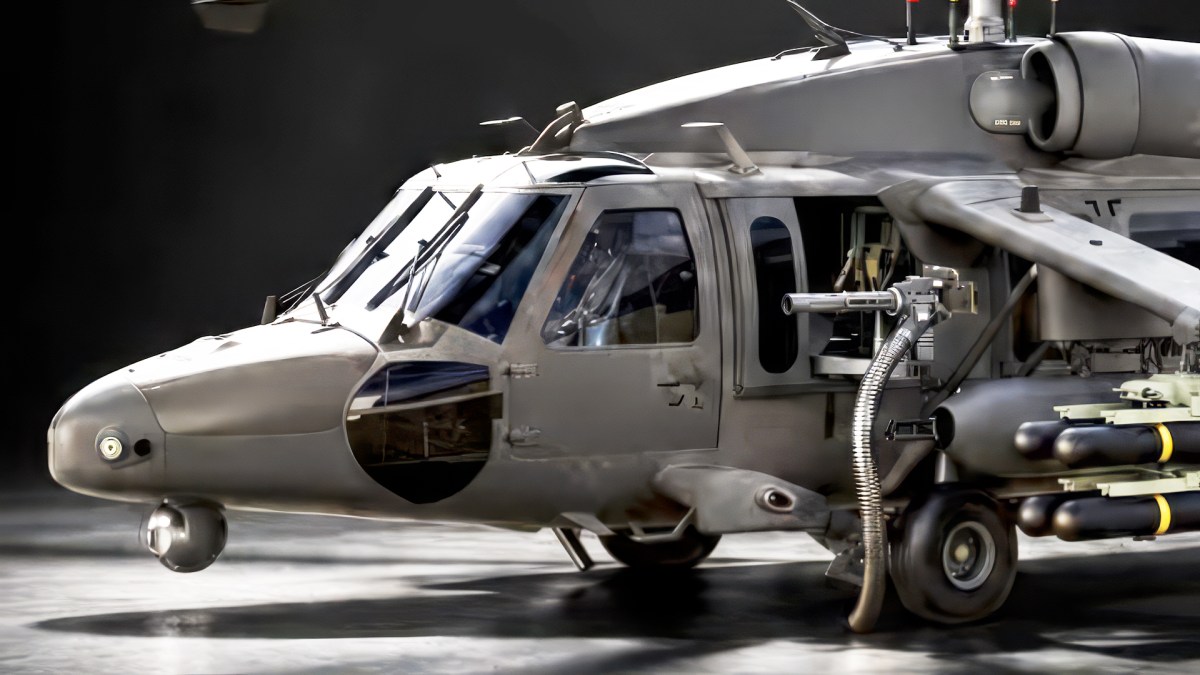
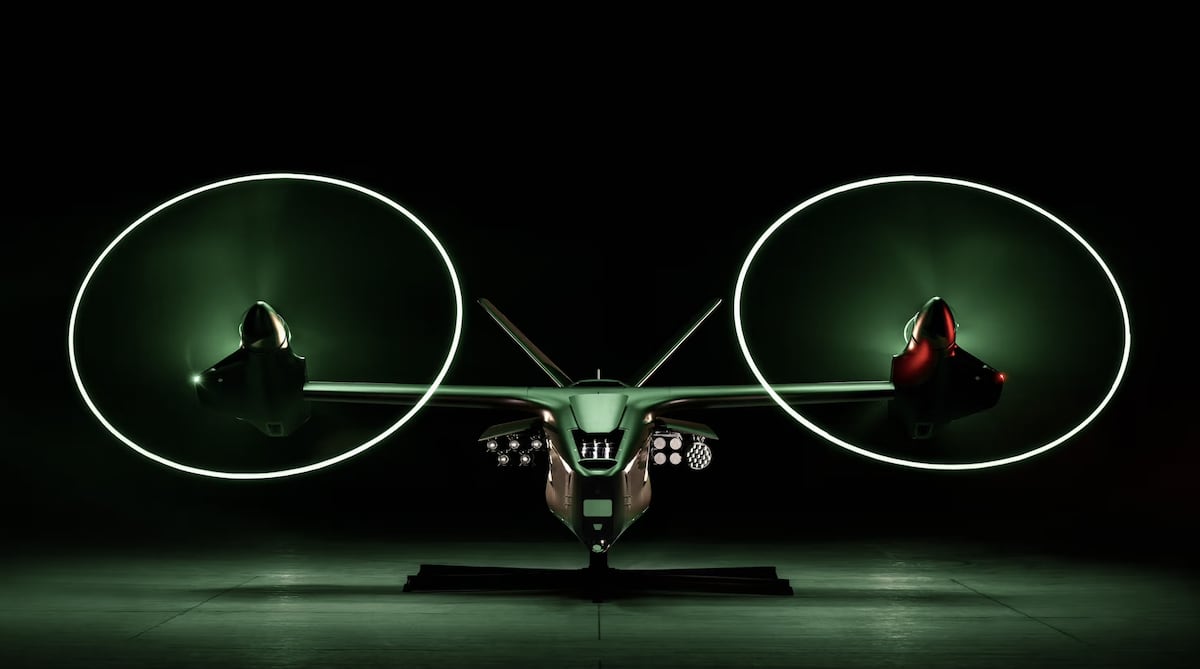
Anduril has introduced a new autonomous attack rotorcraft called Thunder, broadening the company's push into military aircraft designed to operate alongside human crews. Unveiled at the 2026 Farnborough Airshow, Thunder is described in the candidate source as a Group 5 autonomous rotorcraft built to team with current and next-generation attack helicopters, including platforms such as the Apache and Cheyenne II.
The launch is notable because much of the recent discussion around drone wingmen has focused on fixed-wing aircraft, especially the Combat Collaborative Aircraft effort. Thunder moves that concept into the helicopter domain, where crews often operate closer to the battlefield and face a denser mix of air defenses, loitering munitions, and persistent surveillance.
Anduril's argument is that rotary-wing aviation needs the same shift toward distributed, attritable, and autonomous mass that fighter aviation is pursuing. The company says the battlefield has become so saturated with cheap sensors and munitions that traditional attack helicopters and their crews face rising risk in the near-surface fight.
A hybrid-electric, tilt-rotor combat drone
According to the candidate source, Thunder was developed in partnership with Archer Aviation as a vertical takeoff and landing aircraft. It uses a series hybrid-electric powertrain and tilt rotors, a combination intended to give it flexibility across multiple operating environments while still allowing it to keep pace, when needed, with faster rotary aircraft.
That combination matters operationally. Vertical takeoff and landing allows deployment from dispersed positions without the runway dependence of fixed-wing systems. Tilt rotors can help reconcile the usual tradeoff between hover-capable aircraft and faster forward flight. A hybrid-electric architecture may also offer advantages in fuel efficiency, power management, and mission adaptability, though the candidate source does not provide detailed performance figures.
What is clear from the source is the design intent: Thunder is not being framed as a narrow-purpose drone. It is being positioned as a flexible aircraft that can either accompany crewed helicopters, operate in autonomous formations, or fly independently depending on mission needs.
Built for more than one mission set
The candidate text outlines a broad mission suite. Thunder is expected to support long-range mass effects delivery, fire support, intelligence, surveillance and reconnaissance, maritime patrol, anti-submarine warfare, search and rescue, and contested cargo and logistics.
That range is ambitious, but it follows a familiar logic in defense procurement. A platform that can carry different payloads across multiple mission types is easier to justify in a budget environment where militaries want adaptable systems rather than fleets of highly specialized aircraft. The source says Thunder uses modular internal main and nose payload bays, allowing it to be configured for different roles without redesigning the airframe.
On the weapons side, those bays can reportedly house precision munitions, electronic warfare payloads, air-launched effects, rockets, and counter-drone munitions. The source gives several examples of possible battlefield loadouts: one Thunder could carry 10 air-to-ground missiles, 16 launched effects, or 76 70mm rockets, as well as a dozen counter-UAS munitions.
Those numbers suggest Anduril wants Thunder to be seen not simply as a scout or decoy, but as a contributor to actual combat mass. In other words, the aircraft is being sold as a way to multiply the striking power and persistence of a manned formation while keeping human crews farther from the highest-risk zones.
The logic of mass without more pilots
The core military promise behind systems like Thunder is straightforward: more aircraft in the fight without requiring a corresponding increase in pilots. That is especially relevant for attack helicopter forces, where training pipelines are expensive, sortie generation is demanding, and exposure to short-range threats remains high.
Anduril says Thunder will be able to fight alongside crewed aircraft or independently. The practical value of that claim is that commanders could use autonomous rotorcraft to absorb riskier tasks, extend sensor coverage, carry extra weapons, or maintain pressure over a target area after manned aircraft reposition. If that concept works in practice, it could change how rotary formations are built and how close human crews need to get to contested airspace.
The candidate source also emphasizes formation teaming. By pairing multiple Thunder aircraft with a single crewed platform, Anduril argues that commanders can achieve a step-change in combat mass. The important phrase there is not just mass, but scalable mass. A system becomes more attractive if one crewed aircraft can direct or coordinate several autonomous partners without proportionally increasing cockpit workload.
Lattice is central to the pitch
Thunder will operate using Anduril's Lattice for Mission Autonomy software, according to the candidate source. Lattice is expected to handle formation behaviors and separation management around crewed aircraft, which is essential if autonomous rotorcraft are going to fly safely in mixed formations. The source says this approach removes the need for direct pilot control of the drones and frees crews to focus on mission execution.
That software layer is not a side detail. It is central to whether systems like Thunder can move beyond demonstrations. Autonomous aircraft are only useful in large numbers if the command-and-control burden remains manageable. If pilots or ground operators have to micromanage each vehicle, the concept loses much of its operational advantage. The source presents Lattice as the mechanism that prevents that by automating flight coordination and safety behavior.
Why Thunder matters now
The unveiling comes at a time when lessons from recent conflicts continue to push militaries toward cheaper, more numerous, and more autonomous air systems. The candidate source explicitly links drone proliferation in land warfare to a battlefield stalemate in which both crewed platforms and personnel face mounting danger from low-cost air defenses, loitering weapons, and persistent ISR.
Thunder is Anduril's answer to that environment. Rather than replacing the attack helicopter outright, it supplements it with an unmanned aircraft that can carry payloads, widen the formation, and take on missions that would otherwise increase risk to a human crew. That is a more achievable near-term proposition than eliminating crewed rotorcraft altogether.
It also fits the company's broader strategy. Anduril has consistently emphasized autonomous systems that combine software-defined control with adaptable hardware. Thunder brings that formula to a part of military aviation where survivability and mass are increasingly in tension.
From airshow reveal to real-world fielding
The candidate source says the U.S. military will soon field a drone wingman in the rotorcraft category, but key questions remain unanswered in the supplied text. No timeline for operational deployment is provided, and the source does not include details on endurance, range, speed, unit cost, or procurement commitments.
Even so, the reveal is important because it signals where rotary-wing modernization is heading. Attack helicopter forces are under pressure to stay relevant in airspace crowded with sensors and cheap interceptors. Autonomous teammates offer one possible path forward: extend reach, increase weapons carriage, and distribute risk without discarding the manned platforms militaries already operate.
If Thunder performs as advertised, it could become part of a broader redefinition of what a helicopter formation looks like in the next decade. Instead of a small number of crewed aircraft carrying the full burden of sensing, striking, and surviving, future formations may be built around one crewed node supported by several autonomous partners. That is the concept Anduril brought to Farnborough. The harder test will be proving it outside the airshow environment.
This article is based on reporting by Defense News. Read the original article.
Originally published on defensenews.com