Japan’s F-2 test jet flies with a previously unseen large missile
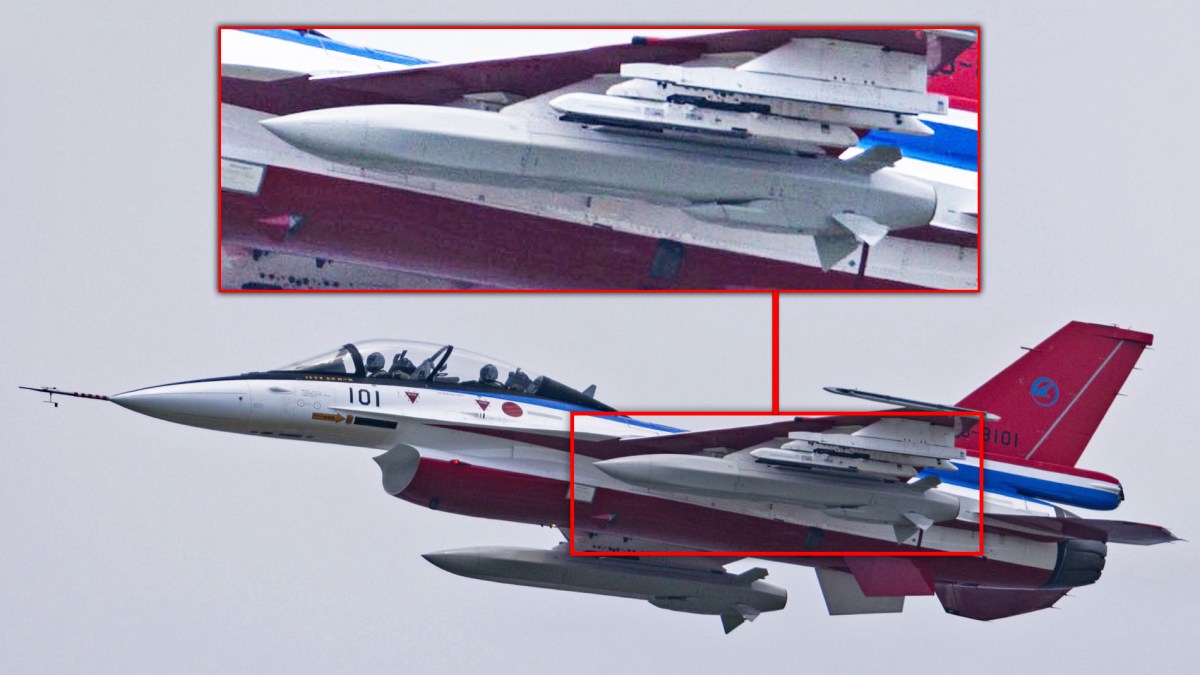
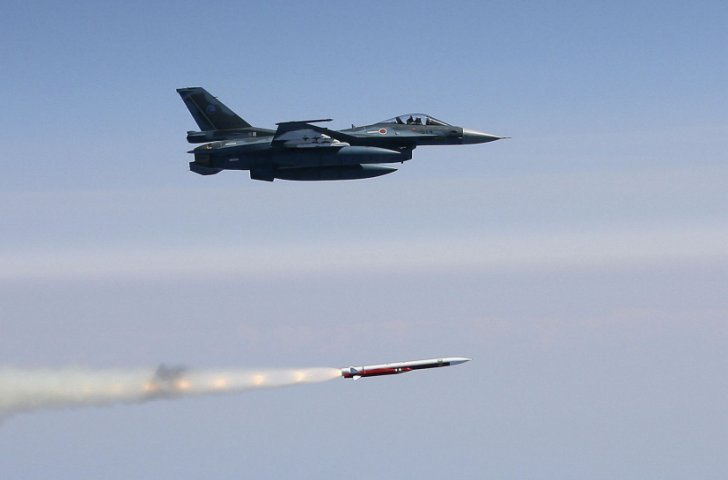
A Mitsubishi F-2 operated by the Japan Air Self-Defense Force’s Air Development and Test Wing has appeared carrying a pair of large, previously unseen missiles under its wings, offering one of the clearest public signs yet that Japan is moving ahead with a new air-launched standoff weapon. Photographs taken at Gifu Air Base on July 30 show the missiles mounted on the inboard wing pylons of a two-seat F-2B test aircraft, while an F-2A flew in support as a chase plane.
The weapon has not been officially identified in the source material. Even so, the timing, size, and visible configuration described in the reporting point to a strong possibility that it is the air-launched version of Japan’s Type 25 Surface-to-Ship Guided Missile, also referred to as a new standoff anti-ship strike system. If confirmed, the appearance would mark an important step in Japan’s broader effort to expand long-range precision strike options as regional military pressures intensify.
Why this sighting matters
The F-2 is already closely associated with maritime strike missions, but the newly observed missile appears substantially larger than the anti-ship weapons more commonly linked to the aircraft, including the ASM-2 and the newer ASM-3. According to the source report, the missile seen at Gifu has a long and relatively slender fuselage, folding wings positioned along the upper body, four cruciform tailfins, and an underslung engine intake near the rear. Its shape also includes angular contours or “chines” that suggest some effort to reduce radar visibility.
Those details matter because survivability is increasingly central to long-range strike design. A missile intended to reach defended naval targets must do more than fly far. It also has to penetrate or evade modern integrated air-defense systems. The apparent low-observable shaping described in the report would fit that requirement, particularly in scenarios involving well-protected warships and layered maritime defenses.
Seen in that light, the F-2 flight is more than a test curiosity. It points to a practical shift in Japanese capability: from shorter-range anti-ship attack toward a more survivable, stand-off strike profile that could be launched from outside the most dangerous engagement zones.
What the aircraft and test setup suggest
The aircraft carrying the missiles was identified as F-2B serial 68-8101, a prototype now assigned to the Air Development and Test Wing. That detail is significant because prototype and test-wing aircraft are routinely used for early integration and flight evaluation work. The presence of a chase aircraft further suggests a controlled test environment rather than a routine operational sortie.
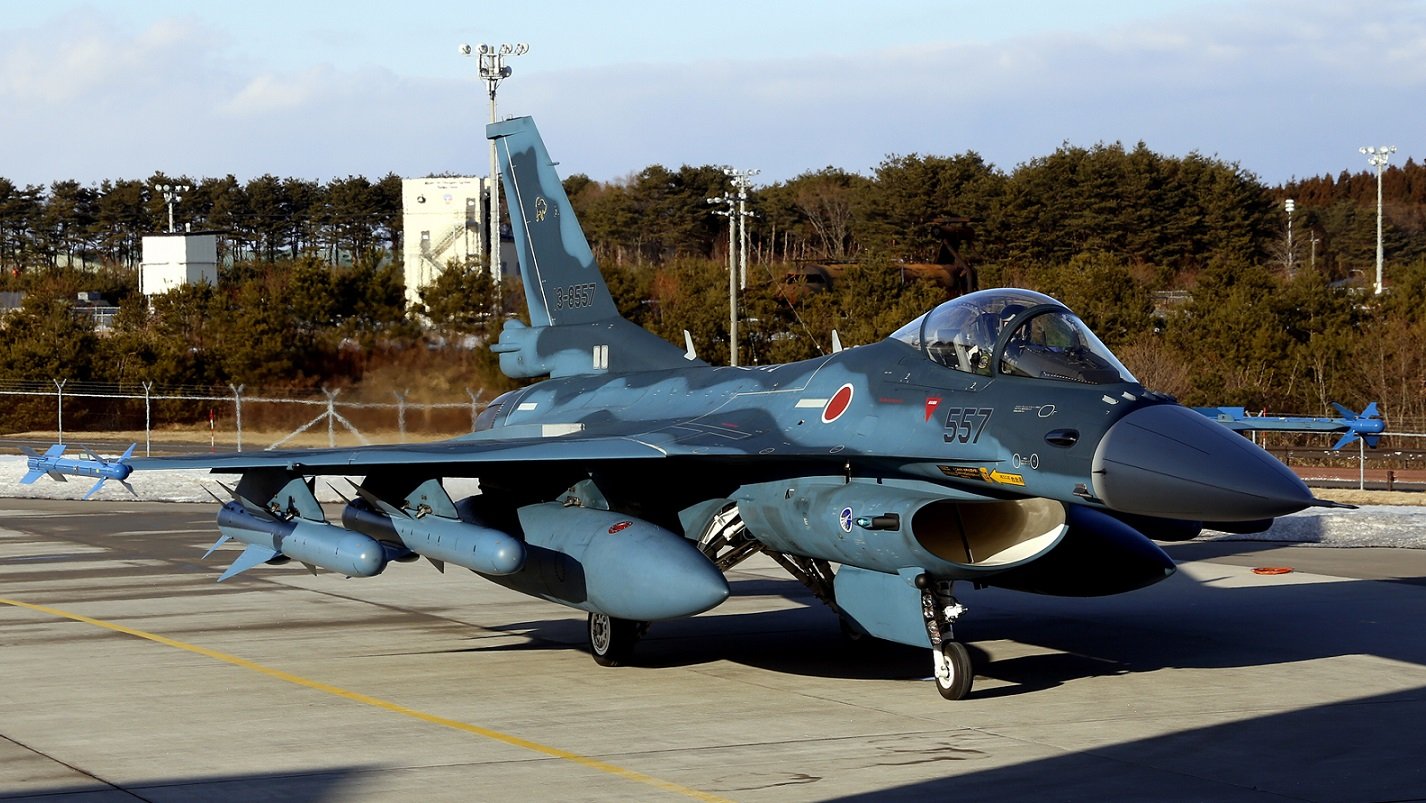
The source reporting says this was apparently the first test flight from Gifu Air Base involving the missile configuration. Public imagery from such flights often becomes the first external evidence that a weapons program has moved from concept art, procurement documents, or ground display models into actual airborne integration testing. In that sense, the sighting is important even without formal government confirmation of the exact missile type.
It also shows that Japan is not only buying foreign long-range strike systems but continuing to develop domestic ones. The visible integration on an indigenous F-2 platform reinforces a pattern of expanding layered strike options through both procurement and homegrown development.
A larger shift in Japan’s strike posture
Japan’s defense planning has been moving toward greater standoff capability for several years, driven by a more demanding regional security environment and the need to hold hostile ships or land targets at risk from safer distances. The report places the new missile in the context of a growing long-range arsenal to which the Tomahawk land-attack cruise missile was recently added.
That broader context matters. Rather than treating each new missile as an isolated procurement or test article, Tokyo appears to be building a more diverse strike architecture. In such an architecture, different missiles fill different roles: some optimized for ship attack, some for land attack, some for survivability, and some for launch from different branches or platforms. A large air-launched missile on the F-2 would fit neatly into that trend.
For Japan, air-launched standoff weapons offer several operational advantages. Aircraft can be repositioned quickly, can launch from dispersed bases, and can approach target areas using flexible routing. Combined with missiles designed for low observability and long reach, that creates a more resilient deterrent option than relying on a narrower set of launch platforms.
What can and cannot be concluded yet
The most important limit is that the missile remains unofficially unidentified in the source material. The report argues that the size, timing, and layout strongly suggest an air-launched Type 25 derivative, but that remains an informed assessment rather than a confirmed designation. There is also no verified performance data here for range, seeker type, speed, or warhead.
Still, several conclusions are well supported. First, Japan is flight-testing a large new missile on the F-2. Second, the missile appears designed with features associated with standoff strike and reduced observability. Third, its dimensions alone imply a significant capability step beyond legacy anti-ship weapons carried by the same aircraft. And fourth, the test aligns with Japan’s established push to deepen long-range strike capacity across its force structure.
That combination is strategically meaningful even before formal specifications are published. In military modernization, the move from planning and procurement language to visible airborne testing is one of the clearest indicators that a capability is maturing.
Why regional observers will pay close attention
Any new Japanese long-range missile is likely to be watched closely by regional militaries because it changes assumptions about reach, survivability, and response time. A stealthier air-launched weapon complicates defense planning for adversaries by forcing them to account for both the launch platform and a missile that may be harder to detect and intercept. It also increases the value of Japan’s combat aircraft fleet as part of a wider deterrence network.
The F-2 itself is not Japan’s newest fighter, which makes the integration noteworthy in another way. Rather than waiting solely for future platforms, Japan appears to be extracting new relevance from existing aircraft through advanced weapons. That is often one of the fastest ways to improve combat value without depending entirely on a new airframe entering service.
More details will be needed to judge the weapon’s ultimate role and maturity. But based on the public evidence from Gifu, Japan has moved one step closer to fielding a more capable air-launched standoff missile, and the region has been given a visible preview of that shift.
This article is based on reporting by twz.com. Read the original article.
Originally published on twz.com