ARRW moves from a threatened program to production
The US Air Force has awarded Lockheed Martin a $694 million contract to produce the AGM-183A Air-launched Rapid Response Weapon, or ARRW, marking a dramatic reversal for a hypersonic-missile program the service had moved to cancel in 2023.
The contract was awarded on September 29 and announced on October 26. The Air Force has not said how many missiles will be produced under the agreement or when deliveries will begin. It has, however, described the award as the formal shift of the boost-glide missile program from prototyping and flight testing into production.
That transition puts ARRW back on track to become an operational high-speed, standoff strike option after years in which the weapon’s future appeared uncertain. In 2023, the program was in line to be the US military’s first operational hypersonic weapon before the Air Force moved toward cancellation.
How the AGM-183A works
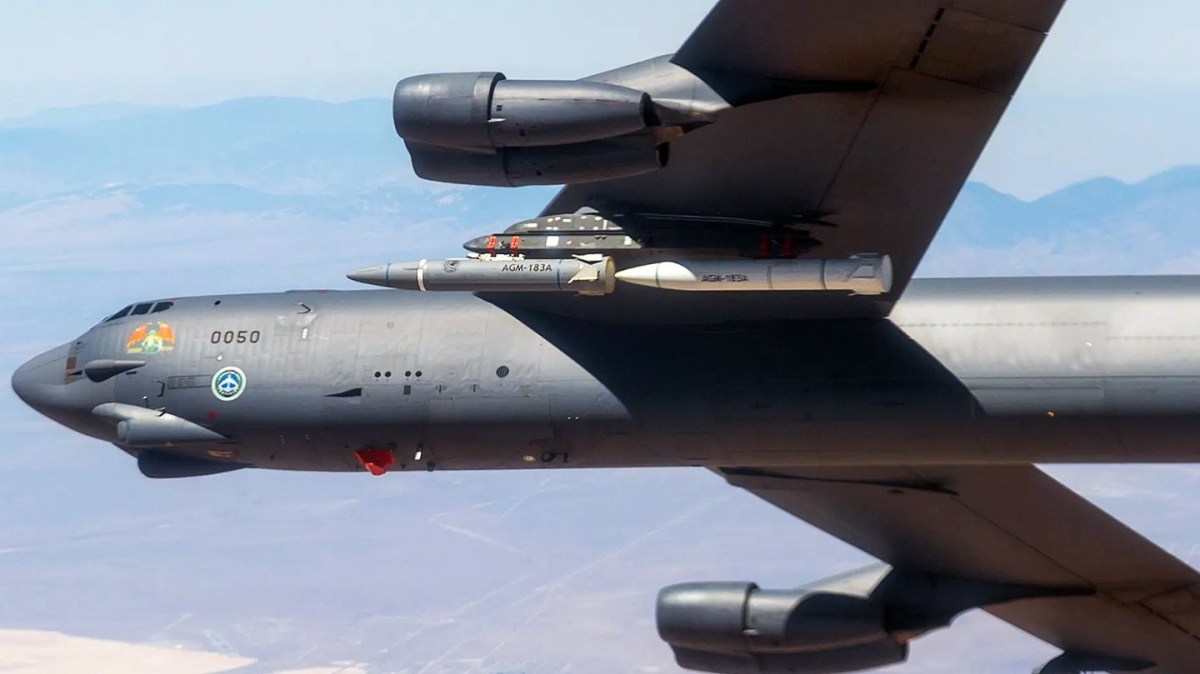
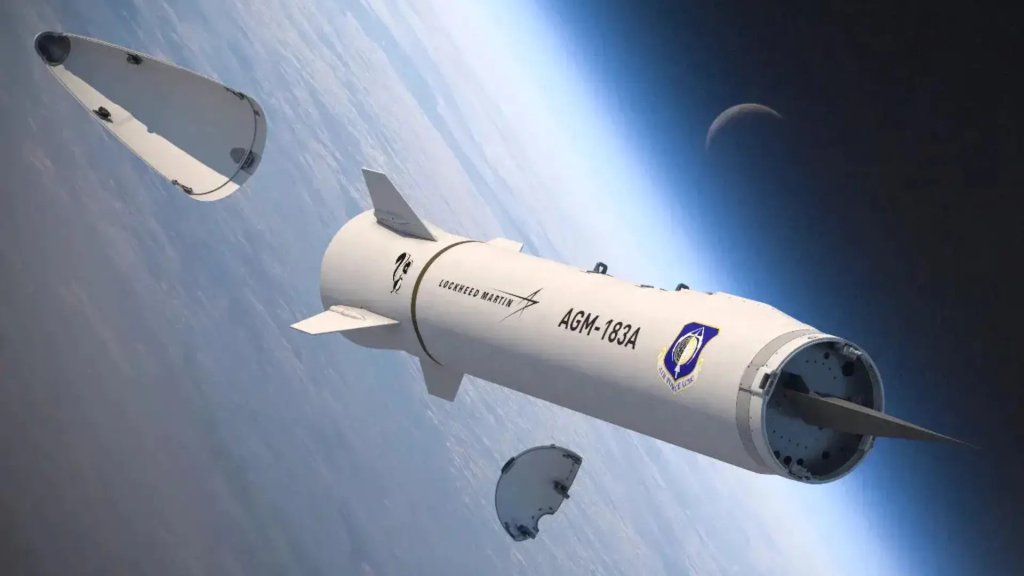
ARRW is a boost-glide weapon. It uses a rocket booster to reach the required speed and altitude, after which the nose cone separates and releases an unpowered, wedge-shaped boost-glide vehicle.
The basic arrangement distinguishes it from a missile that remains powered throughout its flight. The booster supplies the initial acceleration and altitude; the released vehicle then continues as a high-speed gliding body. The Air Force’s production decision is therefore a commitment to fielding a boost-glide capability, not simply another conventional air-launched weapon.
The service says the program’s move into production is intended to provide standoff, high-speed strike options. “Standoff” describes the ability to launch from a distance rather than requiring the launching aircraft to approach a target closely. The Air Force’s statement framed the production milestone as part of modernising its strike inventory.
Bombers are the first stated carriers
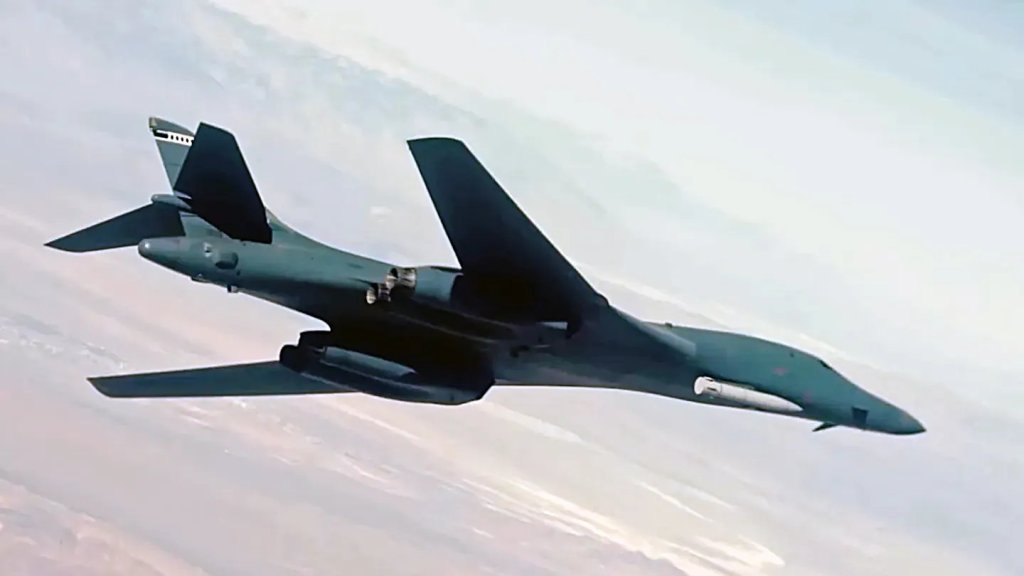
The Air Force has previously disclosed plans to integrate AGM-183A missiles onto B-52 and B-1 bombers. Both aircraft have the payload capacity and physical space needed for very large external stores, making them logical first platforms for the outsized weapon.
A B-1 has previously been seen carrying an ARRW missile or related test article on an external pylon during flight testing. The source reporting the contract notes that other aircraft with sufficient payload capacity and space could potentially carry the AGM-183A or future variants, but the B-52 and B-1 are the platforms the Air Force has publicly identified.
The number of weapons in the production award remains undisclosed, so the contract alone does not reveal the initial operational scale of the program. Neither does the announcement provide a delivery schedule. Those details will be significant in determining how quickly the capability can move from a production contract to a deployable bomber armament.
A planned variant could add moving-target capability
The production decision is not the only sign that the Air Force sees a future for the system. Plans already exist for another ARRW variant equipped with a new seeker intended to hit moving targets, including enemy warships.
A seeker is the part of a weapon used to identify or home in on a target. A variant designed for moving targets would represent an expansion beyond a capability focused on fixed locations. The published information does not specify a production schedule, technical design or maturity level for that seeker-equipped version.
Still, the stated plan indicates that the Air Force is considering ARRW as a family of capabilities rather than a one-off weapon. The original production award, meanwhile, is for the AGM-183A and follows the program’s formal move out of prototyping and flight testing.

What the reversal signals
ARRW’s path has been unusually volatile. The Air Force’s 2023 cancellation move suggested the program might end before becoming operational. The new contract instead commits $694 million to production and restores the system’s place in the service’s plans.
The decision does not answer every question. The Air Force has not disclosed missile quantities, delivery dates or the precise operational timeline. Nor does the contract announcement provide new technical performance figures. What is clear is that a weapon once headed toward cancellation is now being produced for a force that has identified the B-52 and B-1 as its first carriers.
For the Air Force, the milestone is an acquisition and capability decision: a boost-glide hypersonic missile has crossed from development activity into production. For Lockheed Martin, it is a major production award. And for the broader US effort to field high-speed strike systems, it is a concrete reversal of a program that only three years earlier appeared unlikely to survive.
This article is based on reporting by twz.com. Read the original article.
Originally published on twz.com