Ethiopia announces Su-35 delivery
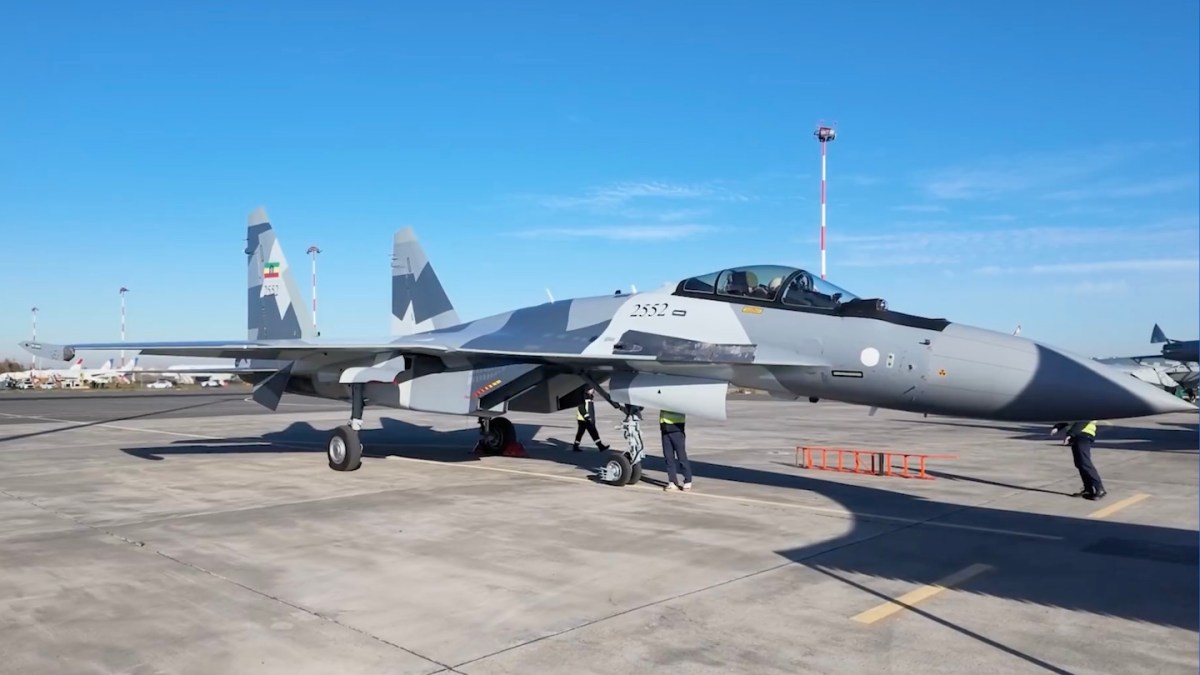
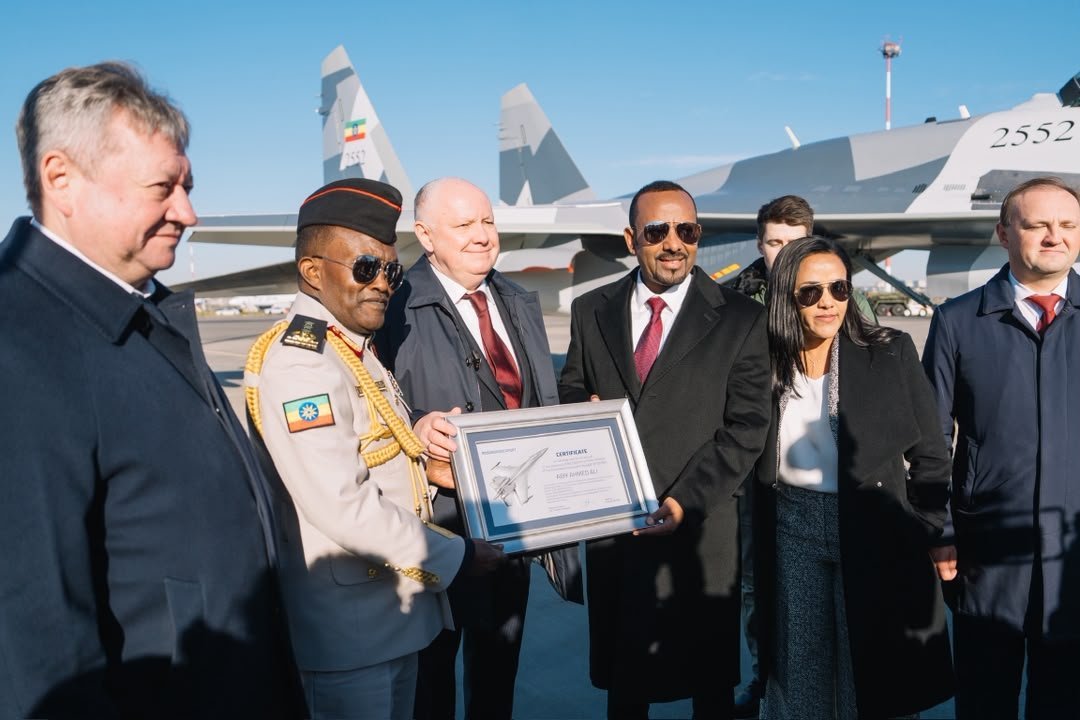
Ethiopia has received 12 Russian-made Su-35 multirole fighter aircraft, according to an announcement by Prime Minister Abiy Ahmed, a development that would significantly expand the Ethiopian Air Force’s combat capability.
Abiy said the aircraft arrived a year ahead of schedule under an agreement with Moscow. He also said the agreement calls for four batteries of Russia’s S-400 surface-to-air missile system, though a delivery timetable for those systems has not been disclosed.
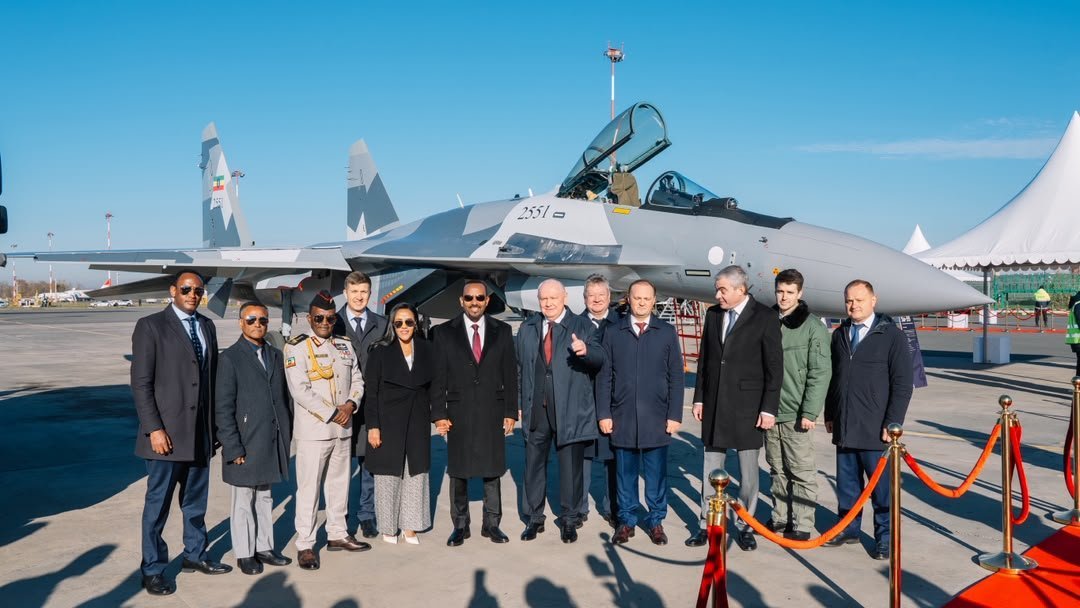
The financial terms of the arrangement, the locations from which the fighters will operate, and whether the agreement includes aircraft beyond the 12 announced Su-35s have not been made public. Abiy announced the development on X and posted photographs and video showing Ethiopian and Russian officials alongside two of the jets.
A major upgrade over Ethiopia’s existing fighter force
The Su-35 is a heavily modernized version of the Soviet-era Su-27 fighter, known to NATO as the Flanker. Ethiopia already operates Russian-designed Su-27s, a factor that could provide some continuity as it brings the newer aircraft into service.
The newer Su-35 combines twin thrust-vectoring engines, advanced radar and other sensors, and the ability to carry both air-to-air and air-to-surface weapons. Its thrust-vectoring engines are intended to give the aircraft a high degree of maneuverability. The combination of radar and long-range air-to-air missile capability represents a notable step up in Ethiopia’s ability to detect and engage hostile aircraft, while the multirole design allows it to undertake strike missions as well.
Receiving a dozen aircraft would therefore be consequential not simply as a numerical addition to the fleet, but because the Su-35 is designed to perform multiple mission types. It is an air-defense fighter with strike potential, rather than a platform limited to one role.
S-400 plan adds an air-defense dimension
The potential acquisition of four S-400 batteries would add a ground-based layer to Ethiopia’s planned air-defense modernization. The delivery schedule remains unclear, and the announcement did not provide details on the batteries’ locations, configuration or operational timeline.
That uncertainty matters. The reported fighter delivery is specific: Abiy said 12 Su-35s had arrived. The S-400 component remains a planned part of the agreement rather than a confirmed delivery. No broader contract information or cost details have been released publicly.
Taken together, however, the fighter and air-defense elements point to an effort to strengthen Ethiopia’s ability to protect its airspace. The announcement comes as the country faces continuing domestic security challenges and tensions across the Horn of Africa.
Political and operational questions remain
Abiy thanked Russian President Vladimir Putin for facilitating the accelerated delivery. The announcement was made during the third Russia-Africa Summit in Moscow on October 28 and 29, according to the report.
Several key questions remain unanswered. Ethiopia has not disclosed where the Su-35s will be based, how quickly they will become operational, or what weapons and support arrangements are included. Aircraft deliveries alone do not answer those questions: operating modern fighters also depends on personnel, maintenance, logistics, training and mission integration. None of those details were specified in the announcement.
The report also did not establish whether the 12 aircraft form the complete fighter portion of the agreement or the first delivery under a larger arrangement. Nor did it identify the planned schedule for the four S-400 batteries.
A significant regional capability claim
The Su-35 acquisition is significant because it would give Ethiopia a more capable multirole fighter than its existing Su-27 fleet, according to the aircraft characteristics described in the report. Advanced sensors, air-to-air capability and strike flexibility would broaden the Ethiopian Air Force’s potential mission set.
The S-400 plan, if completed, would extend the modernization beyond aircraft to surface-to-air defense. But the confirmed and unconfirmed parts of the announcement should be distinguished. Ethiopia’s leader said the Su-35 fighters have arrived; the four S-400 batteries are included in the reported agreement, but their delivery timing is unknown.
For now, the announcement establishes a major new defense procurement relationship between Ethiopia and Russia, while leaving the final scale, price, basing and operational impact of the deal unresolved. The arrival of 12 Su-35s a year ahead of schedule is the clearest element of the disclosure, and it marks a substantial claimed expansion of Ethiopia’s air-combat capability.
This article is based on reporting by twz.com. Read the original article.
Originally published on twz.com