A redesign aimed at usability
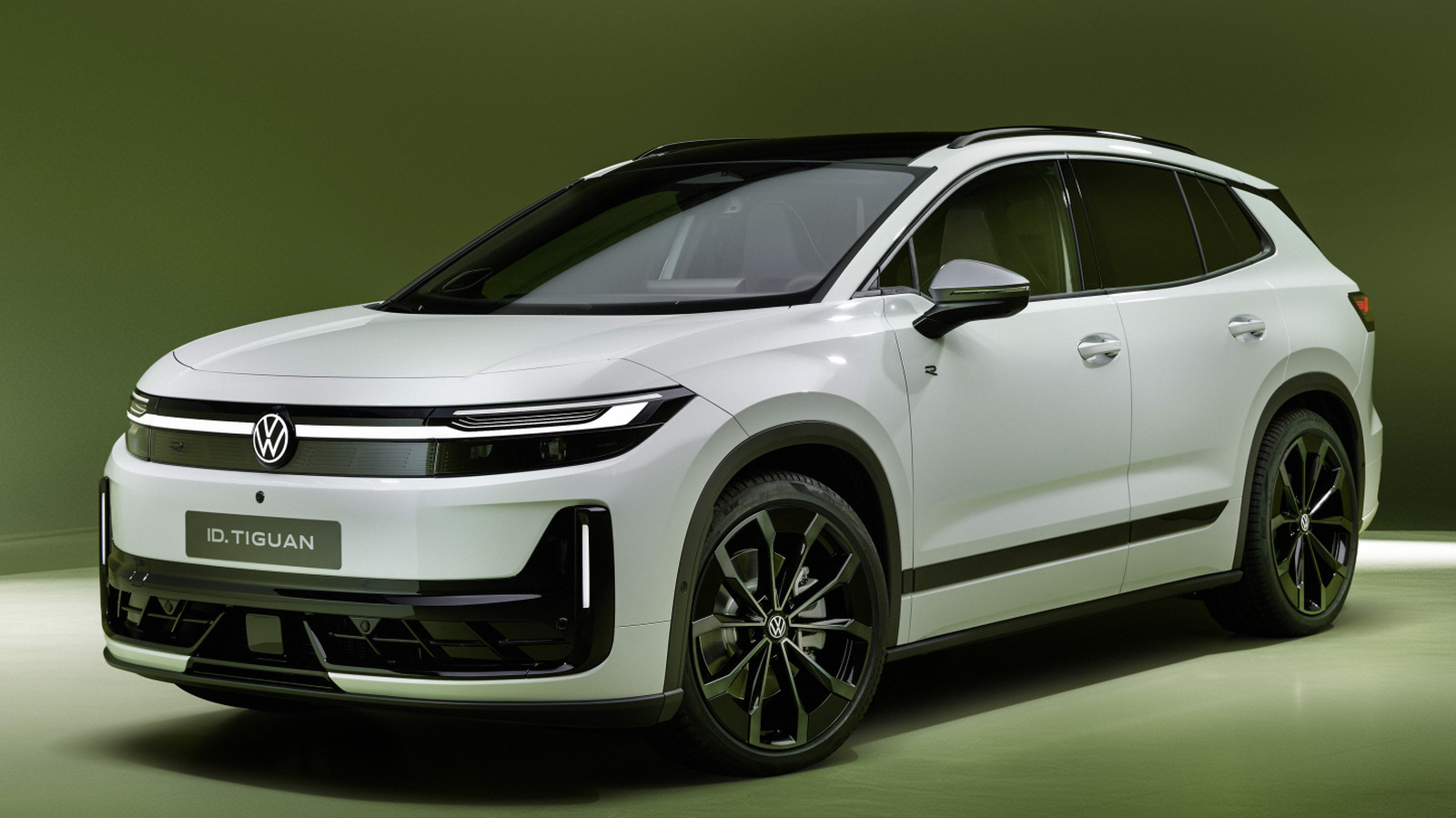
Volkswagen’s new ID Tiguan is more than a change of name or exterior styling. The electric SUV is being positioned as a substantial rework of the ID 4, with a cabin that reverses several interface choices associated with the earlier model.
The European-market ID Tiguan has been unveiled first, while a closely related version is expected to reach the United States in 2027. According to the initial details, Volkswagen is pairing a new exterior design language with a markedly more conventional set of interior controls.
That shift is notable because touch-heavy cabins have become common across the auto industry, especially in electric vehicles. In the ID Tiguan, Volkswagen is bringing back a steering wheel with physical buttons, a row of physical climate-control toggles, a center-console volume knob, regular air vents and physical mirror controls on the doors.
It also uses four individual window switches and conventional exterior door handles. None of these elements are exotic technologies, but their return reflects a practical response to customer expectations about controls that can be located and operated without navigating a screen.
Physical controls return to the cabin
The ID 4 helped establish Volkswagen’s electric SUV presence, but the new model’s interior is intended to feel more usable. The ID Tiguan’s list of tactile controls stands out because it covers functions drivers use frequently: adjusting climate settings, changing audio volume, operating mirrors and controlling windows.
The steering-wheel controls are physical buttons rather than touch-sensitive surfaces. Climate functions receive their own toggles, while the volume control returns as a dedicated knob on the center console. Volkswagen has also returned to more traditional air vents.
Together, those decisions point to an interface philosophy that gives everyday actions a direct physical home. A passenger display may be available, but it is optional rather than the defining feature of the interior described so far.
The redesign is therefore not simply a matter of adding more hardware. It is a reassessment of which vehicle functions should be mediated through a central display and which are better handled through controls that can be felt and used quickly. In a moving vehicle, that distinction can shape the experience as much as screen size, graphics or processing power.

A familiar name for an electric SUV
Volkswagen is using the Tiguan name for the electric model, linking it to one of the company’s better-known SUV badges. The vehicle replaces the ID 4’s more anonymous model naming with a label that many buyers already recognize.
The exterior also adopts Volkswagen’s newer design language, already seen on the ID Polo. The company’s approach combines that visual change with an interior intended to be more elevated and more user-friendly than the ID 4’s.
For the European market, the ID Tiguan will be offered with three powertrain configurations. The entry model has rear-wheel drive and a 58-kilowatt-hour battery. A longer-range rear-wheel-drive version uses a 77-kilowatt-hour battery, while the range-topping dual-motor version also uses the 77-kilowatt-hour pack.
Volkswagen estimates a maximum range of about 372 miles under the European WLTP test cycle. That figure is based on the cycle used in Europe and should not be treated as a direct US range rating. The company also says models with the larger battery will be able to tow up to 4,409 pounds.
European launch first, US arrival later
The ID Tiguan is scheduled to go on sale in Europe early next year. Volkswagen plans Trend, Life, Style and R-Line trim levels there, adding an R-Line option that was not offered on the ID 4.
The United States is expected to receive the ID Tiguan in 2027. Volkswagen has not presented the European vehicle as a precise specification sheet for the American market, so equipment and powertrain details could differ by the time the SUV arrives. The early look nonetheless provides a clear indication of the direction Volkswagen is taking.
That direction is especially relevant as established automakers try to make electric models feel less like isolated experiments and more like fully developed successors to familiar vehicles. The Tiguan badge supplies continuity, while the controls and cabin layout address practical elements that can influence ownership every day.

A nod to Volkswagen’s past
The new SUV also includes an available retro presentation for its 10-inch Digital Cockpit driver display. The design is a rendering of the blue-glowing gauges from the fourth-generation Volkswagen Golf, including a representation of that car’s red-pixel LCD trip-computer display.
It is a small feature compared with a new battery or powertrain, but it underscores the broader strategy behind the ID Tiguan. Volkswagen is not presenting the vehicle as a rejection of digital displays. Instead, it is combining digital instrumentation with familiar touchpoints and recognizable design references.
That mixture could help distinguish the model in a market where many electric-vehicle interiors have converged around large screens and minimal physical switchgear. The ID Tiguan still offers modern digital features, but it gives several routine tasks dedicated controls rather than asking drivers to route every interaction through a touchscreen.
What the redesign signals
Volkswagen’s decisions do not settle the wider industry debate over touchscreens. Large displays remain central to navigation, cameras, vehicle settings and entertainment. But the ID Tiguan suggests that manufacturers can draw a clearer line between functions that benefit from software and functions that drivers expect to access immediately.
For Volkswagen, the redesign is also a chance to make its mainstream electric SUV more memorable. The original ID 4 established a foothold, while the ID Tiguan attempts to combine better-known branding, revised styling, updated powertrain choices and a more conventional human-machine interface.
The crucial test will come when the vehicle reaches buyers, first in Europe and then in the United States. For now, the most consequential feature may be the least futuristic-looking one: a renewed commitment to buttons, toggles and knobs for the controls people use most often.
This article is based on reporting by Jalopnik. Read the original article.
Originally published on jalopnik.com