Commercial vehicles face a new safety test
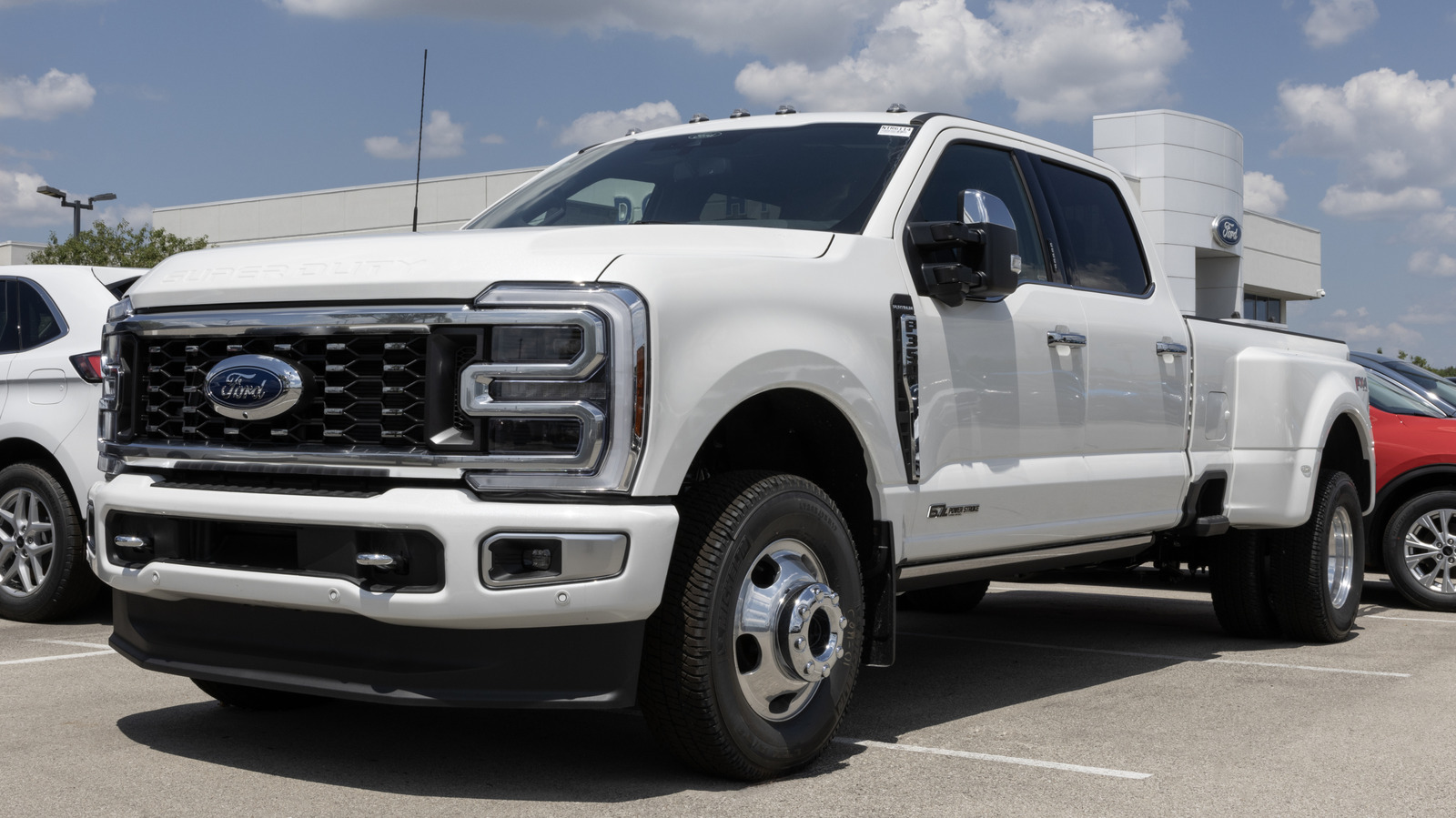
The Insurance Institute for Highway Safety is expanding its attention beyond passenger cars, putting cargo vans and heavy-duty pickup trucks through evaluations aimed at the driver-assistance systems that can prevent a collision before it happens. Its latest results point to a substantial gap: many of the commercial vehicles tested trail passenger vehicles in front-crash prevention.
The distinction matters because these vans and trucks are larger and heavier than typical passenger cars. When their safety systems fail to identify another vehicle or a person in time, the consequences for other road users can be especially serious. IIHS President David Harkey called the findings a wake-up call for commercial-vehicle makers and stressed the importance of front-crash prevention for vehicles with greater mass.
The tests are part of a broader IIHS effort to assess work-oriented vehicles under more scrutiny. Earlier in 2026, the institute released a comparison of safety features that included seatbelt reminders. The new evaluation moves to active crash avoidance, examining how vehicles respond to potential impacts with other vehicles and pedestrians.
Few strong results in vehicle-to-vehicle testing
IIHS said marginal and poor ratings were common among the first commercial models it put through its vehicle-to-vehicle and pedestrian crash-avoidance tests. That does not mean the performance gap is unavoidable. In every test, the institute found at least one good performer, indicating that manufacturers can meet the challenge with available approaches.
Among the cargo vans and heavy-duty pickups in the vehicle-to-vehicle evaluation, the Mercedes-Benz Sprinter 2500 delivered the strongest result. The Chevrolet BrightDrop 400 received an acceptable rating. The Rivian RCV-Delivery 500 and Ram entry were rated marginal, while every other vehicle in that part of the evaluation received a poor rating.
Those results suggest that a commercial-vehicle buyer cannot assume that a system advertised as forward-collision prevention will offer equivalent real-world protection across models. IIHS is testing performance rather than simply the presence of a feature. That distinction is important for fleet operators, drivers, and organizations making purchasing decisions around safety technology.
Pedestrian detection is a key concern
The institute’s evaluation also examined pedestrian crash avoidance. In that testing, the Chevrolet BrightDrop 400 and Rivian RCV-Delivery 500 performed at roughly the same level. The result is notable because commercial vehicles frequently operate in dense delivery, work-site, and curbside settings where pedestrians may be nearby.
Front-crash prevention generally depends on sensors, software, and automatic braking working together quickly enough to identify a threat and slow the vehicle. The IIHS findings do not say that these systems can eliminate crashes. Instead, they show wide variation in how the tested commercial models performed under the institute’s scenarios.
For manufacturers, the findings create a clearer benchmark and added pressure to improve systems that are already common in the passenger-car market. For fleets, they provide another factor to examine alongside payload, range, operating costs, and purchase price. A cargo van or heavy-duty pickup may be a work tool, but it shares roads, crossings, loading areas, and parking lots with people outside the vehicle.
IIHS is building a commercial-vehicle record
The crash-avoidance assessment follows IIHS’s earlier seatbelt-reminder review. In that work, the 2025 Ram ProMaster 2500 and electric 2025 Chevrolet BrightDrop 400 were the only cargo vans identified as having effective driver seatbelt reminders. Among the trucks examined, the 2025 Chevrolet Silverado 3500HD and Ford F-350 passed the reminder check, while the 2026 Ram 3500 did not.
Together, the evaluations begin to create a more detailed picture of commercial-vehicle safety. Passenger vehicles have long been shaped by government requirements and by independent crash testing. IIHS’s work signals an effort to bring comparable attention to vans and heavy-duty pickups, where safety expectations and testing histories have differed.
The immediate takeaway is not that every commercial vehicle is unsafe. It is that strong crash-avoidance performance is uneven, even within a relatively small set of tested models. The good results show improvement is possible; the prevalence of marginal and poor ratings shows the work is not finished.

What comes next
IIHS has framed the results as an early stage in its commercial-vehicle evaluations. As more models are tested, the ratings may give buyers a more direct way to compare whether a vehicle’s assistance technology can help avoid a collision with another vehicle or a pedestrian.
For now, the institute’s message is straightforward: commercial vans and heavy-duty pickups should not be treated as an exception to the safety progress expected of modern vehicles. Their size makes effective crash prevention particularly consequential, and the latest test results show that many manufacturers still have ground to make up.
This article is based on reporting by Jalopnik. Read the original article.
Originally published on jalopnik.com