Europe's Cycling Push Is Working — That Was the Plan
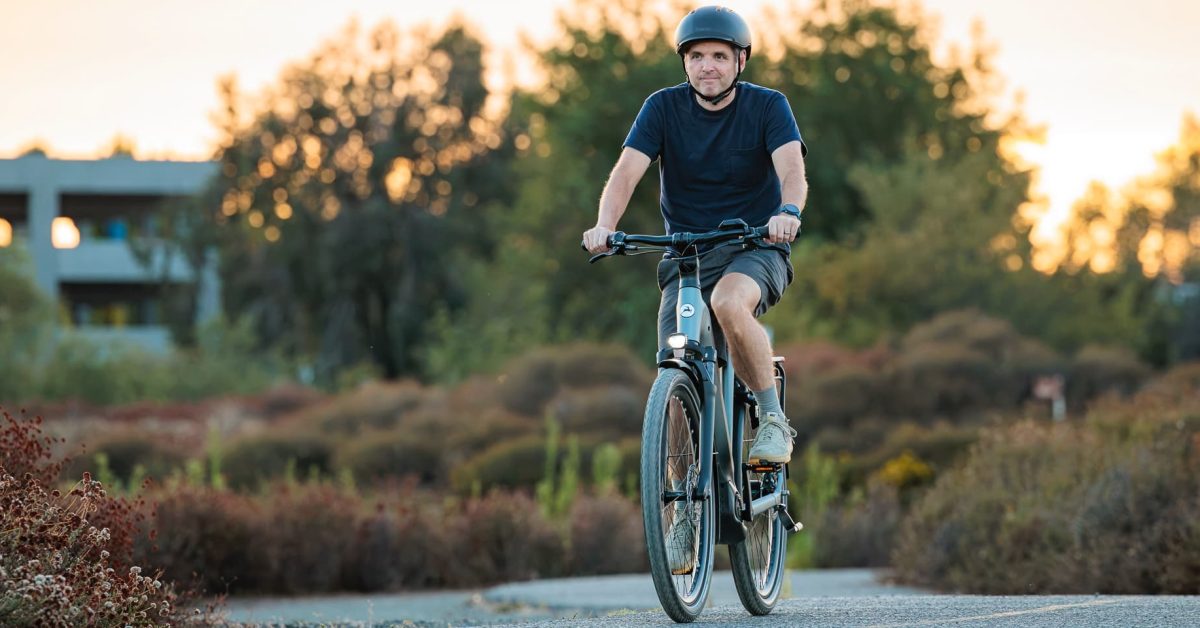
For more than a decade, cities across Europe have treated the bicycle as serious transport infrastructure rather than a recreational afterthought. The playbook has been consistent: make driving in dense areas less convenient and more expensive, make cycling safer and more attractive, then let the modal shift follow. As Electrek notes, Europe has spent years encouraging people to ditch cars and get around on bicycles and e-bikes instead — and in many places, that effort is plainly working.
That success is not trivial. Every trip moved from a car to a bike is a trip that no longer burns fuel, competes for a parking space, or adds to urban congestion. Electric bicycles stretched the range of that shift considerably, converting hilly commutes and longer suburban runs into realistic cycling distances for people who would never have considered a conventional bike.
But the same reporting flags something less comfortable: all of those increasingly sophisticated electric bicycles are now feeding a surprising new problem in Europe. The word doing the heavy lifting in that sentence is sophisticated. The issue is not simply that more people are riding. It is that the machines themselves have changed.
An E-Bike Is Not Just a Faster Bicycle
A modern e-bike is a small electric vehicle wearing a bicycle costume. Beneath the familiar frame sit lithium-ion battery packs, motor controllers, torque and cadence sensors, wiring harnesses, displays, and increasingly connectivity modules that pair with a phone. That engineering is what makes the category appealing — and it is also what separates it from everything European cycling policy was originally built to handle.
What sophistication brings with it
- Battery packs that store vastly more energy than a phone or laptop, concentrated in a single removable unit.
- Heavier frames and more powerful motors that push against rules, lanes, and parking infrastructure designed around pedal cycles.
- Electronics and firmware that complicate diagnostics, repair, resale, and long-term ownership.
- Higher average speeds and greater mass sharing space with pedestrians, conventional cyclists, and cars.
None of these features is inherently a defect. The complication is that each one introduces a second-order consequence that only becomes visible once adoption reaches scale — which is precisely where much of Europe now finds itself.
The Gap Between Policy and Product
Most European cycling policy was written for bicycles: subsidy schemes, lane design, tax incentives, share programs, and parking rules all assumed a human-powered machine weighing around 15 kilograms and traveling at roughly the speed of a brisk jog. E-bikes broke those assumptions quietly, one purchase at a time.
Once electric models became the dominant growth segment, questions that had never needed answers suddenly did. Where do these batteries get charged, and by whom? Who services a motor controller that fails after four years? What happens to a pack when the bike is abandoned? Who is accountable when a heavier, faster machine collides with a pedestrian on a shared path? Policy frameworks built around the bicycle often have no clean slot for any of these.
Charging, Storage, and the Home Front
The most immediate pressure point sits indoors. E-bike batteries are typically removed and carried inside to charge, and in dense European housing stock — apartments, walk-ups, shared courtyards, narrow hallways — storage and charging happen in exactly the places where people live and sleep.
That arrangement creates a set of concerns that cities are only beginning to formalize: standards for battery quality and certification, requirements for charging in multi-family buildings, guidance for landlords, and disposal routes that actually get used. None of these are exotic problems, but each requires regulation, enforcement, and money — and cycling policy budgets were largely written before anyone thought about them.
Three pressure points emerging at once
- Infrastructure: bike lanes, parking, and lifts built for light pedal cycles now have to absorb heavier, faster machines.
- Ownership: repairs demand specialized parts and skills, and incentives rarely cover maintenance or safe disposal.
- Enforcement: rules written for bicycles struggle to distinguish between classes of powered machines that look nearly identical on the street.
Success Breeds Second-Order Problems
There is a pattern here that anyone who follows energy and transport transitions will recognize. The first-order problem — getting people to adopt a cleaner alternative — eventually gets solved. Once it is, the second-order problems take its place: grid capacity, materials supply, maintenance networks, safety standards, and waste handling. Solar deployment followed this arc. Electric vehicles followed it. Micromobility appears to be following it now.
The good news buried in the Electrek reporting is that the problem exists because the transition worked. A city with few e-bikes has no battery logistics to solve and no charging questions to answer. A city with hundreds of thousands of them has to build the boring plumbing that makes a new mode of transport genuinely durable rather than merely popular.
What to Watch Next
The trajectory from here depends on how quickly European cities treat e-bikes as a distinct category rather than an extension of cycling. Several threads are worth tracking:
- Whether battery certification and charging rules for apartment buildings move from voluntary guidance to binding standards.
- Whether repair and recycling infrastructure develops fast enough to keep pace with the first big wave of batteries reaching end of life.
- Whether insurance, liability, and speed-class rules catch up to the reality of what is already on the road.
- Whether subsidy programs shift from pure purchase incentives toward maintenance, safety, and end-of-life handling.

The Takeaway
Europe set out to replace car trips with bikes and e-bikes, and in many places it succeeded — a genuine policy win that took years of lanes, incentives, and political will. The unexpected twist is that the machines doing the work have outgrown the systems built to support them. Sophisticated e-bikes solved the range and effort problem. What they left behind is a set of infrastructure, safety, and lifecycle questions that the next phase of cycling policy will have to answer.
That is not an argument against e-bikes. It is a reminder that a transport transition is never finished when adoption arrives. The harder, less glamorous work starts exactly at the moment a good idea becomes ordinary.
This article is based on reporting by Electrek. Read the original article.
Originally published on electrek.co