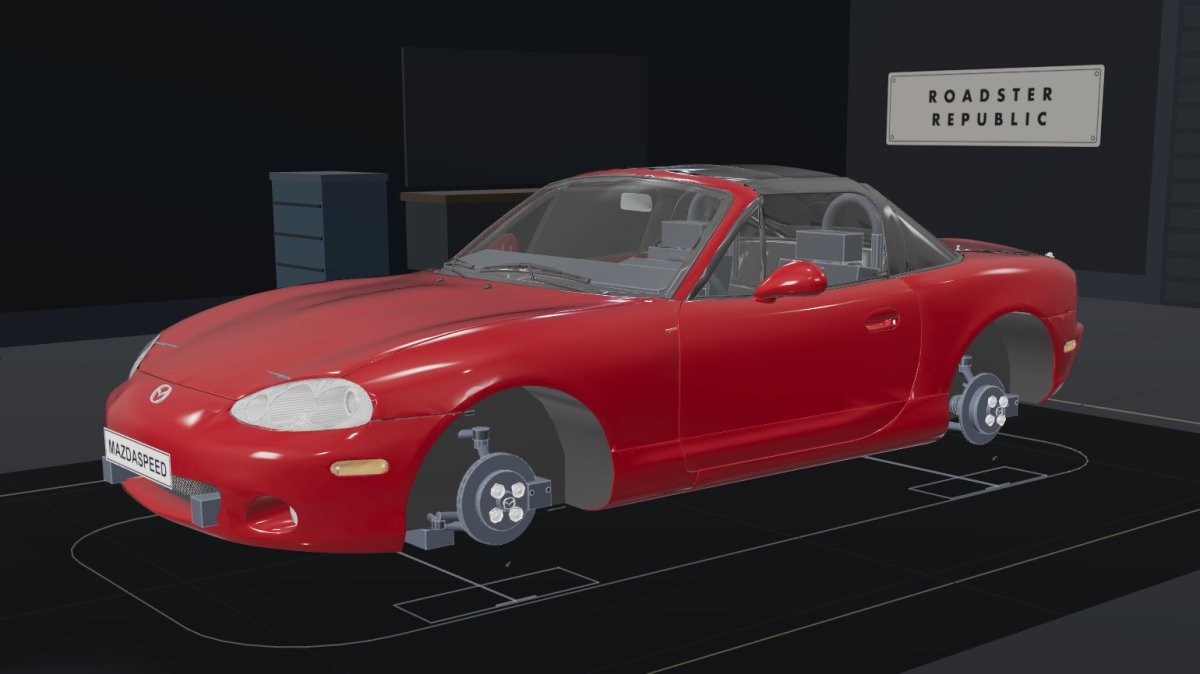
A detailed digital teardown of the second-generation Mazda MX-5 Miata is now freely available in a web browser. Called Roadster Atlas, the interactive 3D model lets users explore an NB-generation Miata from its exterior panels down to individual bolts, offering a new kind of reference for owners, enthusiasts and mechanically curious visitors.
The project was built by Ryan Montgomery, the person behind the Miata-focused brand Roadster Republic. Montgomery used his own 2004 Mazdaspeed Miata as a starting point, while designing the model to represent the wider NB generation, sold across model years 1999 through 2005.
Roadster Atlas contains 699 individual parts. Users can rotate the car, remove bodywork, view exploded assemblies and break down the engine into its components. It is free to view without an account or download, making it less like a conventional repair document and more like an accessible mechanical map of a car.
A browser-based mechanical reference
Traditional workshop manuals are built to answer specific repair questions: where a fastener sits, what sequence a job requires, or what specification applies to a component. Roadster Atlas does something different. Its value is visual context. By letting a viewer separate assemblies and inspect a vehicle from multiple angles, it can show how parts relate before someone reaches for a tool.
That matters for cars such as the Miata, which have remained popular with owners who maintain, modify and restore them. A suspension change, engine-bay project or bodywork repair becomes easier to picture when the neighboring components can be explored in three dimensions.
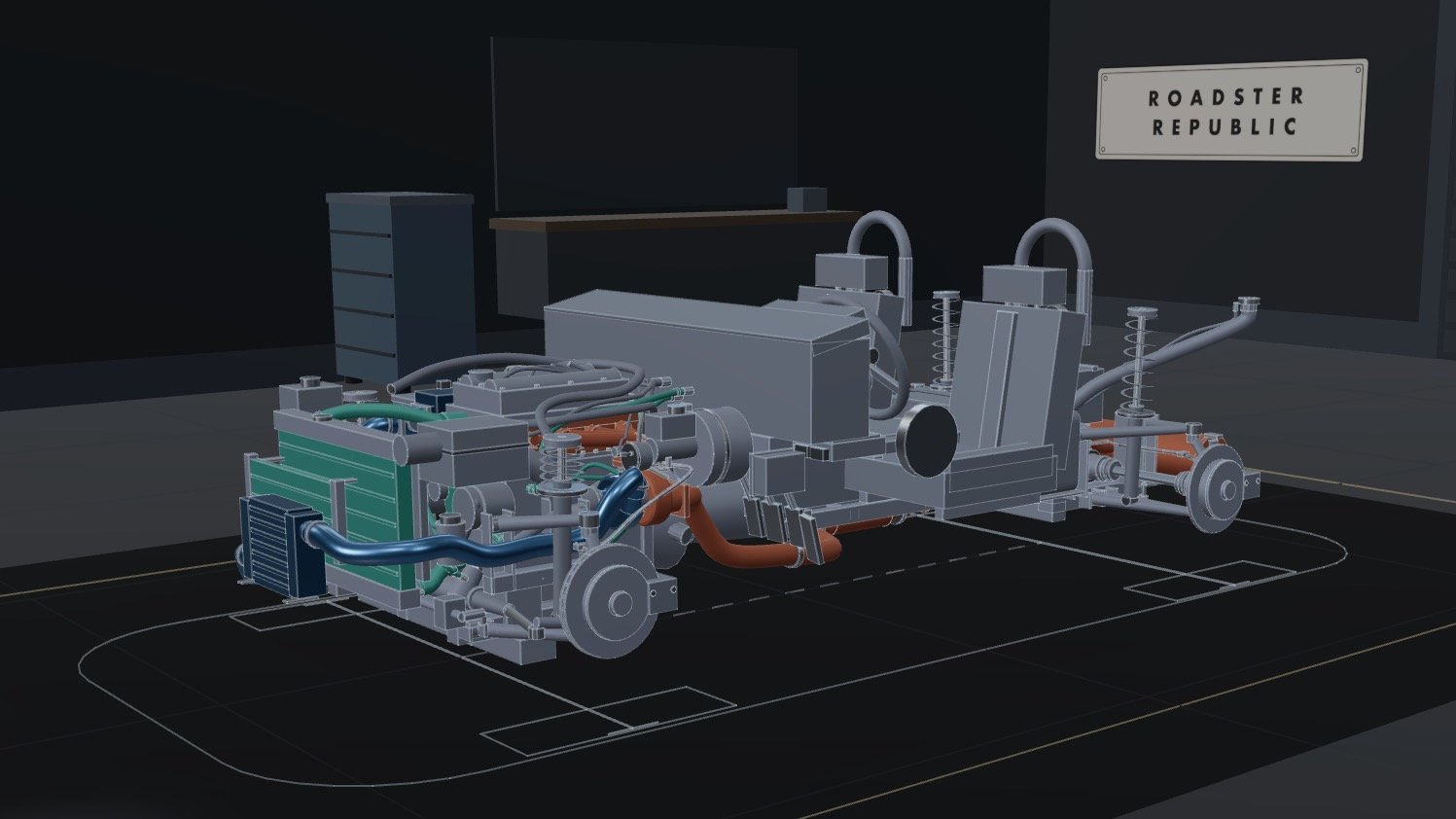
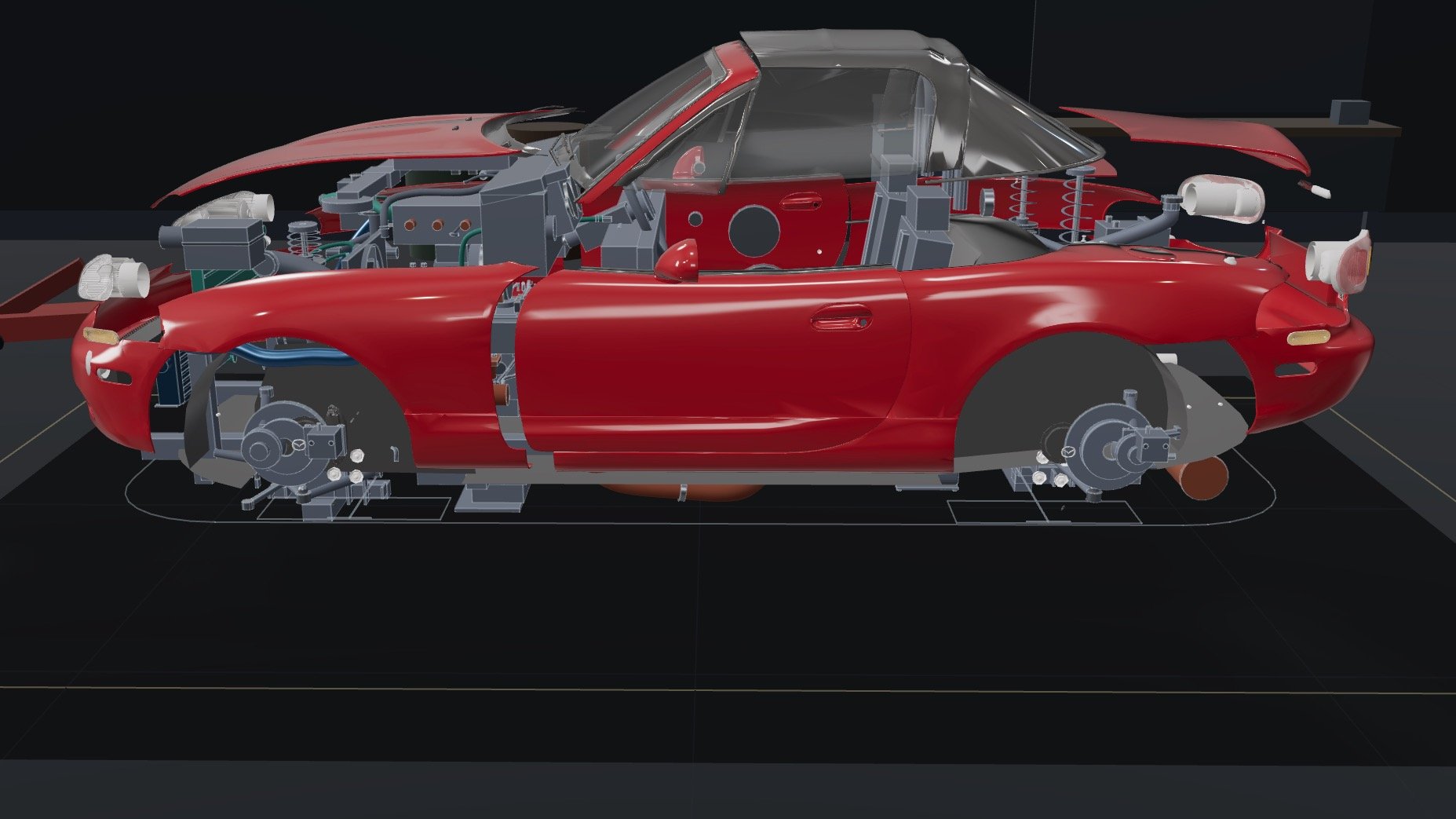
The model includes both body-off and exploded views. Those modes make the structure of the car easier to see than it would be in a conventional photograph, where wiring, panels and mechanical hardware obscure one another. A click-and-drag interface allows viewers to move around the model and inspect it from different positions.
Mobile browsers can display Roadster Atlas, but Montgomery has said it is best experienced on a desktop. That recommendation follows naturally from the depth of the model: a larger display gives users more room to examine individual systems and navigate through the many components.
Seeing systems move
The project is not limited to a static parts catalog. Roadster Atlas also uses animation to show mechanical relationships. Visitors can watch the engine rotate and see how different suspension settings alter geometry. Those features give the model an educational role beyond simple identification.
For a novice owner, a moving engine model can make the relationship between parts more legible than an illustration alone. For a prospective modifier, visualizing suspension geometry can help explain why an adjustment affects the stance and movement of the car. Neither function turns the site into a substitute for proper service information, but both can make more formal instructions easier to understand.
The source material is also deliberately mixed. Measurements are based on Mazda’s published specifications as well as information from media and community sources, including owners who had disassembled their cars. That approach reflects the practical knowledge built around a long-lived enthusiast vehicle, while also setting a boundary on the model’s role: it is a representative interactive atlas, not an official manufacturer repair manual.
Digital access for hands-on communities
Projects like Roadster Atlas point to a broader use for 3D tools in automotive culture. The technology is often associated with professional design, engineering simulation or expensive visualization systems. Here it is being used to turn a familiar production car into a public, explorable object.
That format can lower the barrier to learning. A person who has never removed a bumper, opened an engine or adjusted suspension can first explore the basic layout digitally. An experienced owner can use the model as a quick visual refresher while planning work. In both cases, the experience depends on curiosity rather than specialized software, a paid database or a download.
The car chosen for the first model is especially well suited to that role. The NB Miata has a large enthusiast following, and its relatively compact, mechanical layout makes it a useful subject for studying how a car is assembled. At the same time, the 699-part count shows that even a comparatively simple sports car is a dense collection of connected systems.

More Miatas are planned
Montgomery says other Miata generations are planned for rendering next. That could turn Roadster Atlas from a one-car experiment into a growing visual library spanning the model’s history. The prospect is particularly appealing for components that are difficult to understand without motion or a stripped-down view, such as the retractable hardtop on the current-generation Miata RF.
The project will not replace the detailed procedures, cautions or torque specifications needed for real repair work. But it offers something manuals often cannot: an immediate, interactive sense of how a complete vehicle fits together. For Miata owners, that makes a beloved roadster easier to study. For anyone else, it is a reminder that a web browser can now serve as a surprisingly capable window into mechanical design.
This article is based on reporting by The Drive. Read the original article.
Originally published on thedrive.com