Mitsubishi sees early demand for its returning flagship
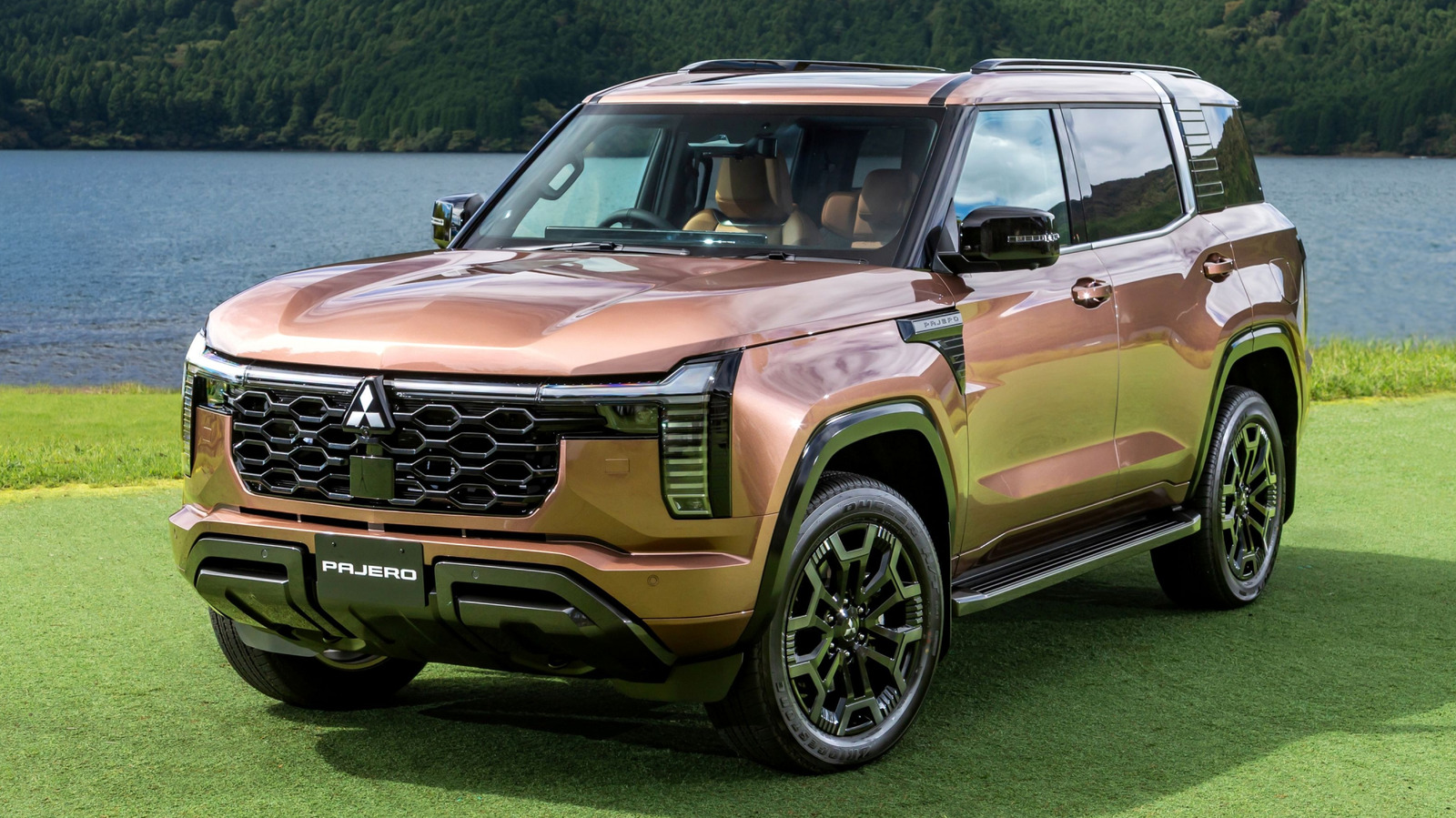
Mitsubishi says its relaunched Pajero is attracting buyers from competing brands in Japan before the off-road-focused SUV has even reached showrooms. The company has received 5,500 orders for the Japan-built, body-on-frame vehicle, according to reporting cited by Jalopnik, exceeding its initial expectation by 1,500 orders.
Of those orders, Mitsubishi says 80% come from customers outside its usual buyer base. That makes the model’s early order book significant for a company seeking to move the Pajero nameplate upmarket and challenge established rivals in the large SUV market.
A direct bid for Land Cruiser shoppers
The positioning is clear in the Pajero’s Japanese pricing. Mitsubishi has set a base price equivalent to about $39,212. That places it above the reported entry point for Toyota’s Land Cruiser 250, at $36,596, and close to the base utilitarian version of the Land Cruiser 300, reported at $39,890.
More highly specified Land Cruiser 300 models begin at a considerably higher reported price, ranging upward to a top-end GR Sport hybrid listed at $64,586. Mitsubishi is therefore entering a segment in which price, perceived durability and off-road credentials are closely tied to brand identity.
The Pajero had been absent from Mitsubishi’s global lineup after the company discontinued the nameplate in 2020. Its return gives the automaker a recognizable flagship at a time when it is trying to change the market’s view of the brand. The model’s early results suggest that the relaunch is reaching beyond buyers who simply stayed with Mitsubishi.

Orders are also skewing toward premium equipment
The order data carries another encouraging signal for Mitsubishi’s move upmarket. About 70% of Japanese orders are for vehicles equipped with premium packages. That matters because it indicates that a large share of early customers are selecting higher-content versions rather than treating the Pajero primarily as a lower-cost alternative.
For an automaker trying to reset its image, higher-specification demand can be as important as total reservations. Premium-package uptake may support the company’s effort to position the vehicle against better-established competitors, while giving buyers more reason to view the Pajero as a flagship rather than a budget-oriented choice.
The company also says former Pajero owners are returning after leaving the brand when the model was discontinued. Those returning customers are distinct from the large group of conquest buyers, giving Mitsubishi two sources of initial interest: loyalty to the historic nameplate and shoppers moving from other manufacturers.
Japan sales begin in December
Official Japanese sales are scheduled to begin on December 17. Australia is expected to follow the next month. The SUV is already on sale in Thailand, where it has received 1,500 orders so far.
Mitsubishi’s stated target is 10,000 Pajero sales through March 2027. With 5,500 orders already reported in Japan, the vehicle is more than halfway toward that goal before its domestic retail launch. The comparison is not a guarantee of sustained demand: an early reservation total is different from a longer-term sales pattern, and the company still needs to convert interest into delivered vehicles.
Still, the initial number is a notable indicator for a relaunched product. It suggests that Mitsubishi’s decision to revive the Pajero as a seven-seat, body-on-frame SUV has found an audience in a market where Toyota’s Land Cruiser range is a clear reference point.
Why the relaunch matters
Large, off-road-oriented SUVs are a demanding category for any manufacturer. Buyers often compare pricing, seating, equipment and perceived capability across a short list of well-known vehicles. Mitsubishi is using the Pajero’s historical recognition while setting its price close to Toyota’s offerings, rather than attempting to compete solely through a low entry price.
The early figures show a relaunch built around that strategy. Mitsubishi has reported a substantial share of buyers arriving from outside the brand, strong demand for premium equipment and order volume above its original expectation. Those indicators do not establish the Pajero’s long-term market position, but they give Mitsubishi a favorable start as the vehicle begins sales in Japan.
What to watch next
The next test will be delivery performance and whether demand continues once the Pajero moves from pre-launch orders to regular showroom sales. Mitsubishi will also be watched for progress toward its 10,000-unit target through March 2027, as well as for how the model performs when Australia joins Thailand and Japan as a market.
For now, the company’s most consequential claim is the composition of its order book. If the reported 80% conquest-buyer figure holds as sales broaden, the Pajero could become more than a nostalgic revival. It could serve as a practical measure of whether Mitsubishi can win consideration from customers who would otherwise buy a Land Cruiser or another competing SUV.
This article is based on reporting by Jalopnik. Read the original article.
Originally published on jalopnik.com