One nameplate, two distinct meanings
“Barracuda” and “’Cuda” are often used interchangeably, but the names describe different positions in Plymouth’s muscle-car lineup. The Barracuda was the model line; the ’Cuda became its more enthusiast-oriented performance identity, distinguished by its bodywork, colors and engine choices.
The distinction resembles the relationship between a mainstream sporty car and a higher-performance trim. The source compares the ’Cuda’s place in the Plymouth range with performance variants such as the Pontiac Firebird Trans Am and Chevrolet Camaro Z28.
Origins in the Plymouth Valiant
The Barracuda debuted in 1964 as the Plymouth Valiant Barracuda, based on Chrysler’s A-body platform. It was positioned as a smaller, sporty two-door and came with several engine choices, including slant-six engines and a 273-cubic-inch V8 rated at 180 horsepower.
By 1965, the car was marketed simply as the Plymouth Barracuda rather than the Plymouth Valiant Barracuda. That change established Barracuda as its own public-facing nameplate, even as it retained its A-body roots.
More choices, more performance
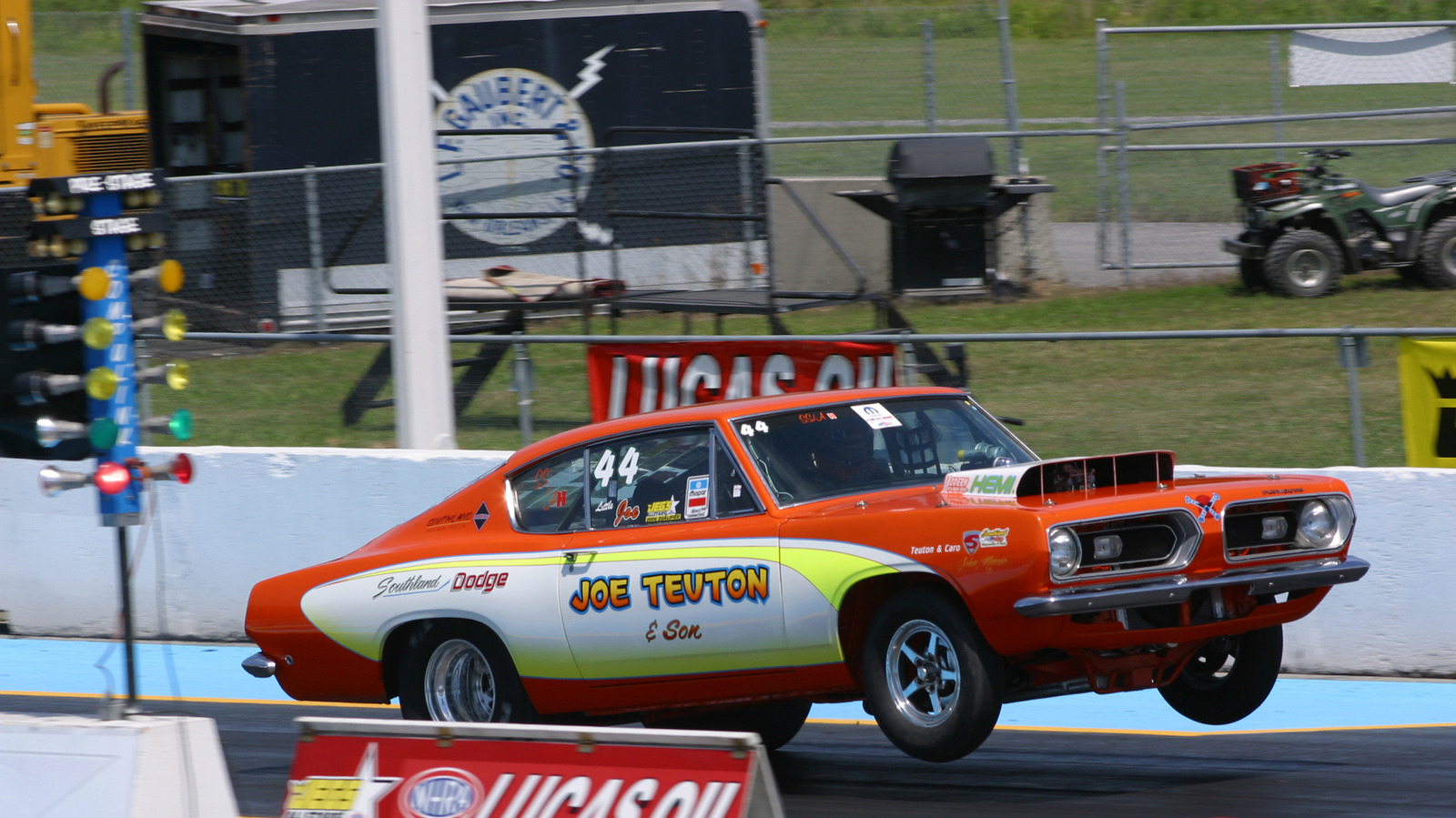
The second-generation Barracuda ran from 1967 through 1969. Plymouth offered it as a fastback, notchback and convertible. Engine availability expanded through the period: the source notes a 383-cubic-inch V8 producing about 280 horsepower, alongside the 318 as the standard V8 for 1968.
The era also produced unusually powerful and now highly sought-after versions. A limited-production 1968 Super Stock Barracuda used Chrysler’s 426-cubic-inch Hemi V8, while a 440-powered Barracuda was also available.
Where the ’Cuda fits
By 1969, the Barracuda had firmly developed its performance credentials, with available 340-, 383- and 440-cubic-inch V8 engines. The name then took on a sharper performance meaning with the third-generation, E-body Barracuda.
The practical takeaway is simple: every ’Cuda is part of the Barracuda story, but not every Barracuda is a ’Cuda. The shorter badge signaled a more aggressive, enthusiast-focused version rather than a separate unrelated model.
This article is based on reporting by Jalopnik. Read the original article.
Originally published on jalopnik.com