Recall covers seven-passenger Siennas built from 2021 to 2026
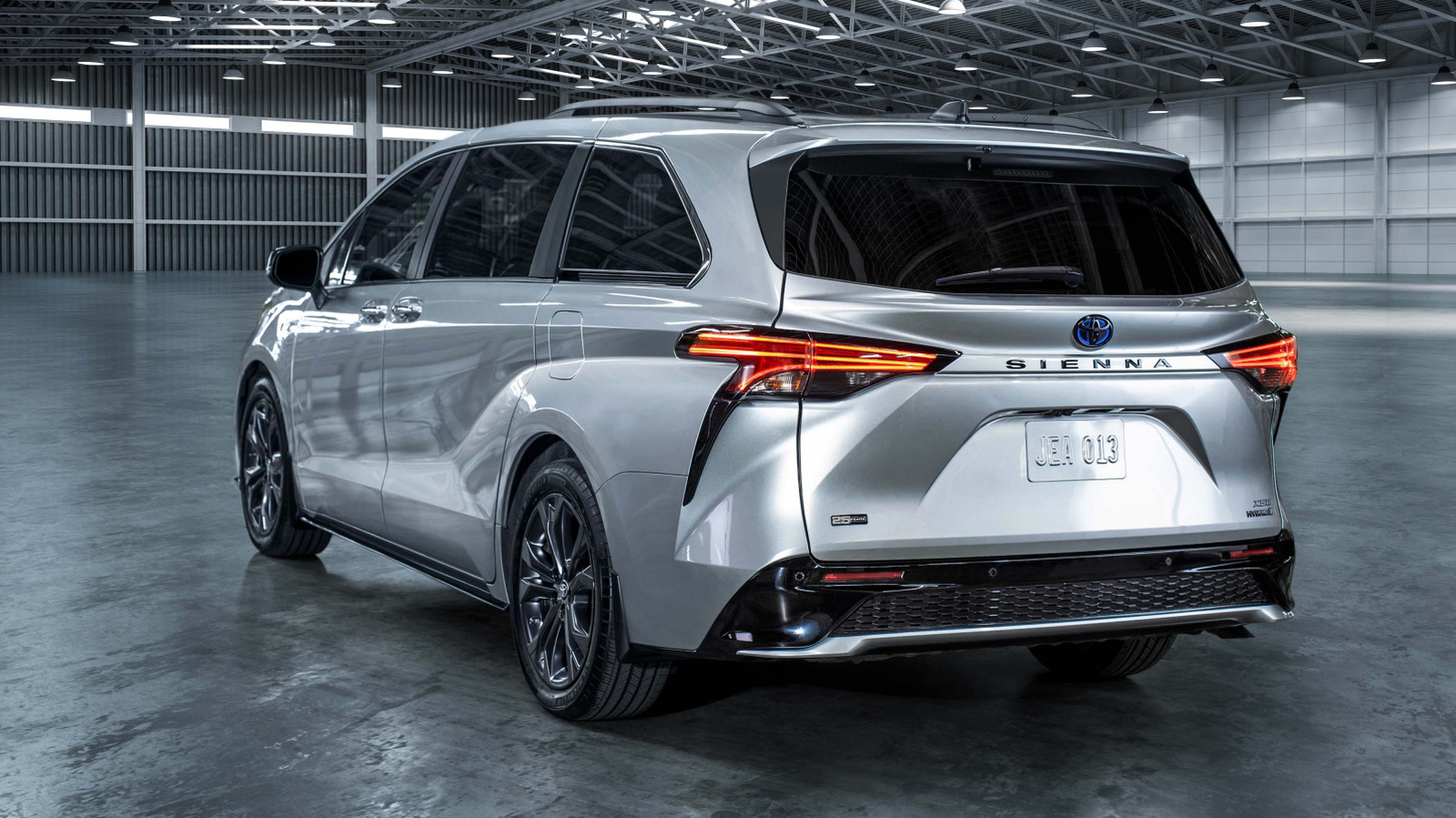
Toyota is recalling 228,367 Sienna minivans in the United States over a potential issue affecting the second-row seat backs in certain vehicles during a frontal collision. The recall covers model-year 2022 through 2026 Siennas built between September 16, 2021, and July 20, 2026.
The issue applies to Siennas equipped with two second-row captain’s chairs, the configuration used in seven-passenger versions of Toyota’s hybrid-only minivan. Toyota said the concern involves the interaction between the seats’ recliner assemblies and seat-belt pretensioners, devices designed to tighten seat belts in a crash.
In the affected vehicles, the load generated by a pretensioner in some frontal crashes can cause oscillation in the recliner mechanism. That movement could allow a second-row seat back to shift during the collision, creating an occupant-safety concern.
How Toyota identified the issue
Toyota’s recall report describes a defect tied to certain recliner assemblies, seats and seat-belt pretensioners supplied during a particular production period. The company began investigating after prototype sled testing for a future second-row seat and seat-belt design identified the behavior last year.
It subsequently conducted additional testing and recovered second-row seat assemblies from vehicles in service to examine how the recliner mechanisms had performed over time. The resulting recall is notable because the finding came from development and validation work rather than a reported field incident.
Toyota said it does not have a reliable estimate of how many vehicles in the recall population contain the condition. The percentage listed in the recall paperwork is effectively a placeholder, rather than an estimate that one percent of the affected vehicles have the issue.
Repair centers on pretensioner-control software
For most involved Siennas, Toyota plans to provide an updated version of the software controlling the seat-belt pretensioner at no charge. The remedy is intended to address the loading condition that can affect the recliner mechanism in a frontal crash.
About 200 vehicles fitted with Toyota’s Mobility as a Service Package will receive a different remedy involving replacement components. Owners should wait for recall notification and follow Toyota’s instructions for scheduling service, rather than assuming a vehicle is unaffected because it has not displayed an obvious seat problem.
The recall does not cover every current-generation Sienna. The affected population begins with the 2022 model year, despite the current hybrid-only Sienna generation arriving for the 2021 model year. It is also limited to vehicles with the relevant second-row captain’s-chair arrangement.
Why a restraint-system interaction matters
Seat belts, pretensioners and seat structures operate as one crash-protection system. A pretensioner is intended to reduce belt slack as a collision begins. That action helps restrain an occupant, but it also imposes forces on the belt’s mounting and nearby seat hardware.
For the recalled Siennas, Toyota determined that the force path can affect the recliner mechanism enough to make the seat back move during a frontal impact. The concern is not simply passenger comfort or a loose seat adjustment; it is the stability of the seat and restraint environment at the moment it is most needed.
Toyota reported no Field Technical Reports or warranty claims related to the defect. That does not change the scope of the recall, but it indicates that the company’s investigation was not driven by a disclosed pattern of customer warranty reports.
What owners can do now
Sienna owners can confirm whether their vehicle is included using its vehicle identification number when Toyota’s recall information becomes available. Owners of model-year 2022–2026 seven-passenger Siennas should pay particular attention, as the captain’s-chair configuration is central to the reported condition.
The planned repair is free. As with other safety recalls, the practical next step is to arrange the remedy once the manufacturer notifies the owner or a dealer confirms eligibility. The recall underscores how modern vehicle safety increasingly depends on the behavior of mechanical components and electronically controlled restraint systems together.
This article is based on reporting by Jalopnik. Read the original article.
Originally published on jalopnik.com