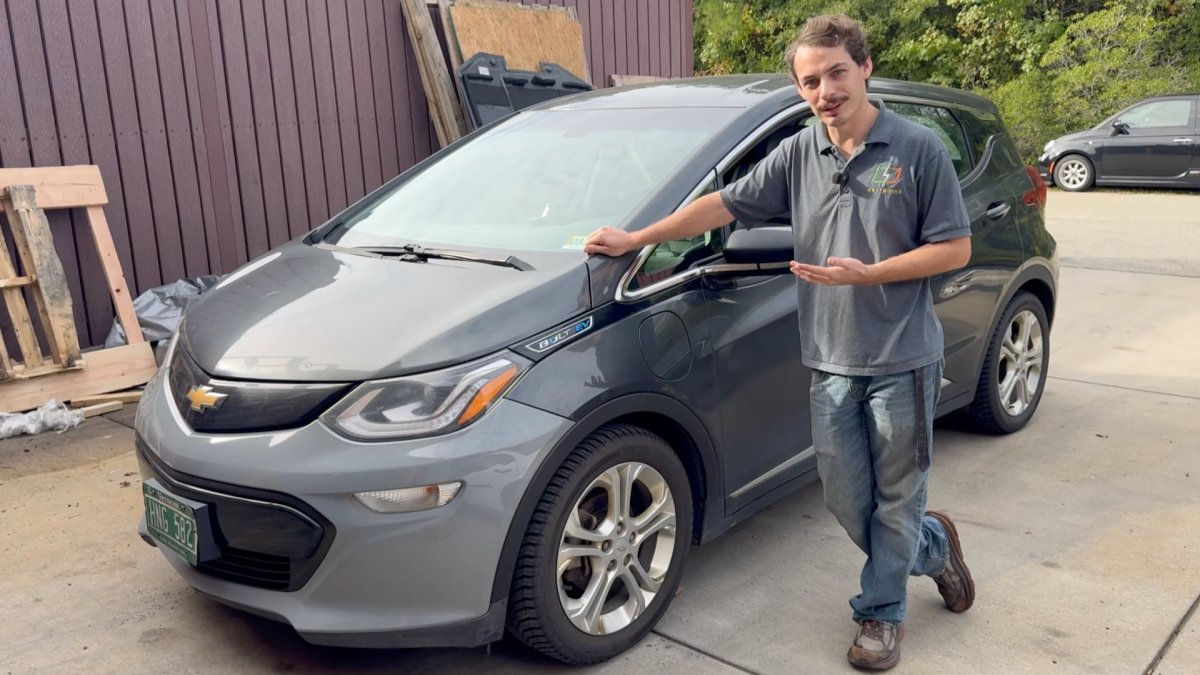
A 2019 Chevrolet Bolt EV with 471,616 miles on its odometer offers an unusually detailed case study in electric-vehicle longevity. The car arrived at the Out of Spec Renew workshop unable to shift into drive and displaying a battery-fault message, but its history shows that one of its replacement battery packs had already accumulated more than 330,000 miles of use.
The vehicle is not a controlled scientific trial, and one high-mileage example cannot settle broader questions about battery durability. Yet its record is notable because it separates the wear on a heavily used car from the service life of its most recent battery pack. It also illustrates how a vehicle can continue to operate for hundreds of thousands of miles while requiring repairs to components beyond the battery.
A nearly half-million-mile Bolt
The 2019 Bolt had covered 471,616 miles before entering the garage featured by Out of Spec Renew. At that mileage, it had expected signs of extensive use, including cosmetic damage, a mismatched front bumper, and prior work on suspension components, wheel bearings and the steering rack. Those repairs are not unique to electric cars and reflect the demands placed on any vehicle driven far beyond typical annual mileage.
The car had also received a previous battery replacement under the Chevrolet Bolt recall. General Motors announced that recall in 2021, and it ultimately covered roughly 140,000 Bolt EV and related Bolt EUV vehicles in North America. The recall addressed manufacturing defects that could create a fire risk, with module replacements in some cases and full battery-pack replacements in others.
For certain 2017 through 2019 vehicles, replacement packs also brought increased range because of chemistry changes introduced later in production. That means the battery history of this particular Bolt cannot be treated as a simple measure of the original pack’s life. It is instead a look at how a recall replacement performed under sustained, high-mileage operation.
More than 330,000 miles on the replacement pack
According to the report, the replacement battery installed in 2022 had survived more than 330,000 miles. That is a consequential figure on its own. The replacement pack was ultimately associated with a battery fault, but the car’s history suggests it had been used intensively for years after the recall work.
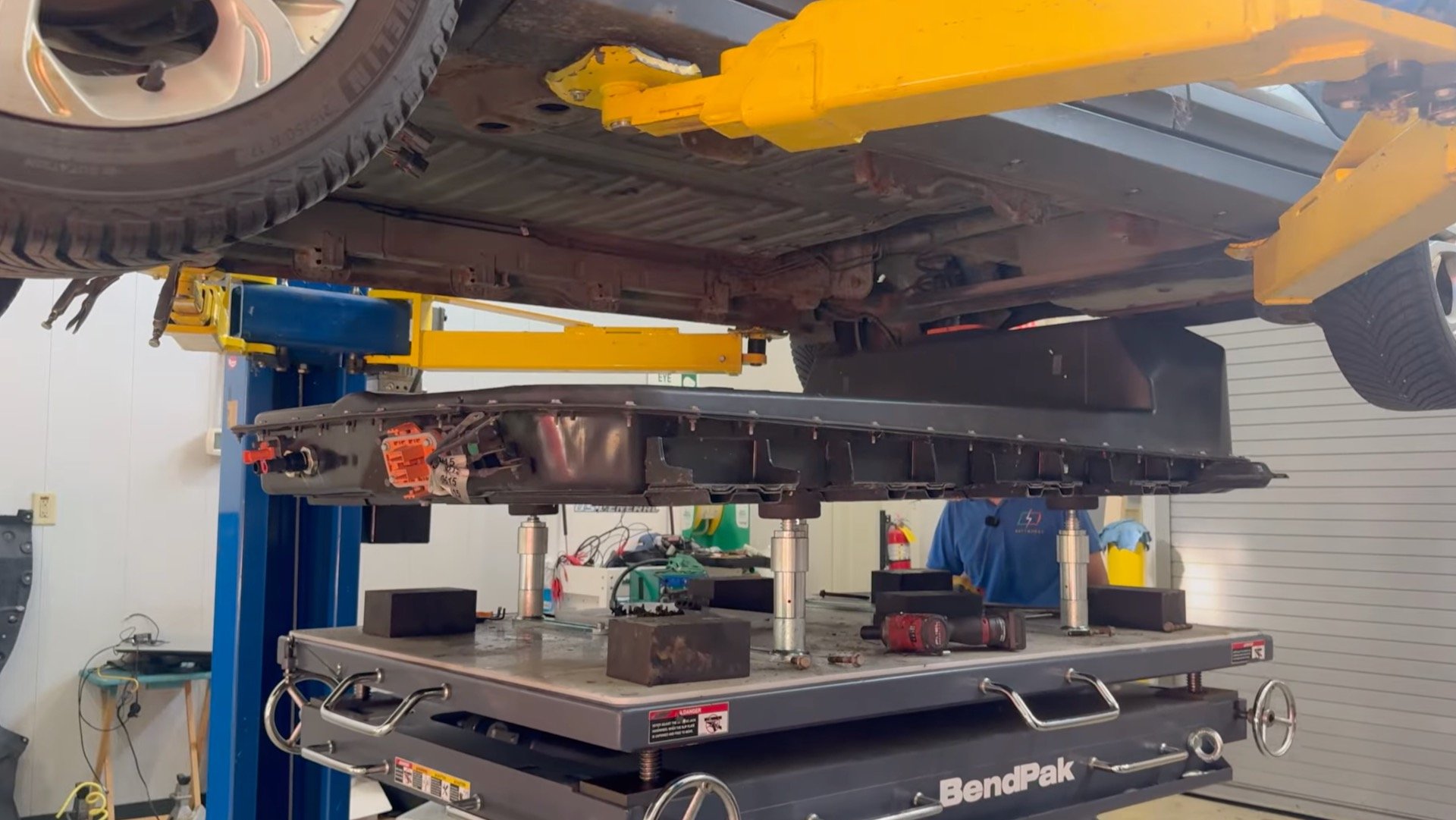
To return the Bolt to service, the workshop used another pack built to the same recall-replacement specification. The donor pack had been installed in a 2017 Bolt in 2023 and was estimated to have only 10,000 to 15,000 miles of use. The replacement required moving some parts from the old battery to the donor unit, including components that may have been affected during transport or removal, but the underlying pack swap was described as relatively straightforward.
The case also carries an important caveat. The vehicle’s original battery did not reach 471,616 miles; it had been replaced because of a safety recall rooted in manufacturing defects. And the second pack, while remarkably well used, was being replaced after a battery fault. It would be misleading to portray the example as proof that all Bolt packs will reliably exceed 330,000 miles without major service.
What the example does and does not show
Electric-car battery discussions often focus on whether a pack can last as long as the vehicle around it. This Bolt suggests the answer can be more complicated. A car’s usable life includes tires, suspension, bearings, steering, body damage and countless other systems. A battery pack is central to an EV, but it is not the only component exposed to the effects of hundreds of thousands of miles on the road.
The vehicle also shows why battery history matters. The recall replacement pack had the benefit of later chemistry, while the car itself had already accumulated substantial mileage before and after that intervention. Its experience is therefore most useful as evidence that a replacement Bolt pack can be driven very hard, rather than as a direct comparison between an untouched original battery and an internal-combustion engine.
There is a broader operational lesson as well. Battery replacement can extend the useful life of an otherwise serviceable EV. In this case, the donor pack gives a high-mileage vehicle a route back to operation, subject to the usual condition checks and repairs needed for a car with nearly half a million miles.
The 471,616-mile Bolt remains an outlier, but it is a meaningful one. It documents an electric car that stayed in use long enough for ordinary chassis wear, a major recall intervention and a second battery swap to become part of the same ownership story. For EV durability, that is less a final verdict than a reminder that longevity depends on the vehicle, the pack, the repair path and the willingness to keep maintaining all of them.
This article is based on reporting by The Drive. Read the original article.
Originally published on thedrive.com