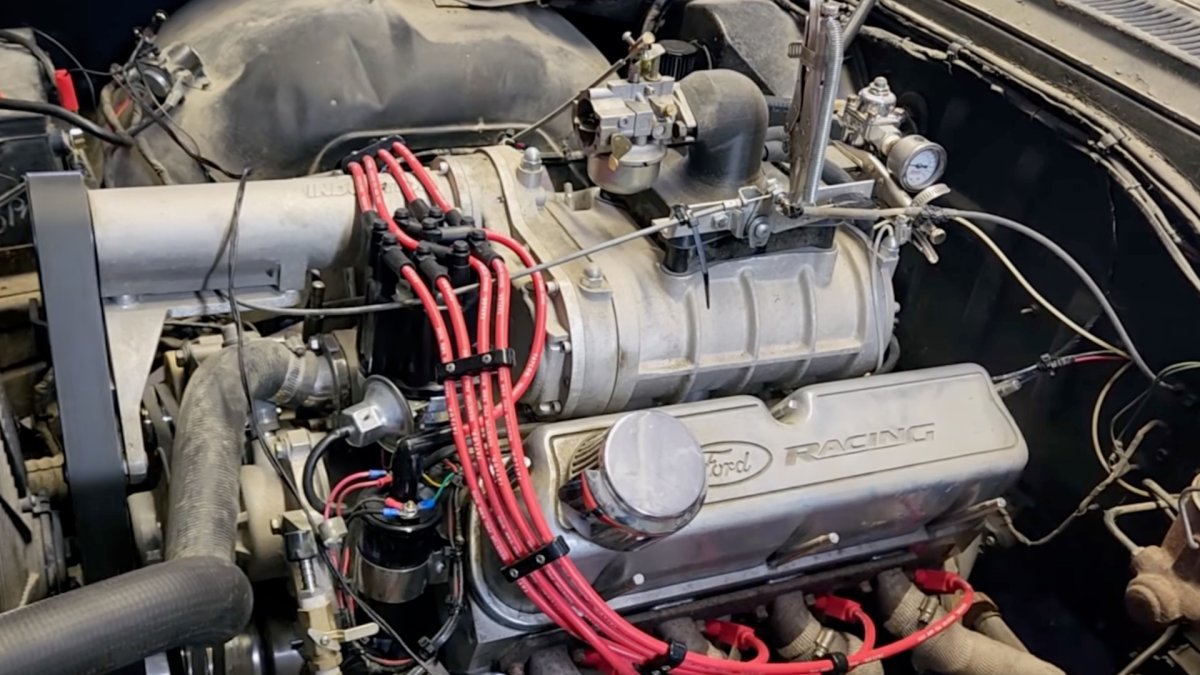
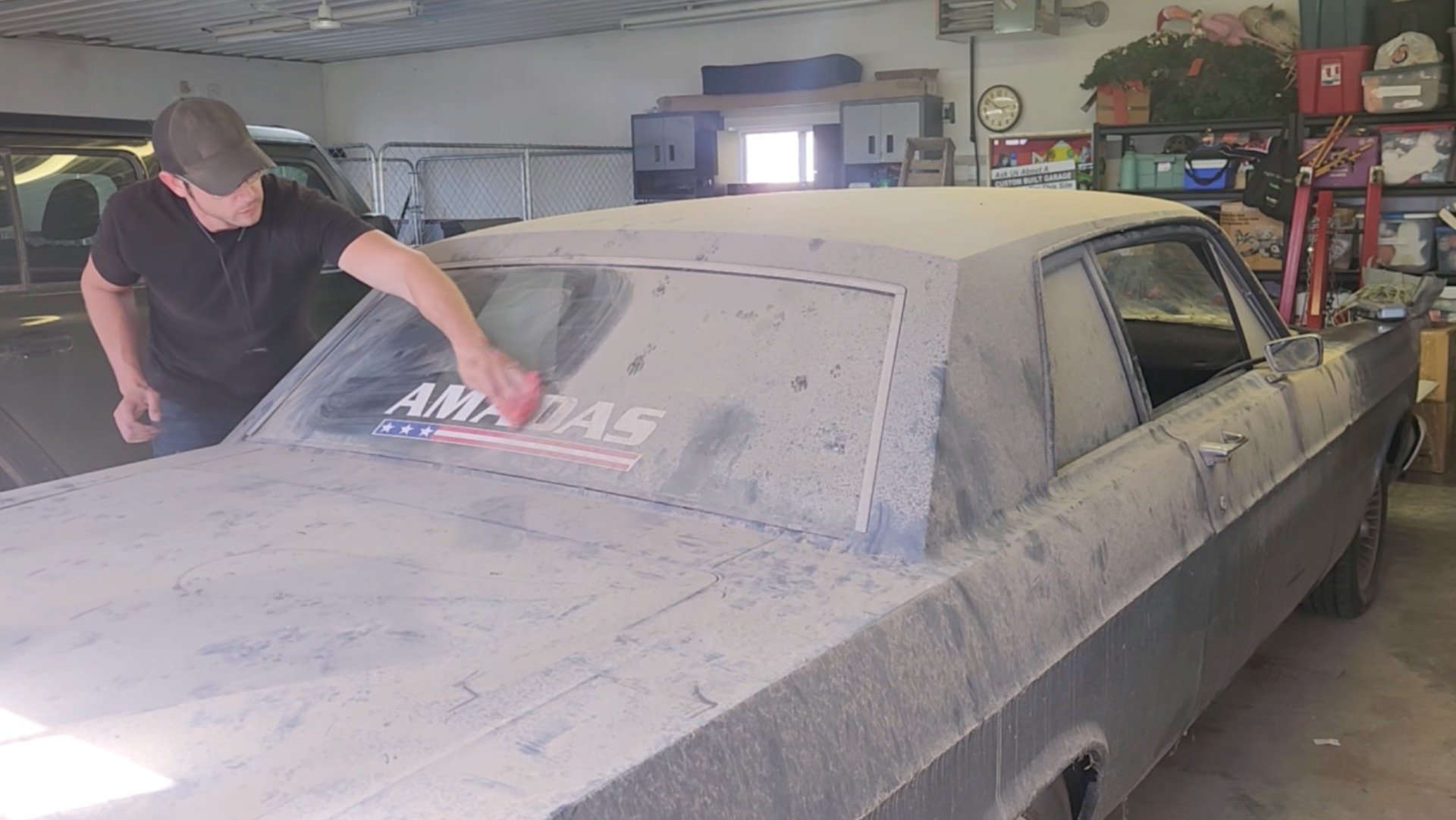
A Ford Fairlane that had spent 10 years parked is back on the road, at least temporarily, after an unusually small piece of equipment was pressed into service: a lawnmower carburetor. The improvised setup is not a path to normal performance, but it was enough to start and move a supercharged V8 that had been dormant for a decade.
The project, documented by Luke of the ThunderHead289 YouTube channel, is a reminder that bringing an old vehicle back to life is often less about a single perfect repair than about solving the immediate problem safely enough to learn what comes next. In this case, the replacement fuel-metering device was drastically undersized for the engine. The result was a functional demonstration, not a finished fuel system.
A deliberately mismatched solution
Carburetors are designed to mix fuel and air for an engine, and their capacity needs to suit the engine they serve. A small lawnmower carburetor was never intended to feed a car V8, much less one fitted with a supercharger. Yet the Fairlane’s engine fired and idled smoothly with the small carburetor in place.
The limits appeared once the car needed more air and fuel. The carburetor could not move enough air to keep the engine operating smoothly at speed. It could not support the airflow required to turn the supercharger effectively and produce boost. The blower may also have added drag, making the task even more demanding for the temporary carburetor.
That outcome was predictable, but it does not make the test trivial. An engine will only run if several systems work together: it needs usable fuel delivery, ignition, air and mechanical timing. Getting a long-idled V8 to start, even at idle, is meaningful progress when the goal is to make a neglected project car move under its own power again.
Making a gravity-fed carb work in a car
The adaptation required more than bolting on a small carburetor. The lawnmower unit was designed for gravity-fed fuel, while a vehicle engine normally requires a fuel supply with some pressure. The temporary system used a regulator to reduce fuel pressure to between 1.5 and 2 pounds per square inch, a level the carburetor could handle.
Because this was an interim arrangement, the Fairlane drew fuel from a small tank placed in the front passenger footwell. Its battery was also temporarily located there. The project’s host brought a fire extinguisher, an important precaution given that the fuel and a possible ignition source were in close quarters.
That arrangement illustrates the distinction between an experiment and a road-ready modification. The setup solved the narrow task of getting the engine to run and the vehicle to move. It was not presented as a permanent installation, and the practical limitations were apparent in the car’s behavior away from idle.
Progress after a decade parked
Project cars can remain parked for years after a single missing or failed part interrupts work. Once that happens, other priorities can keep the vehicle stationary far longer than intended. The Fairlane’s 10-year layup made the moment it drove again significant even though the fuel system was plainly a stopgap.
The project also shows how experimentation can establish a useful baseline. The lawnmower carburetor proved that the engine could start and run. It also revealed exactly where the temporary solution failed: airflow and fueling capacity at speed. Those observations help define the next repair rather than leaving the condition of the engine entirely unknown.
ThunderHead289 has tested lawnmower carburetors on car engines before, including a Ford Maverick that received a more considered conversion with custom parts and was closer to everyday usability. The Fairlane test was different in spirit. It was an inventive way to get a stalled project moving, not an attempt to turn an undersized carburetor into a high-performance component.
The real lesson is scale
The Fairlane’s supercharged V8 could idle with the small carburetor, but it could not receive the air needed for sustained road performance. That contrast is the central lesson: engines can sometimes run under highly unconventional conditions, yet a fuel system still has to be sized for the work the engine is expected to do.
For a vehicle that had not moved in 10 years, a short drive represented a win. The temporary carburetor did not restore the Fairlane to full health, but it converted a static project into a running one and made the remaining work more concrete. Sometimes an imperfect solution is valuable because it provides the first evidence that a much larger restoration is possible.
This article is based on reporting by The Drive. Read the original article.
Originally published on thedrive.com