The Base Model Has Always Been the Family Joke
Within muscle-car culture, the entry-level trim has long served as the punchline. The V8 is what gives these machines their reputation, their sound, and their swagger, and anything sitting beneath it in the lineup tends to be treated as a rental-lot afterthought. That instinct isn't entirely wrong — but it also obscures an interesting shift that has taken place over the past decade.
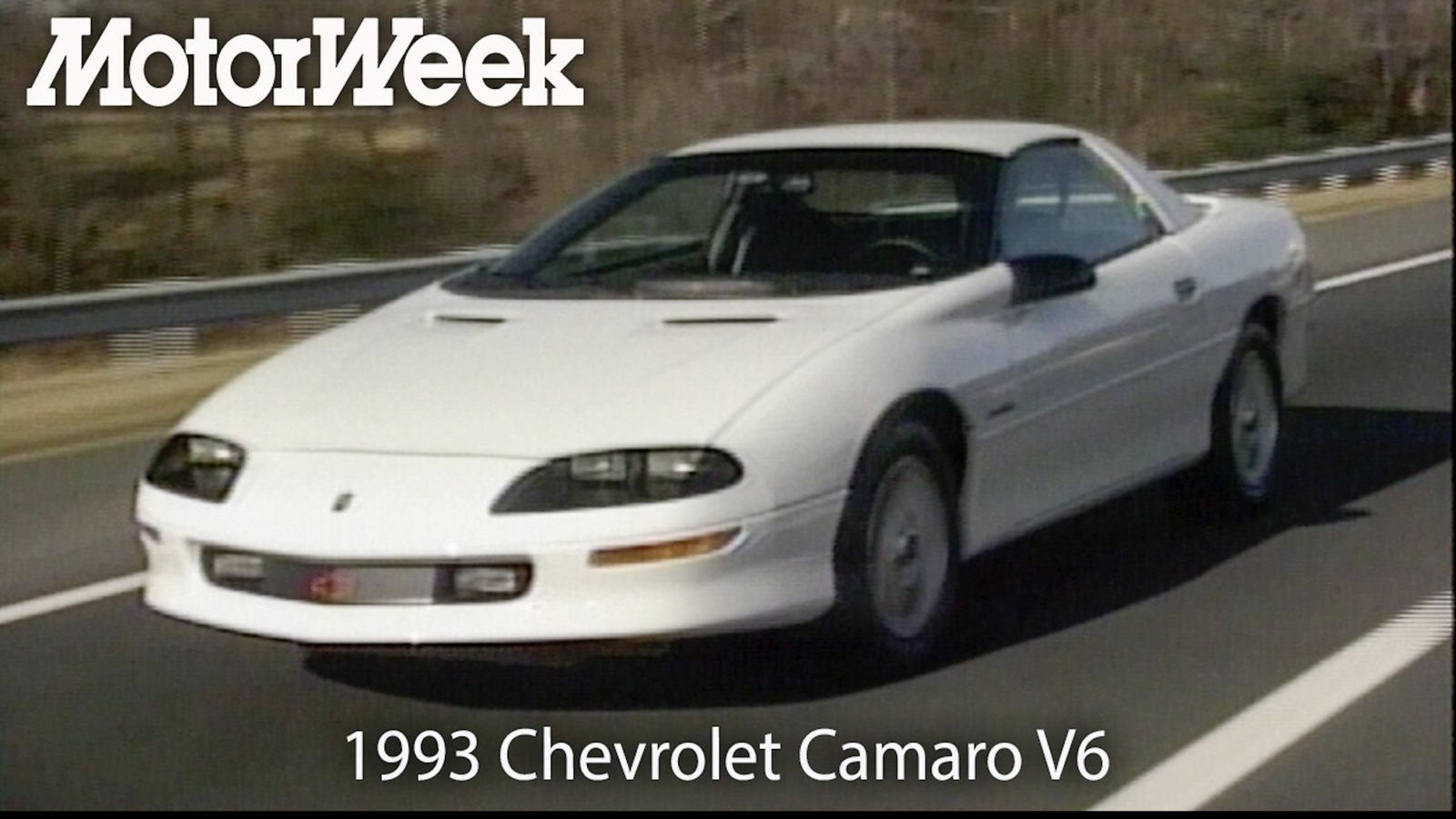
Jalopnik's Logan K. Carter recently made the argument that the modern turbocharged four-cylinder now found at the bottom of the muscle-car ladder is a genuinely better engine than the disappointing V6s that automakers used to slot in. The case rests largely on a MotorWeek retro review of a 1993 Chevrolet Camaro equipped with the base V6 — a car whose measured performance makes the modern four-cylinder look like a revelation. Traditionalists complain that a turbo four doesn't have the right cylinder count for a muscle car. The stopwatch, however, tells a different story.
What MotorWeek Measured in 1993
The Camaro tested by MotorWeek was fitted with a four-speed automatic, a transmission that was never going to flatter straight-line acceleration. Even granting that handicap, the numbers were bleak.
- A 0-to-60 mph sprint of 8.8 seconds
- More than half a second slower than a Nissan Altima from the same model year
- The Altima test car benefited from a manual transmission
- A four-speed automatic handled shifting duties in the Camaro
That Altima comparison is the part that lands hardest. The Altima was a mainstream family sedan, not a performance car, and the 1993 Camaro was supposed to be a rear-drive pony car with a long performance heritage. The fact that a base Camaro could be handily outrun by a four-cylinder family sedan is a reminder that the badge on the hood and the engine under it were not always speaking the same language.
Why the Old V6s Fell So Short
There is a simple structural reason the base engines of that era underperformed. Automakers frequently sourced them from the broader family-car parts bin, which meant a V6 designed for commuting duty, fuel economy, and smoothness rather than for sporting intent. Pairing that engine with a four-speed automatic compounded the problem: fewer ratios meant wider gaps between gears, slower downshifts, and an engine forced to work outside its narrow powerband.
The result was a car that looked the part but couldn't deliver on it. Buyers who wanted the styling and the rear-drive chassis without the V8 price tag got a vehicle that was outmatched by ordinary sedans — a compromise that undercut the entire premise of buying a muscle car in the first place.
The Turbo Four Changed the Math
The Chevrolet Camaro has since been discontinued once again, but when its most recent generation arrived in 2016, the base engine was a turbocharged 2.0-liter four-cylinder producing 274 horsepower and 295 lb-ft of torque. Car and Driver recorded a 5.4-second 0-to-60 time in a 2016 Camaro 2.0T equipped with the six-speed manual — more than half a second quicker than a V6-powered Nissan Altima of that period.
- Engine: turbocharged 2.0-liter four-cylinder
- Output: 274 horsepower and 295 lb-ft of torque
- Transmission in the tested car: six-speed manual
- Measured 0-to-60: 5.4 seconds
Beyond raw acceleration, the lighter weight of the four-cylinder car drew praise for delivering genuinely athletic handling dynamics — an area where the 1993 Camaro could at least claim some credibility, but where the modern car simply does more with less mass over the nose. Turbocharging meant the smaller engine could punch well above its displacement, while a modern manual or multi-speed automatic kept it in its powerband.
The Mustang EcoBoost Tells the Same Story
Ford's answer to the same question follows an almost identical arc, and unlike the Camaro, it remains on sale. The Mustang EcoBoost uses a turbocharged 2.3-liter four-cylinder rated at 315 horsepower and 350 lb-ft of torque. It is offered only with a 10-speed automatic, and Car and Driver's testing produced a 4.5-second 0-to-60 run. That is significantly quicker than any family sedan, and a full second quicker than the well-regarded Honda Accord 2.0T.
The contrast with Ford's own history is stark. When MotorWeek tested a 1997 Mustang V6 convertible with a four-speed automatic, it recorded a 0-to-60 time of 10.1 seconds — a figure that would now be considered sluggish for a compact crossover. The EcoBoost convertible from 2015, even by that point an older design with a six-speed automatic, was already operating in an entirely different performance universe.
Cylinder Count Is Not the Same as Capability
The objection to four-cylinder muscle cars usually centers on identity rather than performance. A V8 rumble is part of the cultural package, and a turbo four simply sounds different. That is a legitimate aesthetic preference. But it is not an engineering argument, and the data does not support the idea that fewer cylinders automatically means less car.
Modern turbocharging, direct injection, and tightly spaced multi-speed transmissions have fundamentally changed what a small-displacement engine can do. Torque arrives early and holds across a broad band, which is exactly the characteristic that makes a car feel quick in everyday driving. Meanwhile, the weight saved over the front axle pays dividends in steering response and balance — benefits that show up every time the car turns, not just when the throttle is pinned.

The Nostalgia Trap
Retro reviews like MotorWeek's serve a useful purpose: they replace memory with measurement. Decades of nostalgia have convinced many enthusiasts that older base-model cars were honest, analog, and underrated. The 8.8-second Camaro and the 10.1-second Mustang suggest something different — that the bottom of the lineup really was the weak point of the breed, and that buyers were paying for appearance rather than capability.
Today's base muscle cars are criticized for the opposite reason: they are seen as too sophisticated, too turbocharged, too far removed from the V8 template. Yet a 4.5-second Mustang or a 5.4-second Camaro would have been extraordinary performance in the 1990s, and not just for an entry-level car. The modern four-cylinder is quicker than many V8s of the era it supposedly embarrasses.
The Case for the Affordable Performance Car
The real value of the turbo-four formula is accessibility. A base muscle car keeps the styling, the rear-drive layout, and the chassis tuning that make the model desirable, while lowering the price of entry and improving fuel economy. For drivers who want the shape and the handling without the insurance premiums and fuel bills of a V8, that trade-off is increasingly difficult to argue against.
The honest conclusion is that the entry-level muscle car has finally caught up with its own marketing. It took roughly two decades, a shift from naturally aspirated V6s to turbocharged fours, and transmissions with far more ratios than the old four-speed automatics, but the cheap version is no longer the embarrassing one. Judged by the same stopwatch MotorWeek used in 1993, the modern turbo four wins decisively — and that is a change worth celebrating rather than mourning.
This article is based on reporting by Jalopnik. Read the original article.
Originally published on jalopnik.com