Honda is preparing its first body-on-frame pickup
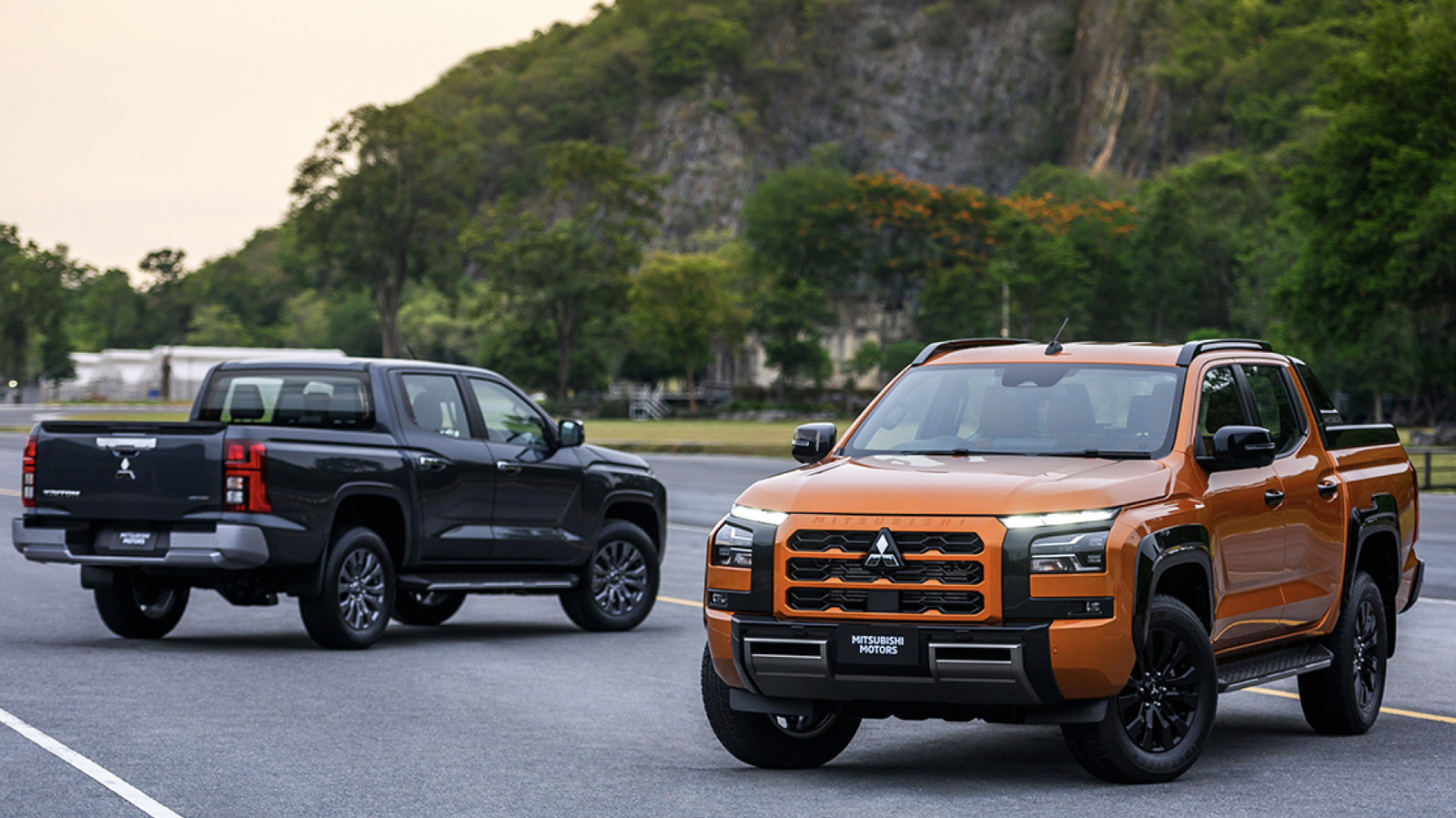
Honda plans to enter a segment it has largely avoided by selling its first body-on-frame pickup truck in 2028. The vehicle will be based on Mitsubishi’s Triton, a one-ton pickup built around a ladder-frame architecture, and is intended primarily for Southeast Asian markets.
The move gives Honda access to a more traditional, rough-duty pickup format than the unibody Honda Ridgeline. It also marks the first announced product outcome of an agreement Honda and Mitsubishi reached in 2024, as the companies seek ways to compete in markets facing increasing pressure from Chinese rivals.
Honda says its version of the truck will have styling sufficiently distinct from the Mitsubishi Triton to differentiate the two products. Important details remain unresolved or undisclosed, including the truck’s final name, exact market list, planned annual volume and whether it could be sold in North America.
A platform-sharing strategy for a competitive region
By using Mitsubishi’s existing platform rather than engineering an all-new truck from the ground up, Honda can enter the ladder-frame pickup market with a shorter route to production. That approach is especially relevant in Southeast Asia, where one-ton pickups are a major part of the vehicle market and must serve both commercial and personal uses.
Honda’s current Ridgeline occupies a different position. It is built around a unibody structure and is often aimed at buyers who value on-road refinement and everyday usability. A body-on-frame pickup has a separate frame beneath the body, a layout associated with tougher work applications and greater off-road-oriented expectations in many markets.
The project is also part of a wider strategic relationship among Japanese manufacturers. Mitsubishi is partly owned by Nissan, and the scope of Nissan’s direct involvement in the Honda-Mitsubishi truck arrangement has not been announced. The companies have said they will continue to deepen their strategic partnership following the failure of a proposed Honda-Nissan merger in 2024.
Mitsubishi gains volume for its Thai production base
For Mitsubishi, supplying a Honda-badged truck could help improve utilization at its Laem Chabang plant in Thailand, where the Triton is produced. The facility has annual capacity for 420,000 vehicles, but made about 170,000 in 2025, according to Automotive News as cited by Jalopnik.
That difference between capacity and recent output leaves substantial room for additional production. A Honda version of the Triton could add demand without requiring Mitsubishi to establish a separate vehicle architecture or factory line for the partner brand.
Mitsubishi is also expected to use the underlying truck platform for a revived and redesigned Pajero/Montero SUV slated to arrive in the coming months. The combination of a new SUV and a Honda-branded pickup could help the company make more use of the shared manufacturing base.
Platform sharing is common across the auto industry, but the commercial value depends on execution. Honda will need a recognizable design and a clear market position, while Mitsubishi must ensure the arrangement adds volume without undermining demand for the Triton itself. Honda’s statement that the truck will be visually differentiated signals that brand separation will be part of the plan.
China competition shapes the business case
The reported rationale is not simply to add another model. Honda is responding to weak sales in China and to growing Chinese competition in other regions. For established Japanese manufacturers, the challenge is to maintain relevance and cost competitiveness while consumer expectations, pricing pressure and product cycles move quickly.
A shared ladder-frame pickup provides a practical answer in markets where a conventional truck is a credible commercial product. It allows Honda to offer a vehicle category it lacks without committing immediately to the full cost and risk of a standalone program. For Mitsubishi, which already has the vehicle and production infrastructure, it creates an opportunity to spread platform costs across more units.
The arrangement may also signal a broader change in how the Japanese industry responds to pressure from newer global competitors. Partnerships can deliver scale, shared procurement and faster product coverage even when a full corporate merger is not viable. The Honda-Mitsubishi project offers a specific, visible example: one company supplies the basic truck architecture and manufacturing base, while the other brings its own brand, design treatment and sales network.
Key questions still remain
Much of the truck’s final form is still unknown. Honda has not identified all of the countries where it will be sold, nor has it said how many units it expects to sell each year. A Honda spokesperson also declined to say whether North America is among the target regions.
Those decisions will determine how consequential the vehicle becomes for Honda. A Southeast Asia-focused model would address a strategically important regional gap while keeping the program closely tied to the Triton’s existing production footprint. A wider rollout would make it a more significant change to Honda’s global truck portfolio.
The 2028 launch date means the companies still have time to refine positioning and determine how much engineering work will separate the Honda from its Mitsubishi counterpart. Yet the core decision has already been made: Honda is using a partnership to enter the body-on-frame pickup market, while Mitsubishi uses its established Triton program and available Thai capacity to support that expansion.
For buyers, the result should be a new Honda truck aimed at a different task than the Ridgeline. For the companies, it is a test of whether focused industrial cooperation can help Japanese brands regain ground in a more competitive global vehicle market.
This article is based on reporting by Jalopnik. Read the original article.
Originally published on jalopnik.com