An early electric vehicle still on the road
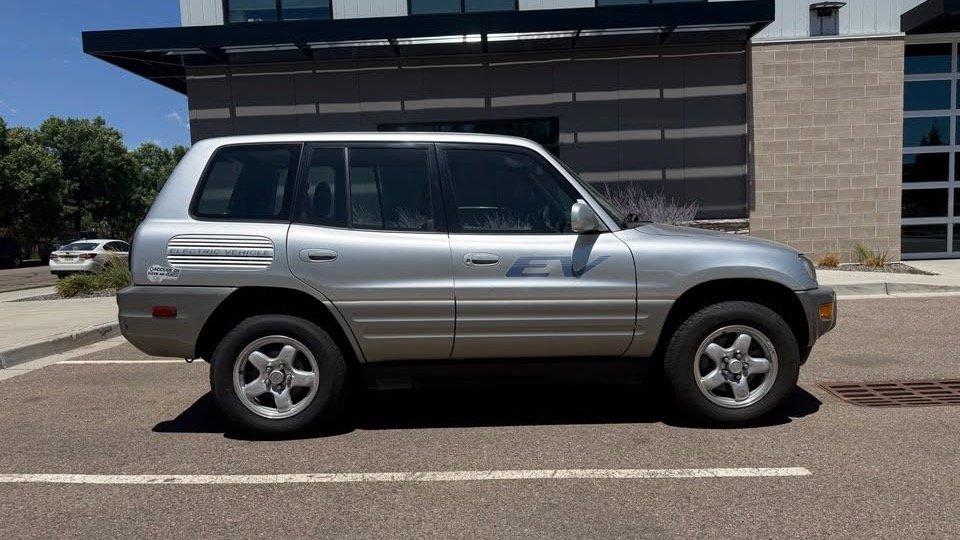
A 2002 Toyota RAV4 EV offered for sale in Fort Collins, Colorado, is a small but striking reminder that the modern electric-vehicle era did not begin with the Tesla Roadster or Nissan Leaf. According to the seller, the vehicle still runs and drives with its original battery pack, despite its age and a number of cosmetic issues.
The asking price is $2,000, and the seller describes the vehicle as a project car. That warning is warranted: the vehicle is old, its electric components are uncommon, and anyone collecting it is advised to bring a trailer. Yet its continued operation is notable because the RAV4 EV belongs to an earlier generation of battery-electric vehicles that was produced in limited numbers and largely disappeared from public view.
Built for California’s zero-emission mandate
Toyota introduced the first-generation RAV4 EV in 1997 in response to California’s early zero-emission vehicle mandate. The policy pushed major automakers to build and sell limited batches of battery-electric cars and trucks, creating an experimental but consequential period for electric transportation.
For most of its production run, the RAV4 EV was available primarily to fleets. Retail sales began shortly before production ended in 2003, and only 328 vehicles reached general customers, according to the source report. That limited availability makes surviving examples unusual, particularly those that remain drivable.
The RAV4 EV was based on Toyota’s conventional compact sport utility vehicle, rather than being designed as a bespoke electric platform. Its survival therefore illustrates a practical approach that would later become familiar across the industry: adapt a broadly proven vehicle architecture while developing a dedicated electric propulsion system.

A nickel-metal-hydride battery still in service
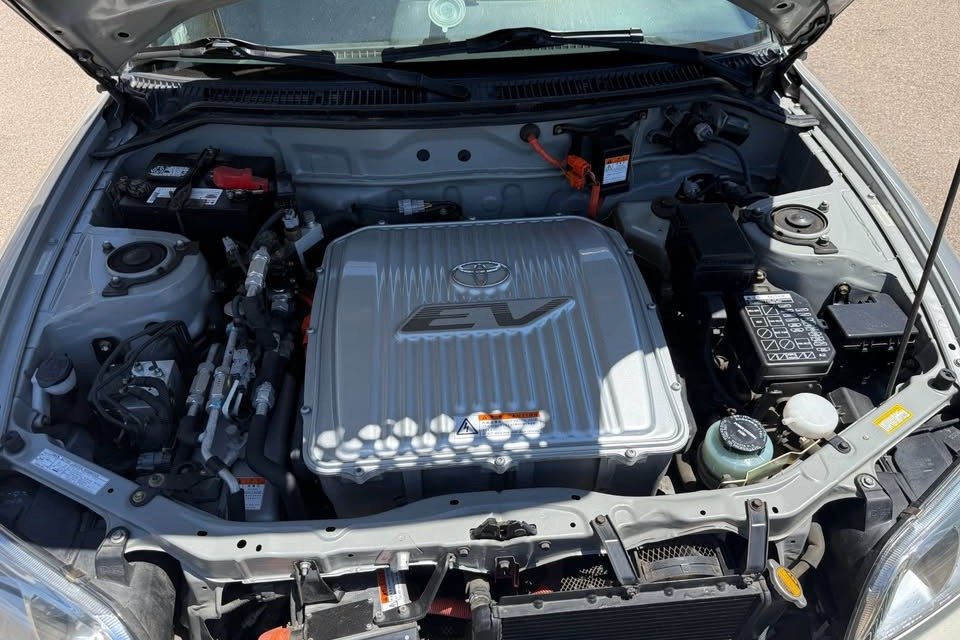
The vehicle’s 27.4-kilowatt-hour battery pack used nickel-metal-hydride, or NiMH, chemistry. Toyota used related battery chemistry in hybrid vehicles for many years. When new, the RAV4 EV carried an Environmental Protection Agency-rated range of 95 miles.
Battery age is one of the central questions surrounding early electric vehicles. Capacity can decline over time, and replacement parts, specialist knowledge and charging equipment can be difficult to find. The seller’s claim that this RAV4 EV retains its factory battery does not establish its present range or battery health, but it does show that the vehicle’s original pack has remained functional enough for the car to run and drive.
That distinction matters. Modern EV discussions often focus on rapid charging, large battery packs and long-distance travel. The RAV4 EV came from an era with much more modest expectations, but its continued operation suggests that longevity can be as important a part of electric-vehicle engineering as headline performance.
An obsolete charging system
Charging is one of the vehicle’s most distinctive limitations. The first-generation RAV4 EV used the MagneCharger system also used by General Motors’ EV1. Instead of the plug-and-socket arrangements that became standard on later production EVs, MagneCharger used a paddle-style connector inserted into a dedicated vehicle slot.
The sale includes two MagneChargers connected to NEMA 14-50 plugs, and the seller says the onboard charging equipment works. Their inclusion is important because the proprietary charging system is no longer part of mainstream EV infrastructure. A vehicle may be mechanically serviceable while still being difficult to use if its charging hardware is unavailable.
The RAV4 EV therefore captures both sides of early electrification: durable components and a technology ecosystem that did not survive. Standardized charging connectors, broader public charging networks and more common replacement parts have since become key factors in making electric cars practical at scale.
A preservation project, not ordinary transportation
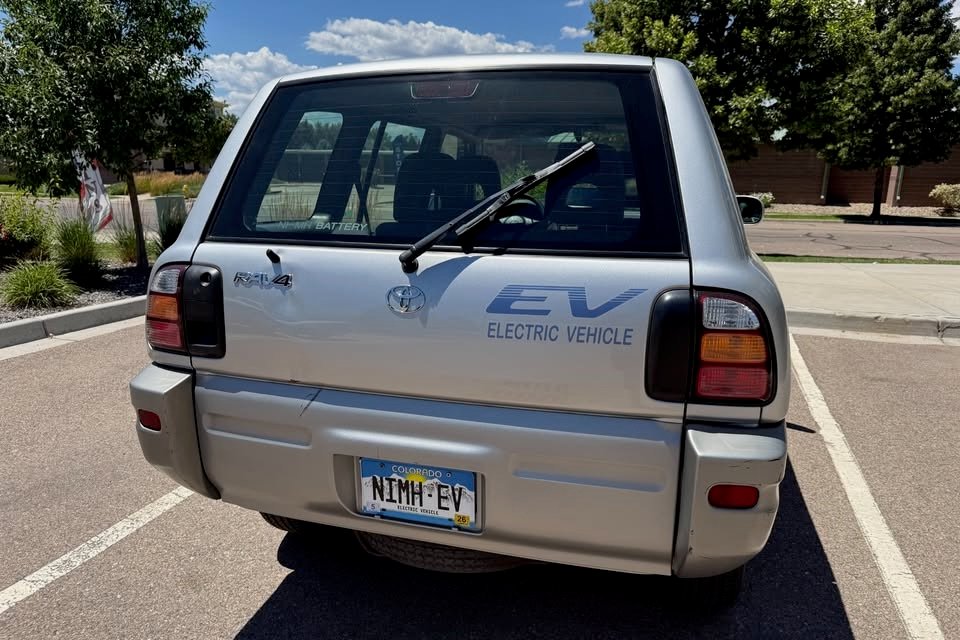
The seller reports that nearly every body panel has dents, dings or scratches, while also stating that the vehicle has not been crashed and has no structural damage. The tires were installed in August 2024 and come from the gasoline RAV4 because the original EV-specific tires are no longer available. The windshield may not be the original heated unit and has a rock chip.
Those details make clear that this is not a pristine collector vehicle. But the RAV4 EV’s value lies in its historical and technical significance. It represents a moment when regulation forced automakers to test electric transportation at a limited scale, long before battery-electric vehicles became a major commercial category.
For an eventual buyer, the car would likely require patience, careful maintenance and a willingness to work with uncommon hardware. For the broader EV story, it offers something more useful: evidence that the industry’s earlier experiments were not merely disposable prototypes. Some were durable machines whose engineering outlasted the market conditions that created them.
This article is based on reporting by The Drive. Read the original article.
Originally published on thedrive.com