Nissan is studying a return for the Z T-top
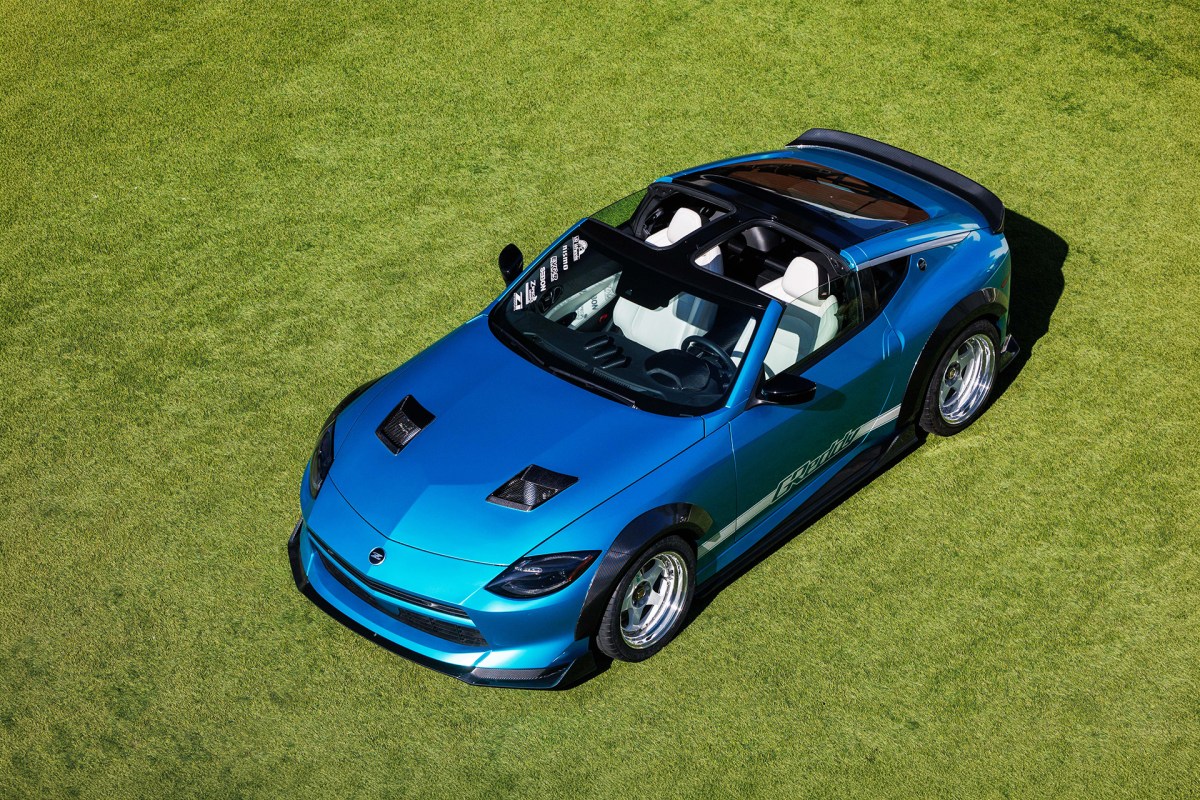
Nissan is working on making a T-top version of its Z sports car a reality, according to the company’s North American planning chief. The effort remains short of a full production approval, and Nissan has not announced a start-of-production date, but the statement moves the idea beyond the status of a show-car conversation.
Ponz Pandikuthira, senior vice president and chief planning officer for Nissan North America, told The Drive at the 2026 Los Angeles Auto Show that people on his team are working on how to make the proposed roof design happen. The company had previously displayed a Z T-top concept in September and encouraged enthusiasts to express demand for the model. Pandikuthira said the response and media attention helped make the message clear within Nissan.
The development is notable because the T-top is closely associated with earlier generations of the Nissan Z, particularly the 1980s and 1990s cars. A return would give the current coupe a removable-roof option that sits between a conventional fixed-roof sports car and a full convertible. Nissan’s comments, however, stop well short of confirming that customers will be able to buy one.
Engineering, not enthusiasm, is the next test
Turning a roof concept into a volume-production vehicle requires more than adapting exterior panels. Removing a significant portion of the roof structure changes the way loads move through a car’s body. Pandikuthira said there are structural implications because reinforcements would be needed after taking roof structure away.
That challenge affects safety, stiffness, weight and the day-to-day behavior of the vehicle. Engineers must preserve adequate rigidity while also accounting for the added components and seals required for removable panels. The company is also studying the tooling needed to build the vehicle at scale, according to Pandikuthira.
Those questions help explain why Nissan has not attached a timetable to the project. The September vehicle may have looked close to production, but it was not a production model. A proposal can appeal strongly to enthusiasts while still needing substantial validation before it can be approved for manufacturing.
Daily usability will be central
The history of T-top cars also shapes the task. Older designs are often remembered for open-air driving, but they have also attracted complaints over leaks caused by aging seals, drains or other roof-system issues. Pandikuthira said a modern Z T-top should be capable of serving as a daily driver without the problems associated with some 1990s-era examples.
Nissan’s existing experience with sunroofs could inform that work, but a T-top is a more consequential design change than a conventional glass panel. The roof pieces must fit reliably, resist water intrusion, operate predictably and preserve the cabin experience in changing weather. The body structure must also be engineered around a configuration that is optional rather than universal.
The executive’s comments suggest Nissan sees the engineering problem as solvable, not settled. That distinction is important for prospective buyers. The company is developing an approach and evaluating the production implications; it has not declared the program complete or committed a vehicle to dealerships.
An option, not a separate limited edition
If Nissan proceeds, Pandikuthira said the T-top would be offered as an option rather than made standard throughout the Z range. He also indicated that the company expects a high take rate, meaning it anticipates substantial customer interest if the feature reaches the market.
Positioning the roof as an option would let Nissan keep the conventional coupe available while giving buyers a more distinctive configuration. It also signals that the company is considering a broader commercial application rather than treating the roof as a small commemorative run. But projected demand is not the same as an announced business case, and Nissan has yet to disclose pricing, trim availability, expected volume or market timing.
The option could become a test of how much room remains for enthusiast-led variation in a modern sports-car lineup. For automakers, niche body styles and roof configurations have to meet contemporary requirements for safety, manufacturing efficiency and quality while still offering a product experience that customers will pay for. A T-top must deliver both the nostalgia enthusiasts want and the usability expected of a new vehicle.
What Nissan has and has not confirmed
Nissan has confirmed that staff are working on the possibility of a Z T-top and that the feature is being considered as an option. It has also acknowledged the need to study structural reinforcement, tooling and volume-production feasibility.
It has not confirmed a final production decision. It has not provided an SOP date, a price, specifications, sales markets or a schedule for revealing a production-ready car. Those unresolved details are the practical milestones that will determine whether the concept becomes a showroom model.
For now, the clearest takeaway is measured progress. The Z T-top has advanced from a fan-facing concept into an active development effort, but it remains a work in progress. Nissan’s next announcements will show whether the company can translate customer interest into a roof design that meets the company’s structural, quality and manufacturing requirements.
This article is based on reporting by The Drive. Read the original article.
Originally published on thedrive.com