A small Greyhound vehicle built for a very big future
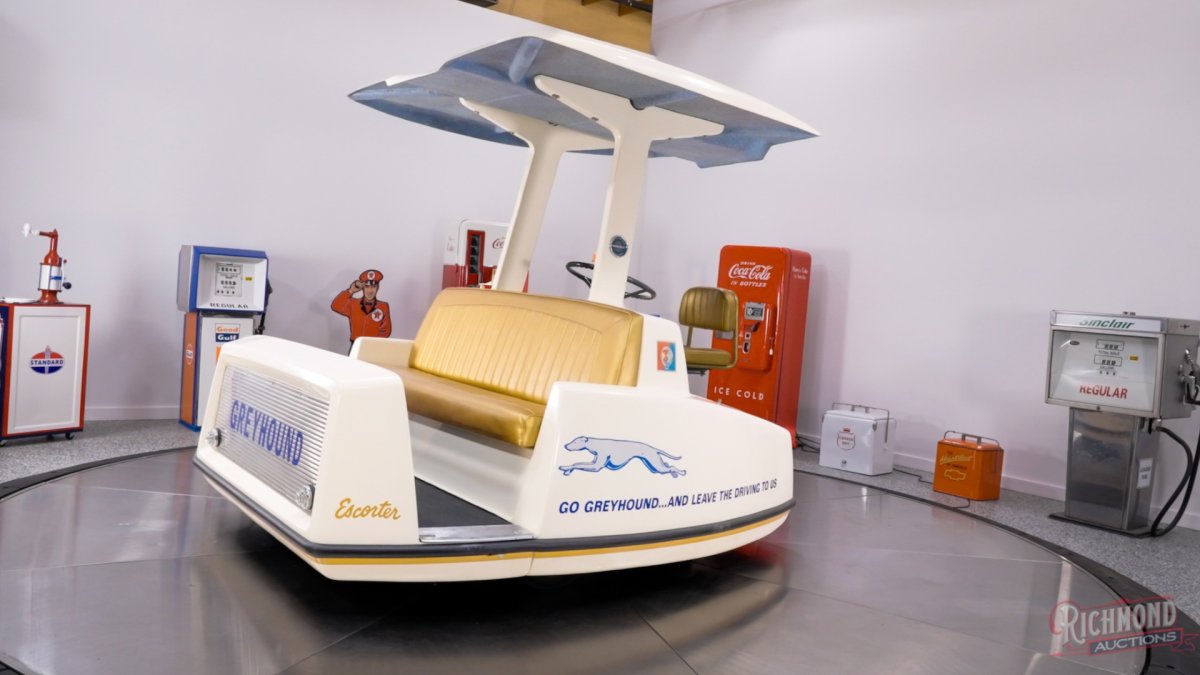
Greyhound is most closely associated with buses, and especially with the domed Scenicruiser that helped define its mid-century image. But the company also briefly explored a much smaller form of passenger transport: an open-air, three-wheeled vehicle called the Escorter.
Built to shuttle visitors around the 1964 New York World’s Fair, the Escorter was conceived as more than a novelty ride. It was designed to carry passengers through a vast event devoted to modern design and technological optimism, while giving the driver a second role as tour guide. Visitors could hire one like a taxi, complete with a meter, or book it by the hour or day.
Its combination of short trips, flexible hiring and guided travel makes the Escorter an intriguing early example of questions that still shape urban transport: what should move people over short distances, how much service should be shared, and whether a vehicle can offer an experience rather than simply a trip from one place to another.
A vehicle shaped by the World’s Fair
The 1964 fair was a showcase for the forward-looking visual language of its era. It also hosted the debut of the Ford Mustang. Greyhound’s Escorter fit that atmosphere. Period marketing described it as “new as tomorrow’s newspaper,” according to the source material, and its open body, compact proportions and unconventional layout gave it a distinctly futuristic character.
The vehicle was reportedly developed with input from Disney, the firm of former General Motors design chief Harley Earl, and Robert Moses, the urban planner who organized the fair. Moses also played a major role in reshaping New York infrastructure around the automobile. That context helps explain why a car-like people mover was chosen for fair visitors rather than a conventional small bus.
Passengers sat on a bench ahead of the driver. The arrangement made the driver visible and positioned the ride as a personal, guided experience. The Escorter was open to the air rather than enclosed like a taxi or bus, a feature that likely reinforced its role as a sightseeing vehicle within the fairgrounds.
An unusual mechanical layout
Greyhound commissioned Kalamazoo Manufacturing Company of Michigan to build 150 Escorters. Kalamazoo was primarily a maker of railroad equipment, making the project an unexpected departure from its usual work.
The Escorter used a fiberglass body on a steel frame. Its powertrain was unusual as well: an Onan two-cylinder gasoline engine drove a hydrostatic system. Instead of using the engine to turn the wheels through a conventional gearbox, the engine spun a hydraulic pump. Pressurized fluid then powered motors at each of the front wheels.
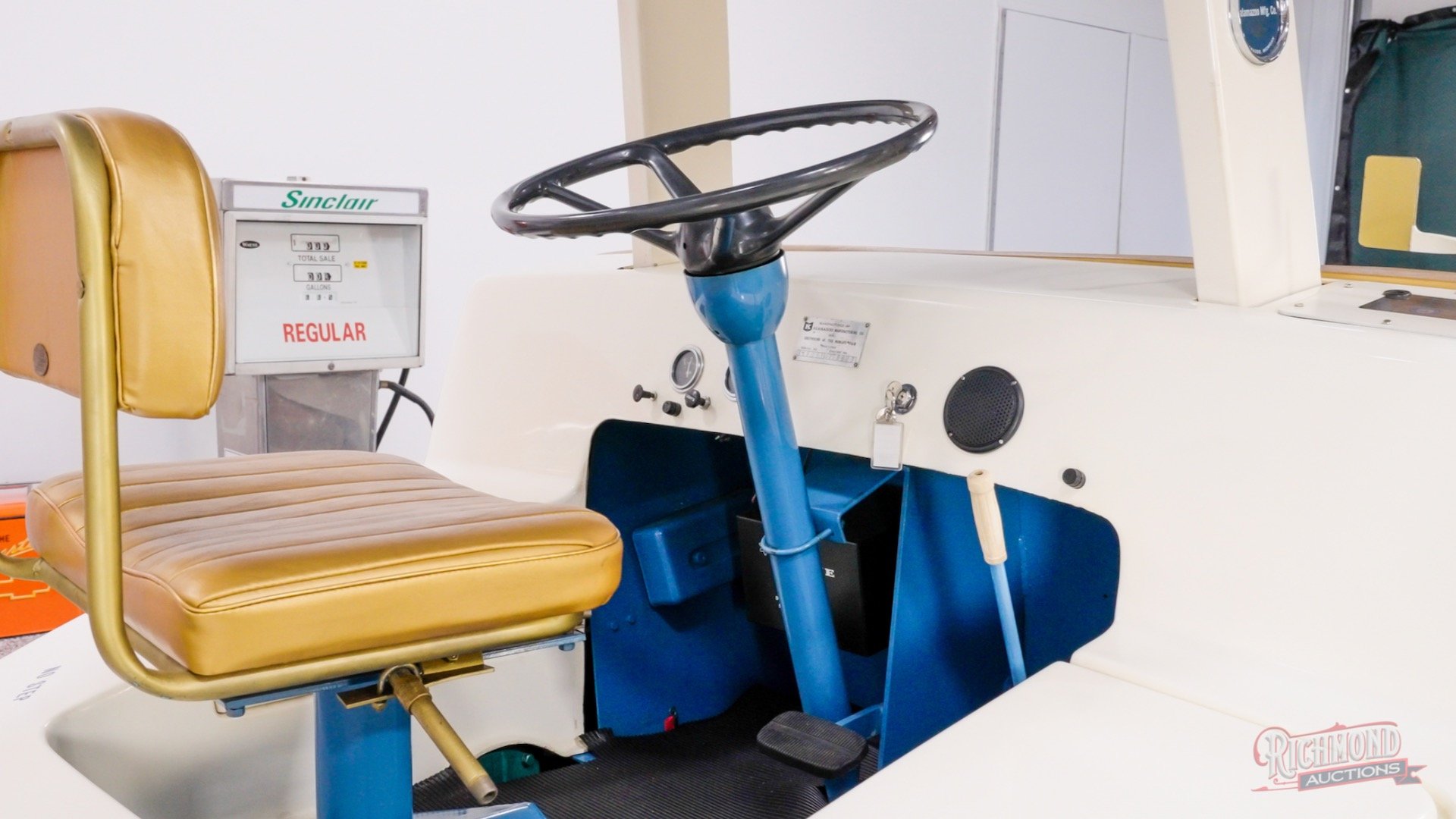
The source material notes that this arrangement probably provided smoother operation than a conventional mechanical drivetrain with a gearbox. Whatever its precise on-road character, the system matched the Escorter’s broader identity as a technical curiosity designed to feel more advanced than an ordinary utility vehicle.
That design also illustrates how the vehicle was built around a specific job. It did not need to serve as a highway vehicle or carry the passenger loads expected of a city bus. Its purpose was to make short-range movement around a special destination feel convenient, visible and memorable.
From fairground transport to collector artifact
Only three working Escorters are believed to survive. One is said to have been restored to original condition. That vehicle later appeared in the 2015 Disney film Tomorrowland, connecting a machine born from 1960s futurism with a later fictional vision of technological possibility.
It was sold at the Barrett-Jackson Scottsdale auction in January 2026 and resold at another auction in October for $38,000. Its value as a collector object reflects not only scarcity but also the peculiar completeness of its design: the Escorter is recognizably rooted in a particular moment when transportation, tourism and promotional spectacle were closely intertwined.
The Escorter was never a blueprint for the everyday city. Still, it anticipated elements of current transport thinking. Its work involved short journeys, on-demand-style hiring, passenger experience and a vehicle smaller than a bus but more service-oriented than a private car. Modern versions of those ideas are often framed around electric propulsion, automation and app-based dispatch. The Escorter approached the same territory using fiberglass, hydraulic drive and a human guide.
A reminder that transport futures often return in new forms
Many mid-century predictions did not become everyday reality. Yet the Escorter shows how easily an old concept can resemble a new one when the technology around it changes. Replace its gasoline engine with an electric motor and remove the driver, as the source notes, and it begins to resemble the kind of last-mile mobility concept that can attract contemporary investment.
That does not mean the 1964 vehicle solved today’s mobility problems. It was created for a controlled, highly specific environment: a World’s Fair, with visitors who could hire a guided ride. But it did test an enduring proposition: that people moving through a complex destination may want something more adaptable and intimate than a full-size bus.
As cities and companies continue to experiment with small shuttles and other last-mile options, the Greyhound Escorter remains a useful historical counterpoint. Its future was never fully realized, but parts of its premise continue to reappear.
This article is based on reporting by The Drive. Read the original article.
Originally published on thedrive.com