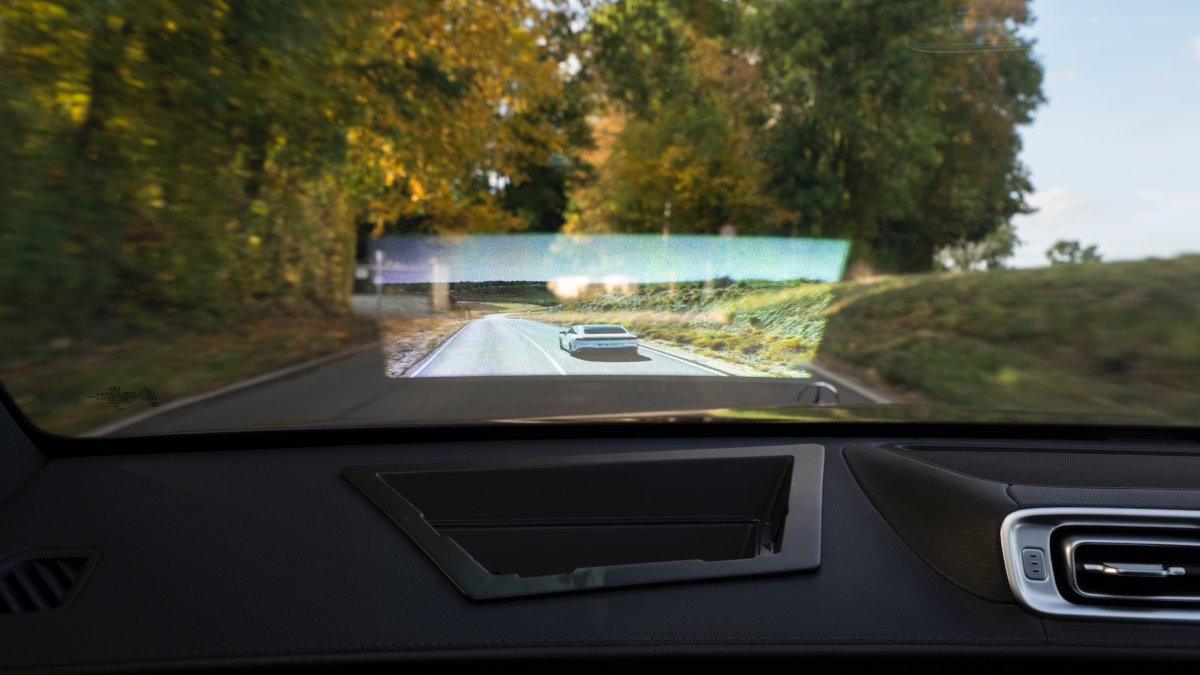
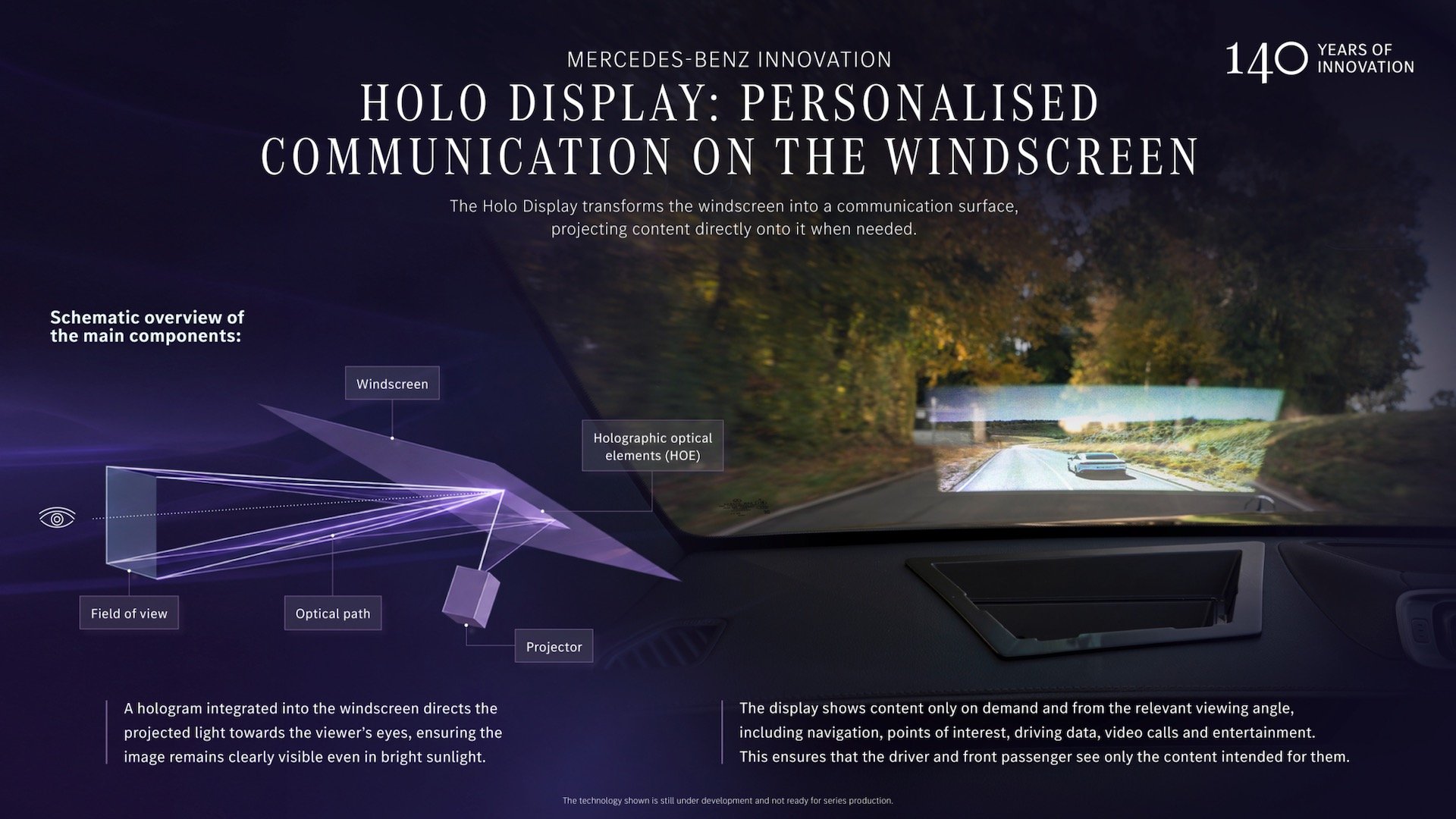
Mercedes-Benz is exploring a way to turn the windshield into a display surface using a dashboard-mounted projector and specially laminated glass. The concept, outlined among technology features the automaker is considering for future production vehicles, would project images across portions of the windshield rather than confining information to conventional dashboard screens.
The idea extends the direction already taken by head-up displays, which place limited driving information in the driver’s forward view. Mercedes’ proposal is broader: the company says its holographic approach could show navigation information, points of interest and video content, with the display arranged so that driver and passenger views can be controlled separately.
How the proposed display works
According to Mercedes, the system pairs a projector built into the dashboard with a windshield containing holographic optical elements. Those elements selectively reflect particular wavelengths of light from the projector, creating images on the glass.
The company says the projected light is concentrated so images remain visible in direct sunlight. It also says the technology can control what is visible from different angles. In the intended use case, content presented for a front-seat passenger could be hidden from the driver, while the driver sees relevant information on their side of the windshield.
Because the system relies on projection, Mercedes says there is no permanently applied display layer obstructing the windshield. The image would appear only when the feature is in use. That differentiates the concept from simply adding another fixed screen to the cabin, although its real-world value would depend on how clearly and safely information can be presented under changing driving conditions.
From head-up displays to a full windshield interface
Automakers have used head-up displays for years to project information such as speed or navigation prompts into a driver’s forward field of view. A windshield-wide projection system would represent a more expansive version of that approach, potentially making the windscreen another configurable part of the vehicle’s digital interface.
Mercedes has already pushed large in-car displays through products marketed as Hyperscreen and Superscreen. The windshield concept suggests the company sees remaining physical dashboard space as insufficient for all the information and entertainment features it may want to provide in future vehicles.
But size is not the only question. More display area may allow information to be positioned closer to where a driver is looking, yet it also creates a design and safety challenge. Windshields are essential sightlines, not just available surfaces. Any interface that occupies them needs to keep critical road information clear and avoid becoming an additional source of distraction.
Passenger entertainment is central to the pitch
Mercedes specifically envisions uses including navigation, points of interest and videos. The ability to limit viewing angles appears intended to make video content more suitable for a passenger without placing it directly in the driver’s view. That follows a broader industry pattern in which automakers have sought ways to offer passenger-facing entertainment while restricting the driver’s access to it.
The proposal also reflects how cabin design is changing as vehicles become more software-defined and screen-heavy. Carmakers increasingly treat the interior as a digital environment in which information, entertainment and vehicle controls compete for space and attention. A projected windshield could give designers another display surface without adding a physical panel above the dashboard.
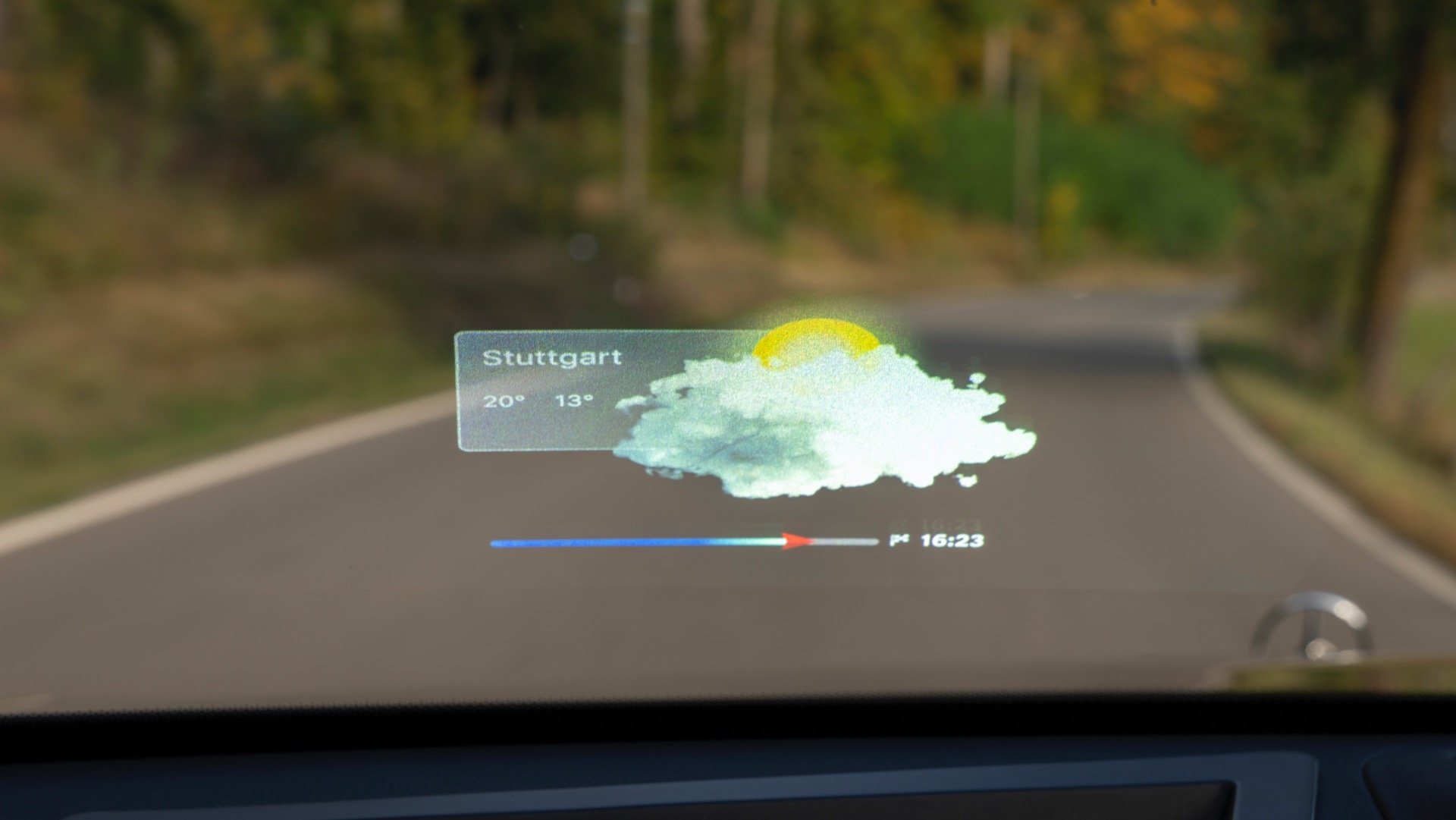
Mercedes is not alone in considering the windshield’s potential as a screen. Nissan design chief Alfonso Albaisa said in a 2024 interview that he expected the windshield to become a screen. Apple also filed a patent application in 2023 for similar technology before it cancelled its widely discussed electric-vehicle project. Those examples do not establish a near-term production timeline, but they show that the idea is circulating across the industry.
A concept with clear constraints
The announcement describes technology Mercedes is considering for future production models, not a confirmed production feature or a rollout schedule. There are also unanswered questions about regulatory approval, brightness at night, interactions with driver-assistance alerts, reliability of the laminated glass and the interface rules needed to prevent distraction.
Those constraints may determine whether the concept progresses beyond demonstration. The technical premise—using holographic optical elements in laminated glass to reflect light from a projector—addresses visibility and viewing-angle control. It does not by itself resolve the human-factors challenge of deciding what should be shown, where it should be shown and when it should disappear.
What to watch next
Mercedes’ announcement is notable because it moves the conversation past the familiar head-up display toward a potentially much larger projection surface. The key question is whether automakers can make that added surface genuinely useful without overloading drivers with visual information.
If the system reaches production, its most practical early applications may be selective: navigation cues, contextual points of interest and passenger-only content. The windscreen may become a display, but its primary purpose will remain unchanged—to give the driver an unobstructed view of the road.
This article is based on reporting by The Drive. Read the original article.
Originally published on thedrive.com