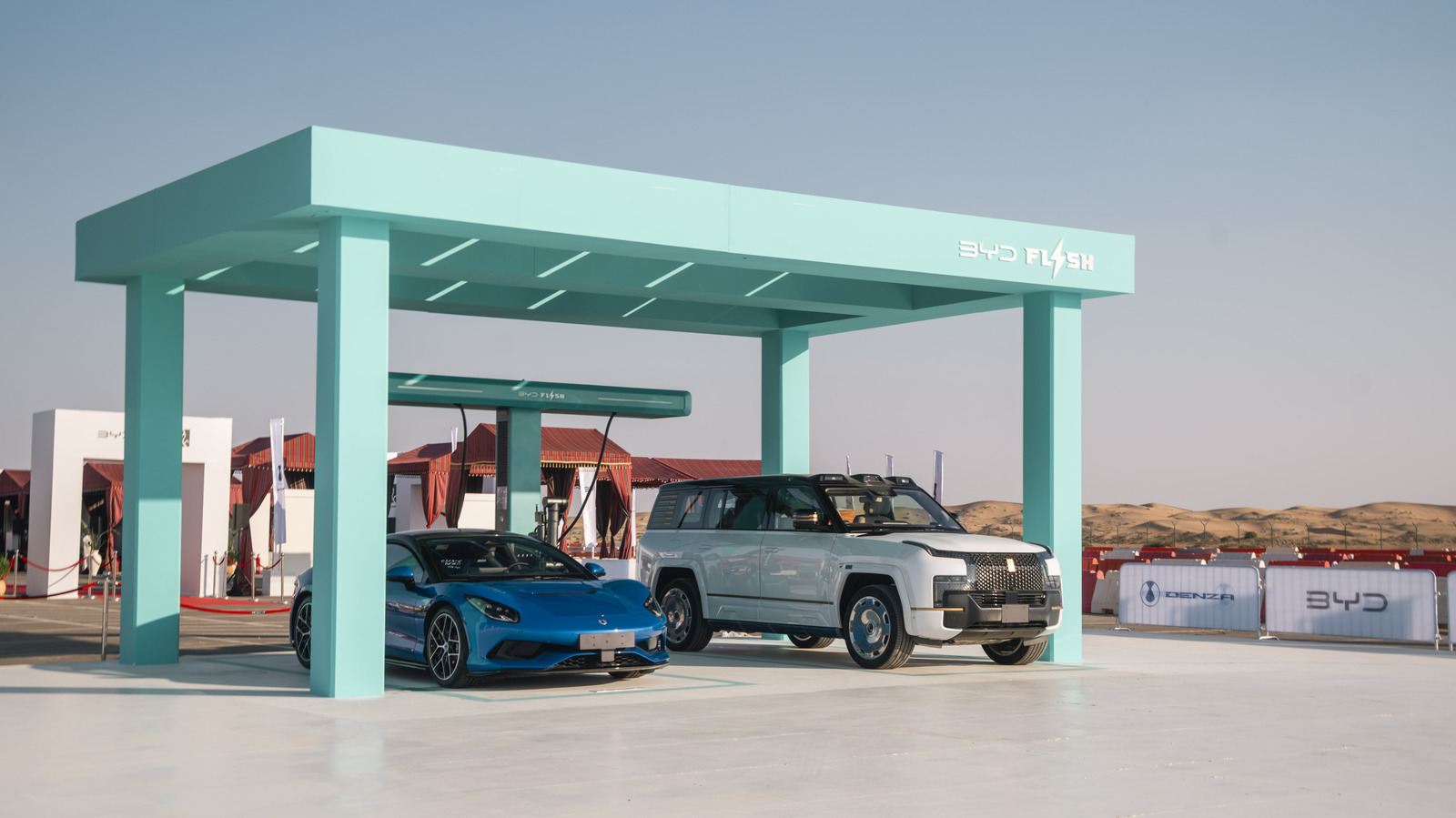
Chinese electric-vehicle maker BYD has unveiled a charging-station concept that combines on-site battery storage, solar generation and optional robotic charging arms. The company says the system is designed to deliver extremely high charging power while reducing dependence on the grid, particularly in remote and sunny locations.
At the center of the plan is BYD’s Flash Charging technology. Like a conventional public charger, the system draws electricity from the grid. But BYD’s design also stores power locally in two 185-kilowatt batteries, according to Jalopnik’s report. The company says that stored energy can be delivered to a vehicle more quickly than electricity drawn directly from the grid alone.
BYD is pairing that storage with solar generation and a more automated charging experience. The announcement is an attempt to address three persistent concerns around electric mobility at once: charging speed, local grid constraints and ease of use.
High-power charging from stored energy
The reported specification is striking. Each Flash Charger has two connectors and can provide up to 1,500 kilowatts when only one connector is being used, BYD says. With two vehicles connected, the system is rated at up to 1,000 kilowatts.
For comparison, the report notes that Tesla’s V4 Superchargers reach up to 500 kilowatts, regular Tesla Superchargers reach 250 kilowatts, and the fastest Electrify America DC chargers can provide 350 kilowatts. A power rating does not by itself determine every driver’s charging time: the vehicle, battery state, temperature and charging curve all matter. Still, BYD’s stated figures point to an effort to push charging infrastructure into a much higher-power category.
BYD’s quoted charging times are similarly ambitious. It says an appropriate vehicle could move from 10% to 70% charge in five minutes, from 10% to 97% in nine minutes, and from 20% to 97% in 12 minutes in minus-30-degree-Fahrenheit conditions. Those are company claims tied to its Flash Charging system and should be understood as performance figures under the conditions used by BYD.
Solar and storage at the site
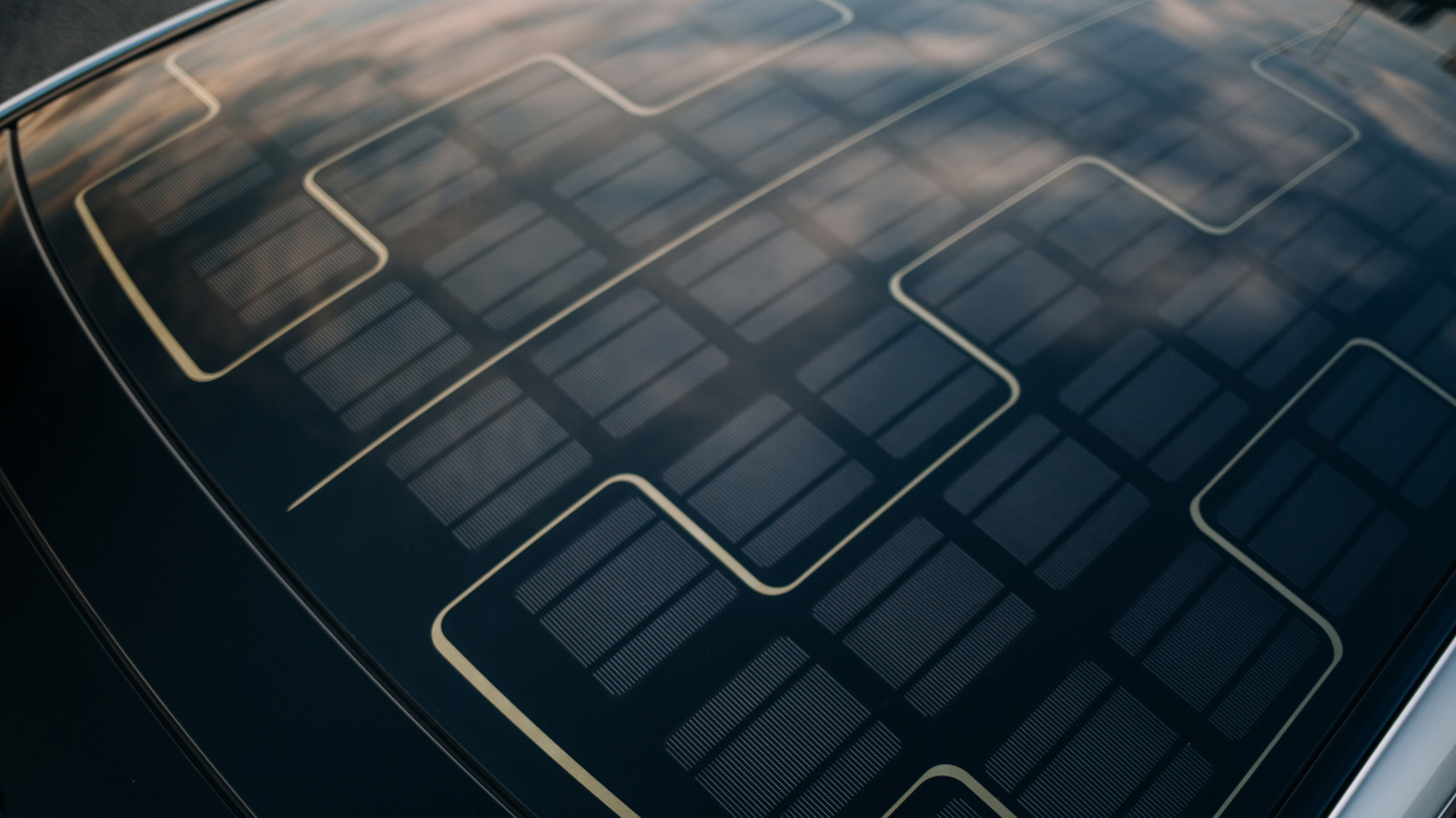
The newest element is the addition of solar power. BYD says solar generation will feed the same local batteries used by its charging system, apparently through panels located on the station canopy. The approach could allow a site to use solar electricity when it is available while keeping energy in reserve for high-power sessions.
That does not eliminate the need for the grid. The underlying Flash Charging system still draws electricity from the grid, and solar output changes with weather, time and location. But on-site generation and batteries can potentially make a charging site less reliant on immediate grid supply, which is particularly relevant in remote, sun-rich regions.
BYD launched the concept in the United Arab Emirates, a market where abundant sunlight and long-distance travel conditions make the combination easy to understand. Local storage can also be important where the grid connection available to a charging plaza is weaker than the peak charging power drivers expect.
Automation remains optional
The proposed stations may also use robotic arms to locate a vehicle’s charging port, open the cover and insert the connector. The idea is not new: Tesla has previously promised automated charging hardware, while Volkswagen, Hyundai and Xiaomi have developed their own versions. BYD’s proposal adds the feature to a broader charging-and-energy system rather than treating it as a standalone convenience.
The technology could reduce the amount of manual work required at a charger, although it also introduces additional hardware that must accurately work across vehicle shapes, port locations and real-world parking positions. BYD does not expect every planned station to receive solar capability or robotic arms immediately, the report said.
A network-scale target
BYD plans to install 6,000 Flash Charging stations worldwide by the end of next year. The target is important because a charging demonstration and a usable network are different propositions. A global rollout requires site access, construction, grid interconnection, maintenance and vehicles that can take advantage of the available power.
Still, the announcement signals how the charging industry may increasingly be built around energy management as well as plugs. Instead of simply connecting vehicles to the grid, operators are looking to combine batteries, local generation and software-controlled power delivery to support faster charging where the grid may not be able to supply peak demand directly.
For BYD, the concept also extends its role beyond vehicle manufacturing. The company is presenting itself as a provider of charging hardware, energy storage and charging automation. Whether its five-minute charging claims translate widely will depend on deployment and compatible vehicles, but its new system places solar-backed storage at the center of its charging-network strategy.
This article is based on reporting by Jalopnik. Read the original article.
Originally published on jalopnik.com