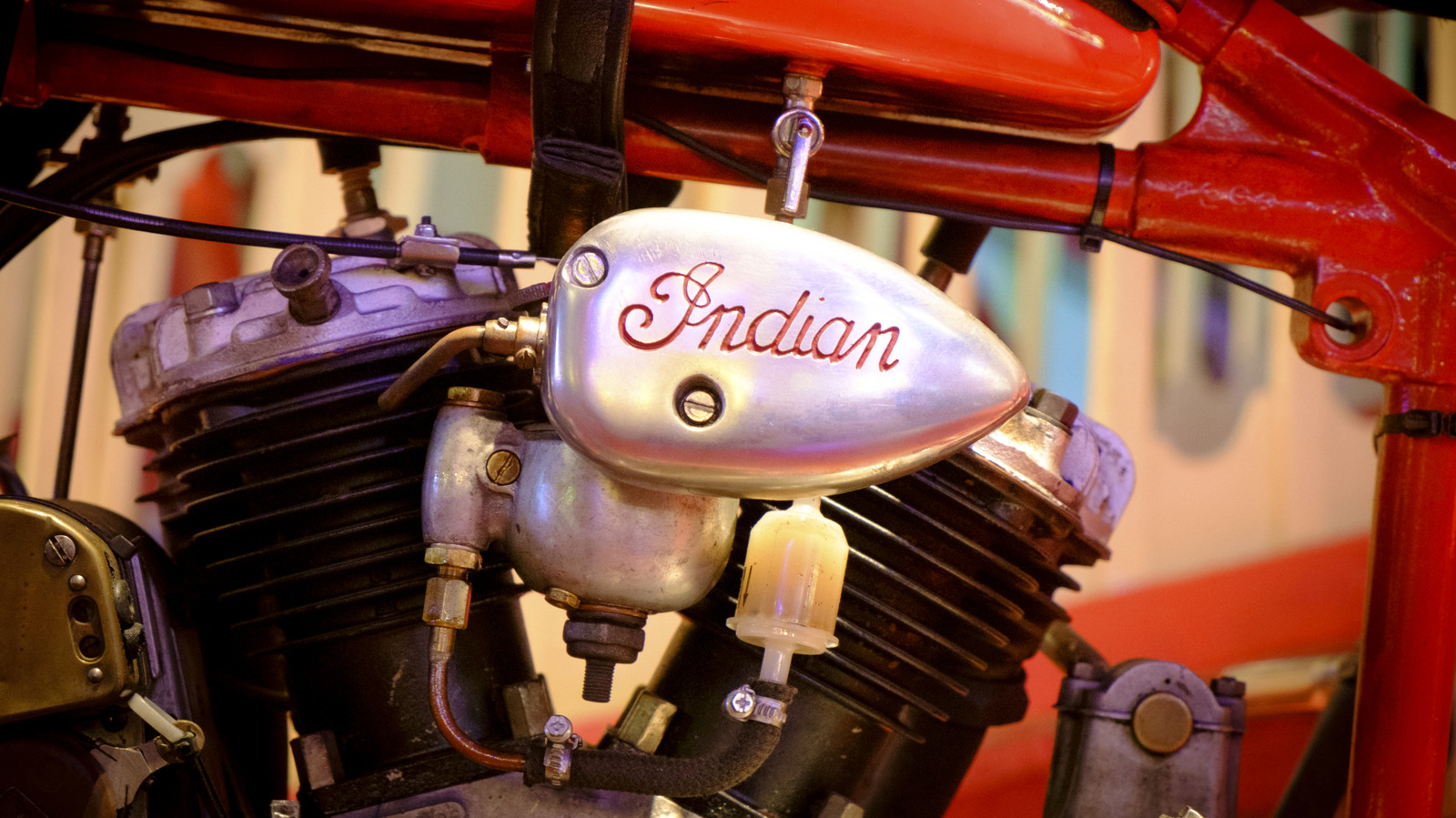
Rarity and price tend to rise together, and few corners of the collector vehicle market illustrate that better than Indian motorcycles built during the first half of the 20th century. Across roughly five decades, the Springfield, Massachusetts manufacturer turned out enormous numbers of ordinary machines, and a very small number of genuinely extraordinary ones. A ranking of ten rare Indian models, ordered from most common to rarest using the best available production figures and, where possible, survivor counts, shows just how wide that gap grew.
Why the Rarest Indians Command Such Strong Money
Indian values follow a simple principle: the scarcer the machine, the higher the price collectors are prepared to pay. That rule of thumb applies to many collectible objects, but it bites hardest on motorcycles that survive in single digits or low double digits. Where a bike has changed hands publicly, the figures come from verified auction sales. Where a machine has never been offered at public auction, the numbers rely on estimates from major auction houses rather than confirmed transactions.
That distinction matters enormously for anyone shopping for, selling, or insuring a vintage Indian. An auction result is a hard data point reflecting what at least two bidders were willing to pay on a given day. An auction-house estimate is a professional judgment about what a machine could bring in the right room, in the right condition, with the right documentation. For the rarest models, estimates are often the only benchmark that exists.
From a Springfield Workshop to the World's Largest Manufacturer
Indian's history starts in Springfield, Massachusetts, where George Hendee founded the Hendee Manufacturing Company in 1897. In 1901, Hendee hired engineer Oscar Hedstrom, and the pair opened a downtown factory dedicated to building gasoline-powered bikes. Their first prototype followed that same year, and the machine reached the streets in 1902.
Growth came quickly. By 1905, roughly 1,000 Indians had been built. By 1913, annual output had climbed to 32,000. During the 1910s, Indian was the largest motorcycle manufacturer in the world. The company also bills itself, officially yet wrongly, as America's first motorcycle company; the oldest motorcycle brand is neither Indian nor Harley-Davidson.
The long run ended in 1953, when Indian closed up shop, a shutdown that inadvertently created one of the rarest and most collectible Indian motorcycles of all time. Decades later, the brand celebrated the 125th anniversary of that first prototype with a series of hand-painted bikes, a reminder of how deep the heritage runs.
How the Ten Models Were Ranked
Rather than sorting by fame or price, the list runs from most common to rarest, producing a spectrum that begins with the 1902 single-cylinder Indian Camelback and finishes with the 1953 Chief. Three inputs shape the order:
- Production figures, using the best counts available for each model.
- Survivor counts, showing how many examples are thought to remain.
- Market values, drawn from verified auction sales where possible and from auction-house estimates where not.
The approach captures something a simple production tally cannot: a motorcycle can be built in modest numbers and still be relatively easy to find, while another can be built in far greater volume and nearly vanish from the market.
The Camelback: Indian's First Production Motorcycle
By modern standards, Indian's earliest production motorcycle barely looks like a motorcycle, but it is the direct product of the Hendee-Hedstrom partnership and therefore central to the brand's story. Hendee met Hedstrom in New York City in 1900 and came away impressed by his motor-pacers. What Hendee wanted to build was a motorcycle for the average rider, driven by a chain rather than the belt drives that were popular at the time but unreliable. Hedstrom combined an Indian bicycle frame with a motor-pacer's engine, and the finished prototype was presented to the public on June 1, 1901.
What the 1903 Camelback Actually Was
A 1903 Camelback displayed at the now-closed National Motorcycle Museum preserved the defining features of Hedstrom's original concept. It carried a 2-horsepower, 13-cubic-inch air-cooled single-cylinder four-stroke engine, a humped rear-mounted fuel tank that gave the model its name, and a traditional diamond-shaped steel bicycle frame holding the whole assembly together. The engines themselves came from the Aurora Automatic Machinery Company of Aurora, Illinois.
Those bicycle bones can be genuinely confounding. Some early Indian models are difficult to distinguish from a bicycle at a glance, and the 1903 Camelback is the clearest illustration of that era, when motorcycles were still visibly evolving out of pedal-powered machines.
Failed Experiments and Government Contracts
Not every rare Indian is rare because it was precious. The 1914 Hendee Special, for example, was an experiment the market rejected. It used an electric starter that failed in service, an engineering misstep that triggered one of the first recalls in motorcycle history. Production was limited, demand never materialized, and the model became a footnote rather than a flagship.
Other low-volume Indian machines came from a very different direction: contract builds for the U.S. Army and the Department of War. Military orders rarely produced large civilian inventories, and the examples that survive tend to be documented differently from showroom bikes, which affects both how they are authenticated and how they are valued.
The 1953 Chief and the Weight of Survivor Counts
At the rarest end of the list sits the 1953 Chief, built during Indian's final year of operation. The closure of the company is inseparable from the bike's collectibility. When a manufacturer shuts down, the last machines off the line carry a historical weight that earlier models simply do not, and that final model year becomes a natural focal point for collectors.
Production totals alone, however, can mislead. A model built in modest numbers but carefully preserved by owners may be easier to locate today than a higher-volume machine that was ridden hard, scrapped, or lost. That is why survivor counts, where they exist, sharpen the picture considerably and why the ranking leans on them wherever reliable figures are available.
What This Means for Collectors
For anyone trying to value a rare Indian, the practical takeaway is that documentation matters as much as the badge. Provenance, originality, and whether a specific machine appears in a verified auction record all shape what a buyer will commit. The ten models on the list occupy a wide range, from early single-cylinder Camelbacks that straddle the line between bicycle and motorcycle to the final Chief built as the factory gates closed.
What unites them is scarcity in its various forms: low production runs, failed experiments that never found an audience, short military contracts, and the abrupt end of an entire company. Each of those paths leads to the same place, a machine that is hard to find, hard to replace, and priced accordingly. The rarer the object, the higher the price, and Indian motorcycles from the first half of the 20th century remain one of the clearest cases in the collector world.
This article is based on reporting by Jalopnik. Read the original article.
Originally published on jalopnik.com