Life on the road is rarely a straight line. There are speed bumps along the way, and the occasional pothole, but that does not stop travelers from enjoying the ride in a recreational vehicle. The category is broad: the RV Industry Association (RVIA), the market's leading trade group, covers both motorhomes and towables along with every distinct type in between. The association frames an RV as a wheels-and-homestead combination, a temporary one, noting that "RVs are not housing" — a description plenty of full-time vanlifers would argue with.
What is harder to argue with is the weather. Travel styles, camping preferences, budgets, and road-trip companions all vary, and so do the demands placed on a mobile home. A solo nomad who stays parked in one place for months has different needs than a family with pets setting out on a seasonal trip. Whatever the itinerary, the rig itself has to be equipped for the elements, inside and out.
The Four-Season Question: Does It Even Exist?
Four-season campers are pitched as the answer for travelers who want year-round, whenever-wherever flexibility. But the label comes with a catch. According to RVShare, there is no industry standard defining what makes an RV an all-season road warrior. Officially, the term is not a recognized classification the way motorhome and towable categories are. You can buy a rig marketed as four-season, or you can retrofit one you already own, but the phrase itself is a claim to evaluate rather than a certified guarantee.

Three-Season Is the Default
Most RVs roll off the line as three-season vehicles, engineered for the generally pleasant months of spring, summer, and fall. When winter arrives, they are typically winterized and put into storage. A four-season rig, by contrast, is built to withstand the extreme freeze and keep functioning. That capability matters in places that refuse to pick a single climate. Think of the false-fall days of the Midwest, when the forecast flips on a dime, or the temperature swings that hit the Playa at Burning Man.
The Systems That Decide the Answer
While there are no formal guidelines, the consensus among experts and enthusiasts lands in roughly the same place. Four areas determine whether a camper can genuinely handle winter: insulation, HVAC, plumbing, and windows.
Insulation and Heating
Insulation comes first. Heavy-duty insulated panels are considered paramount for retaining interior heat inside the shell, and the heating side of the HVAC system has to be able to keep up with the cold outside. A well-insulated envelope reduces how hard the furnace must work, which in turn affects comfort and energy use during long winter stays. Buyers weighing a four-season claim should look at how the shell is constructed, not just at how powerful the heater is.
Plumbing
Water systems are usually where winter camping goes wrong. Tanks, lines, and fixtures exposed to freezing conditions can fail, so plumbing has to be built or modified to tolerate frigid temperatures. For anyone planning to travel, rather than simply park, in cold weather, the plumbing question may be the most consequential item on the checklist, because a broken line can end a trip far from home.
Windows and HVAC
Windows are easy to overlook and just as easy to regret. Glass and frames need to tolerate low temperatures without turning the interior into a heat sink, which is why they appear on nearly every four-season readiness list. The HVAC system, meanwhile, has to handle both directions of the temperature range — heating in winter and cooling in summer — to make year-round use realistic rather than aspirational.

When a Four-Season Camper Makes Sense
All-weather capability is not a need-to-have for every buyer. If your camping calendar runs from spring through fall and your rig sits in storage once the first freeze hits, a three-season model will likely serve you well. The case for a four-season camper gets stronger as your plans get less predictable.
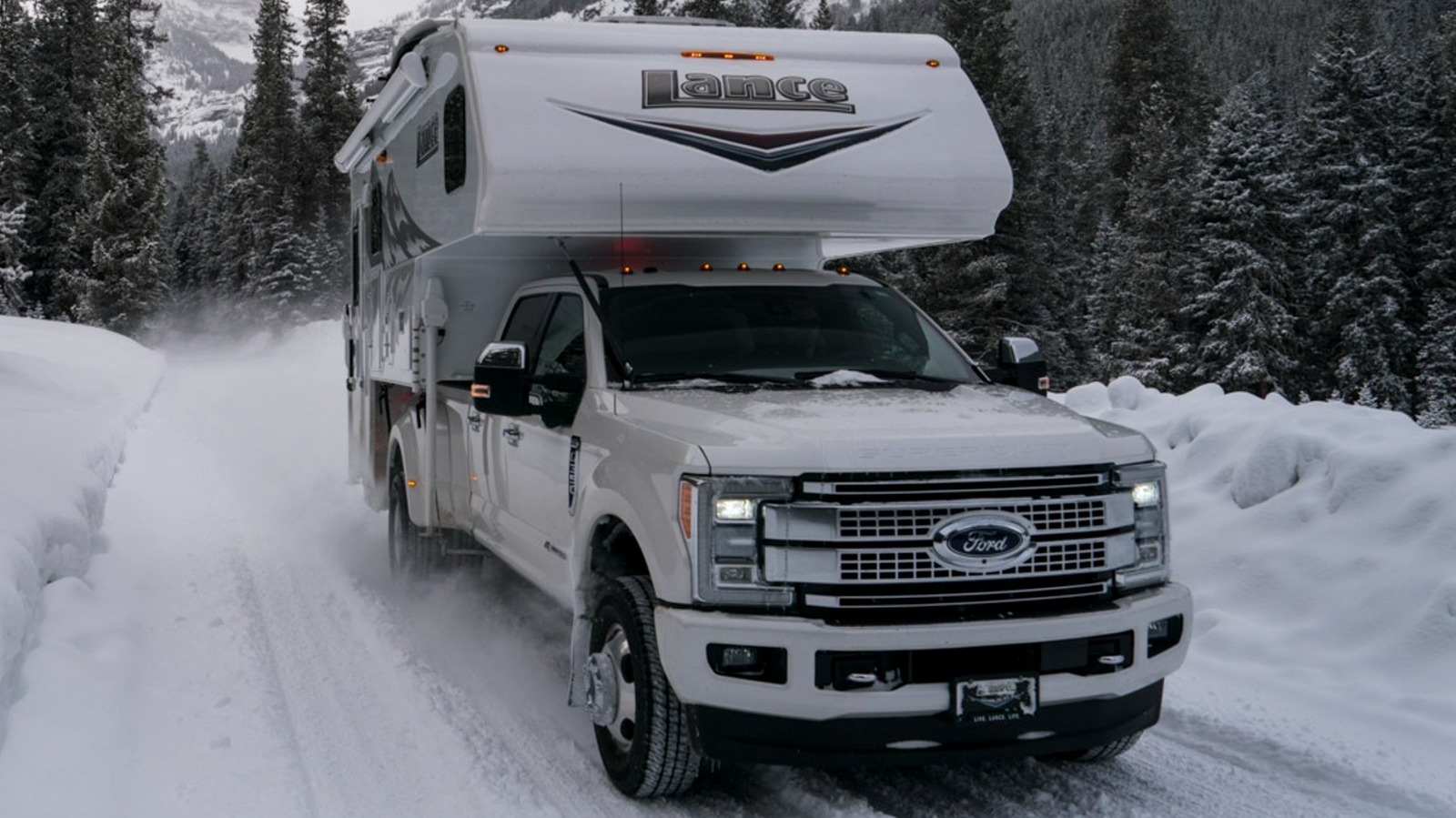
It makes the most sense for dedicated road trippers who want flexibility throughout the year, and for travelers whose destinations do not pause for winter. Ski country, shoulder-season mountain trips, and extended stretches of full-time living all put a premium on a rig that can hold up when temperatures drop. The same applies to anyone who simply refuses to let the calendar dictate when and where they can go.
Buying New or Retrofitting What You Own
Because no standard exists, there are two practical routes to an all-season setup. The first is to buy a camper already marketed as four-season. The second is to upgrade the rig in your driveway. Retrofits tend to target the same weak points the experts identify: insulation, HVAC, plumbing, and windows. Either way, the burden of due diligence falls on the buyer, since the term "four-season" carries no enforceable definition across the industry.
Matching the Rig to the Traveler
There is no single correct answer, because there is no single kind of RVer. The sprawling variety of vehicle types, from conventional motorhomes and towables down to tiny kei campers, exists precisely because one size does not fit all. Travel style, camping preferences, budget, and the people and pets along for the ride all shape the decision. A traveler who stays put for an extended period has a different checklist than a family on a two-week seasonal loop.
The Bottom Line
A four-season camper is less a formal category than a promise about how a rig will perform when the weather turns hostile. No industry body certifies it, and no universal specification defines it. What defines it in practice is attention to insulation, heating and cooling, plumbing, and windows — the four systems that separate a fair-weather trailer from one that can be lived in through a freeze.
For travelers who want the freedom to go whenever and wherever, that capability is worth pursuing. For everyone else, a three-season RV may remain the smarter, more affordable choice, one that hibernates through the winter while its owners plan the next warm-weather route.
This article is based on reporting by Jalopnik. Read the original article.
Originally published on jalopnik.com