A Slower Chapter for Electric Vehicles
The electric vehicle market is entering a noticeably harder stretch, and the latest registration figures make the shift difficult to dismiss as a temporary dip. July data covering the roughly 35 brands that sell electric vehicles in the market showed declines almost across the board, a pattern that points to cooling consumer momentum rather than a single company's stumble.
At the same time, automakers are recalibrating. Rather than pushing ahead with aggressive all-electric timelines, several manufacturers are steering investment back toward gasoline engines and hybrid drivetrains — a strategic reversal that has been accelerated by policy rollbacks under the Trump administration. The combination of softer demand and a friendlier regulatory posture for combustion technology is reshaping how the industry plans its next several model years.
July Registrations Point to a Broad Soft Patch
Registration data is one of the clearest measures of actual consumer behavior, because it reflects vehicles that were purchased and put on the road rather than production targets or factory shipments. By that measure, July was a difficult month for the electric segment.
Most of the 35 brands selling EVs posted significant registration declines. The breadth of the downturn matters as much as its depth: when weakness is spread across nearly every nameplate, it suggests a market-level problem — affordability, charging concerns, incentives, or shifting buyer preferences — rather than an isolated product misstep.
Two Outliers: Tesla Holds Steady, Toyota Surges
Amid the pullback, two results stood apart.
- Tesla saw registrations slip only 0.5 percent — a marginal move that, in a month when much of the field was down sharply, effectively counts as stability.
- Toyota posted an 85 percent gain, a striking contrast to the broader trend.
Those two data points invite competing interpretations. Tesla's near-flat performance may reflect the durability of its brand and its entrenched position, even as rivals lose ground. Toyota's sharp increase, meanwhile, comes from a comparatively small base and from a company whose broader strategy has leaned heavily on hybrids rather than a rapid pivot to fully electric lineups. Both results complicate any simple narrative that the EV market is uniformly collapsing.
Automakers Rethink the Roadmap
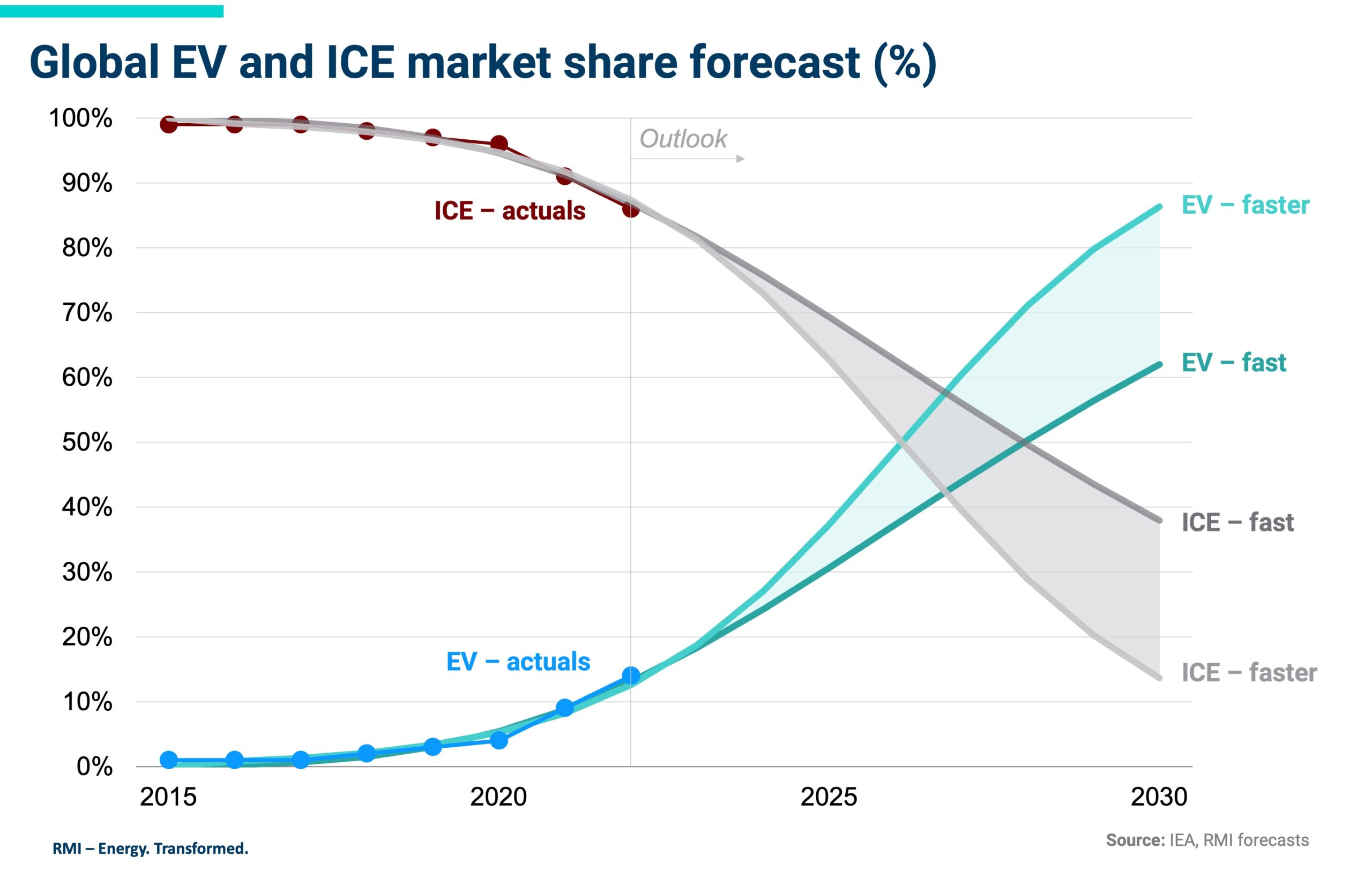
The strategic shift now underway is not limited to one manufacturer. Companies that had announced ambitious targets for electrifying their fleets are revisiting those plans, extending timelines, and reallocating capital toward internal combustion and hybrid programs that they can sell in volume today.
This is a practical response to incentives that have changed on two fronts. First, consumers have proven less willing than expected to absorb the higher upfront cost of an EV when cheaper gasoline and hybrid alternatives sit on the same showroom floor. Second, the regulatory environment has become less punitive toward combustion vehicles, lowering the cost of delaying an all-electric transition.
Hybrids as the Bridge
The clearest beneficiary of this recalibration is the hybrid. Hybrids offer a middle path: meaningful fuel savings without the range anxiety or charging dependency that can deter buyers who lack a garage or reliable access to public charging. For manufacturers, hybrids are also cheaper to engineer onto existing platforms and easier to build profitably.
Toyota's July performance fits neatly into that logic. A company that kept hybrids central to its lineup — rather than treating them as a stopgap on the way to full electrification — is now positioned to capture buyers who want efficiency but are not ready to commit to a plug.
Policy Is Part of the Picture
The rollback of pro-EV policies under the Trump administration has changed the arithmetic for both buyers and manufacturers. Purchase incentives, emissions rules, and regulatory credits all influence how quickly electrification pays off. When those supports weaken, the business case for rushing new electric models to market weakens with them.
That does not mean the transition has stopped. It means the pace is now more dependent on genuine consumer demand, manufacturing cost reductions, and product quality than on policy tailwinds. A market that grew partly because regulation pushed it forward now has to grow on its own merits — a slower and more uncertain proposition.

What to Watch Next
- Whether the declines persist. A single month can be noise; consecutive months of broad registration drops would confirm a structural slowdown.
- Tesla's resilience. A 0.5 percent dip is a narrow cushion, and the company's ability to hold share while rivals retreat will be tested.
- Toyota's trajectory. An 85 percent gain is eye-catching, but sustaining it against a soft market is another matter.
- Hybrid and gas investment. Watch how aggressively automakers redirect capital away from dedicated EV programs.
- Policy signals. Further rollbacks or reinstated incentives would each change the calculus quickly.
The Long Slog Ahead
The phrase capturing this moment is accurate: this is a slog, not a collapse. The vast majority of brands selling EVs lost ground in July, and the industry has responded by hedging — keeping combustion engines in production, elevating hybrids, and stretching out electrification timelines they once advertised as fixed.
For consumers, that hedging may translate into more choice and less pressure to adopt a technology before they are ready. For the EV industry, it means the next phase of growth will be harder won: less buoyed by regulation, more exposed to competition from hybrids and efficient gasoline models, and increasingly dependent on convincing mainstream buyers rather than early adopters.
The next several months of registration data will show whether July was an inflection point or simply a weak month in a cooling market. Either way, the strategic pivot toward gas and hybrid powertrains is already underway — and the companies best positioned for this environment may be those with flexible lineups rather than those with the most ambitious electric-only promises.
This article is based on reporting by Automotive News. Read the original article.
Originally published on autonews.com