A Rolling Symbol of 1950s Ambition
There was a time when every leg of a journey carried a sense of occasion. Passengers boarded tail-finned sedans to cruise Route 66, settled into first class on airliners where meals arrived on real china, and stepped onto long-distance buses that looked as though they had been designed to be admired rather than merely endured. Decades of engineering progress and tight government regulation have made travel faster and far more predictable, but something aesthetic was traded away along the way. Today's motorcoaches are, by and large, anonymous boxes built to move people cheaply across long distances — and little else.
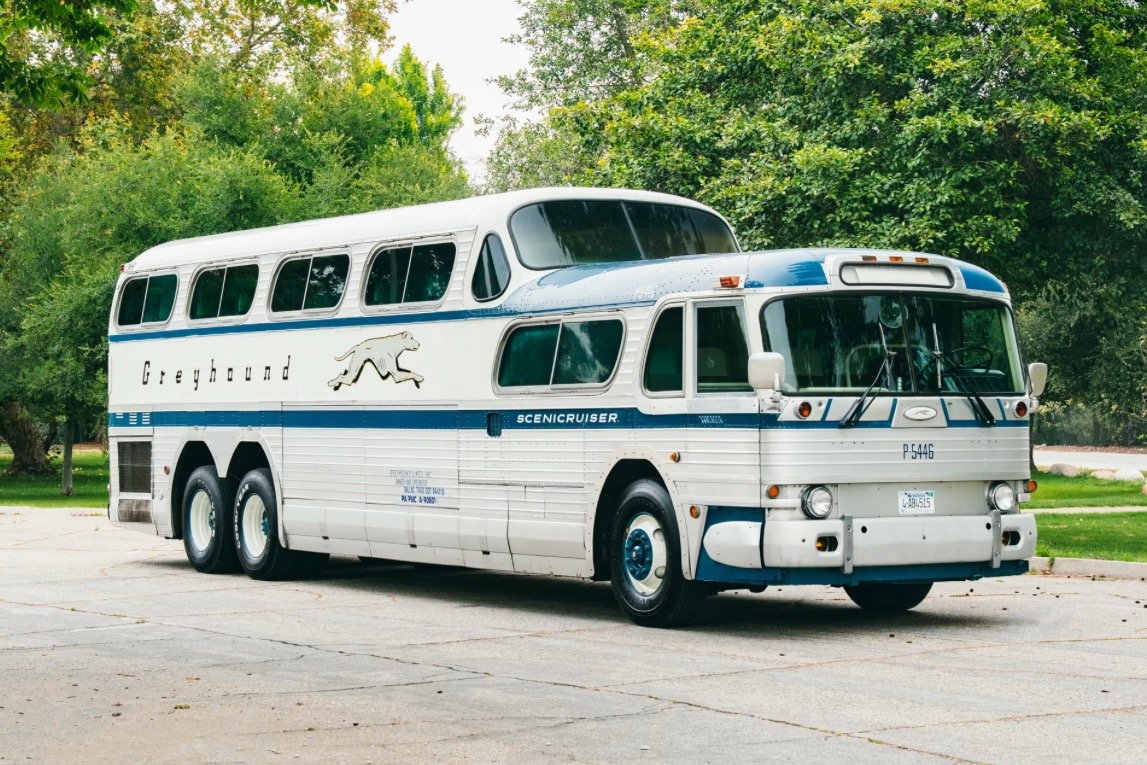
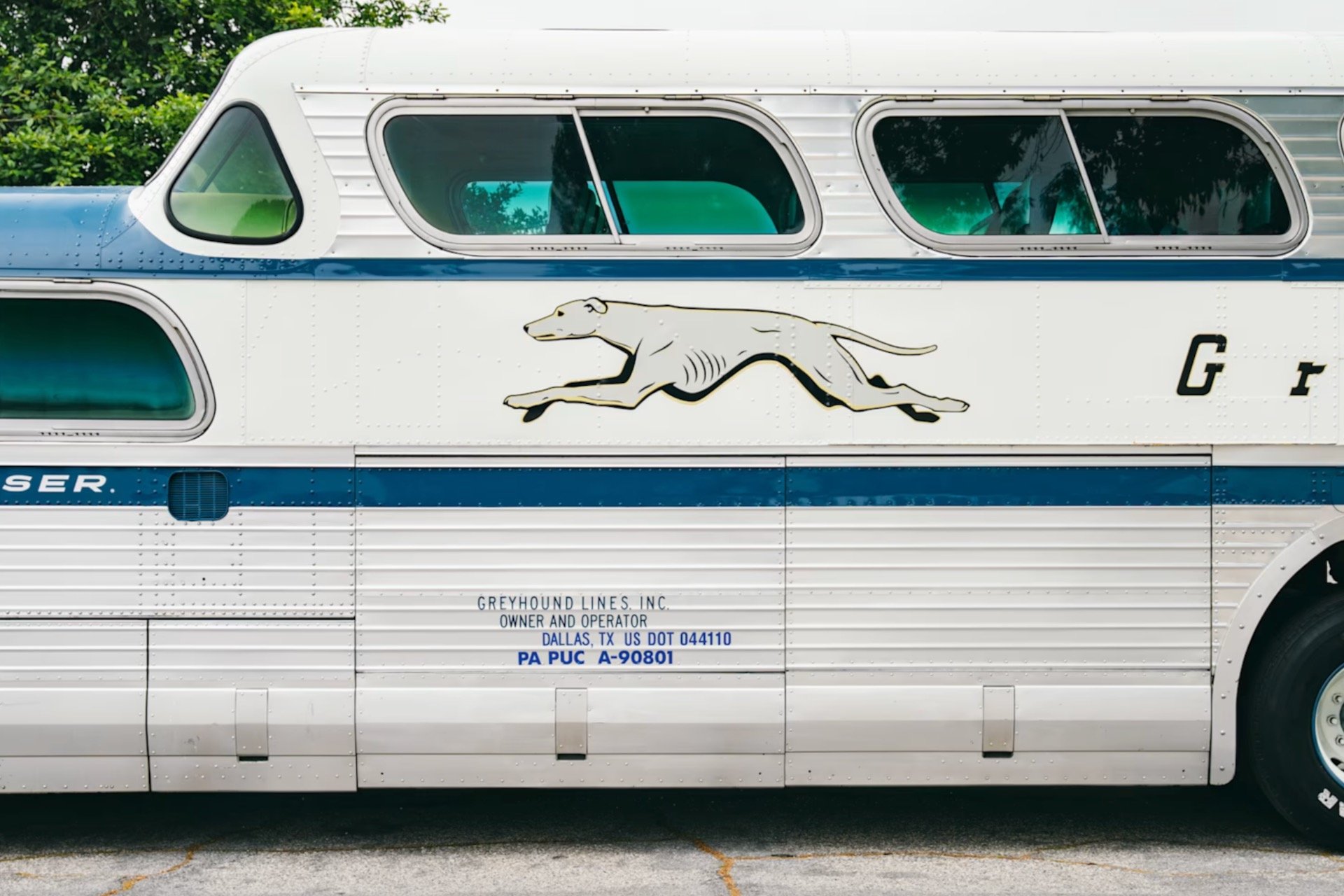
Against that backdrop, the General Motors PD-4501 Scenicruiser stands out as a genuine style statement. Built for Greyhound, it remains one of the most recognizable vehicles ever to wear a bus livery, and an exceptionally well-kept 1954 example is now headed to auction.
The First Production Scenicruiser Comes to Market
Roughly 1,000 Scenicruisers were manufactured for Greyhound between 1954 and 1956. The example now consigned to Mecum's 2026 Las Vegas auction is a 1954 model — the very first production unit — and it is scheduled to cross the block on November 14. For collectors who gravitate toward mid-century industrial design, that provenance is a large part of the appeal: this is not merely an early Scenicruiser, it is the opening chapter of the model's story.
Split-Level Design Borrowed From the Rails
The Scenicruiser's silhouette owes much to the domed passenger cars then common on American railroads. GM's designers adopted a split-level layout that placed passengers on an elevated deck while using the space beneath for a generously sized baggage hold. The arrangement delivered the panoramic, elevated perspective of a dome observation car without the operational headaches of a true double-decker.
Why Lower Beat Taller
Keeping the overall height down mattered. A genuine two-story coach would have run into clearance problems on bridges, tunnels, and older road infrastructure — a practical constraint that shaped the bus's proportions as much as any styling brief did. The result was a vehicle that looked dramatic while remaining usable on the routes Greyhound actually served.
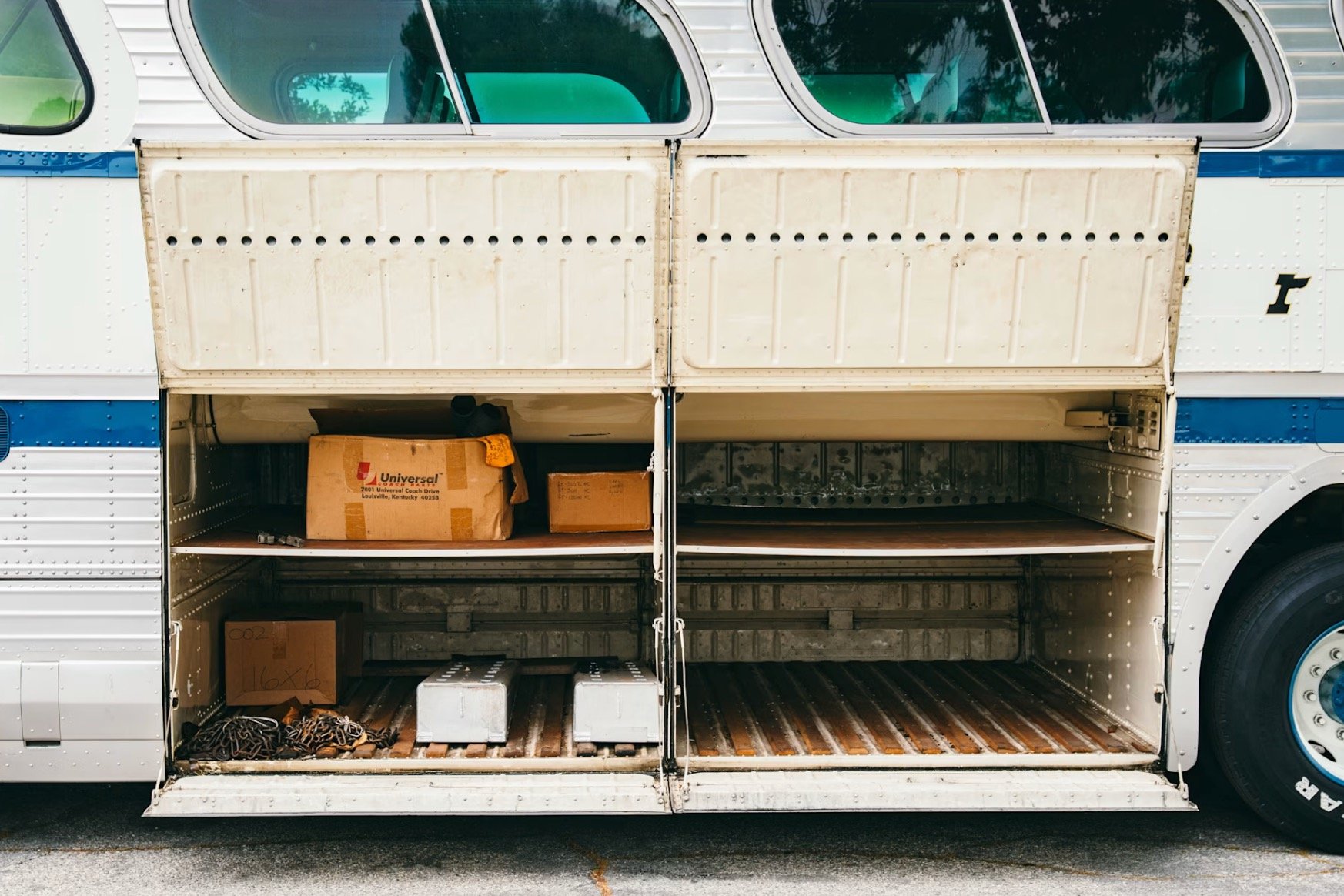
Shininess was its own requirement in the 1950s, and the Scenicruiser delivered with aluminum exterior paneling that caught the light the way chrome trim did on the passenger cars of the era.
The Mechanical Reality Behind the Glamour
Not everything about the Scenicruiser was as polished as its flanks. According to the enthusiast site Bluehounds and Redhounds, the buses suffered significant problems in service. The design was so new that many components had not been fully sorted out before production began.
The most consequential issue was powertrain-related. No suitable V8 diesel engine was available when manufacturing started, so the earliest Scenicruisers were fitted with a pair of four-cylinder engines instead. That solution kept the buses on the road, but it made maintenance considerably more complicated than a single-engine arrangement would have been.
Enter the Detroit Diesel 8V-71
The problem was eventually resolved with the arrival of the Detroit Diesel 8V-71, the engine now installed in the 1954 bus bound for Las Vegas. It is paired with a four-speed manual transmission — a reminder that piloting a Scenicruiser was a physical, hands-on job rather than a matter of monitoring software. This example's current specification reflects the mature, sorted version of the design rather than the compromised early configuration.

A Service Life That Outlasted Its Flaws
Despite those teething troubles, Greyhound kept Scenicruisers in operation into the 1970s, and rival manufacturers brought out their own imitations. That staying power says something about how strongly the design resonated with the traveling public, and about how valuable the buses were as a marketing asset for the carrier.
GM never produced a direct successor. Even so, the Scenicruiser's influence carried forward into the later "Buffalo Bus" line, a more general offering that was not exclusive to Greyhound. The lineage is a familiar pattern in transportation design: a bold, purpose-built flagship proves a concept, and its visual vocabulary gradually migrates into the mainstream.
Survival Rates and Collector Interest
Time has been unkind to most of the production run. Only about 200 Scenicruisers are thought to survive today, which makes any intact example a notable find and a fully restored, historically significant one considerably rarer. That scarcity is part of why the model functions as a reminder of what was.
Mecum has not published a pre-auction estimate for the bus. As a rough reference point, someone advertising an unrestored Scenicruiser on Craigslist in 2024 was asking $50,000. A vehicle that is both fully restored and the first of its kind occupies a different tier entirely, and bidders at a Las Vegas sale tend to price provenance accordingly.
What to Watch When the Hammer Falls
- Whether the final price reflects the "first production model" status or settles closer to restored-example norms.
- How much documentation accompanies the restoration and the bus's service history.
- Whether the Detroit Diesel 8V-71 and four-speed manual are presented in period-correct condition.
- How the aluminum bodywork has held up after seven decades on the road.
Why the Scenicruiser Still Matters
It would be easy to file the Scenicruiser under nostalgia and move on. But the bus is a useful case study in how transportation design changed direction. The mid-century approach treated infrastructure as something the public would look at, ride in, and remember. Aluminum panels, split-level decks, and dome-car proportions were not incidental flourishes; they were arguments that mass transit could be beautiful as well as functional.
The modern coach makes a different argument. It is optimized for cost per seat-mile, standardized for fleet maintenance, and shaped with wind resistance and manufacturing efficiency in mind. Those are legitimate priorities, and they have made long-distance bus travel cheaper and more accessible than it was in 1954. The trade-off is that the experience no longer feels like an event.
For whoever takes home the 1954 Scenicruiser in November, the appeal likely runs deeper than investment. Owning the first production unit of a bus that Greyhound ran for two decades, that rivals rushed to copy, and that survives in only a couple hundred examples is a way of holding onto a moment when getting there was half the point. It is a reminder that a journey could be designed to be enjoyed — not merely completed.
This article is based on reporting by The Drive. Read the original article.
Originally published on thedrive.com