A Rare Artifact From EVs' Most Optimistic Era
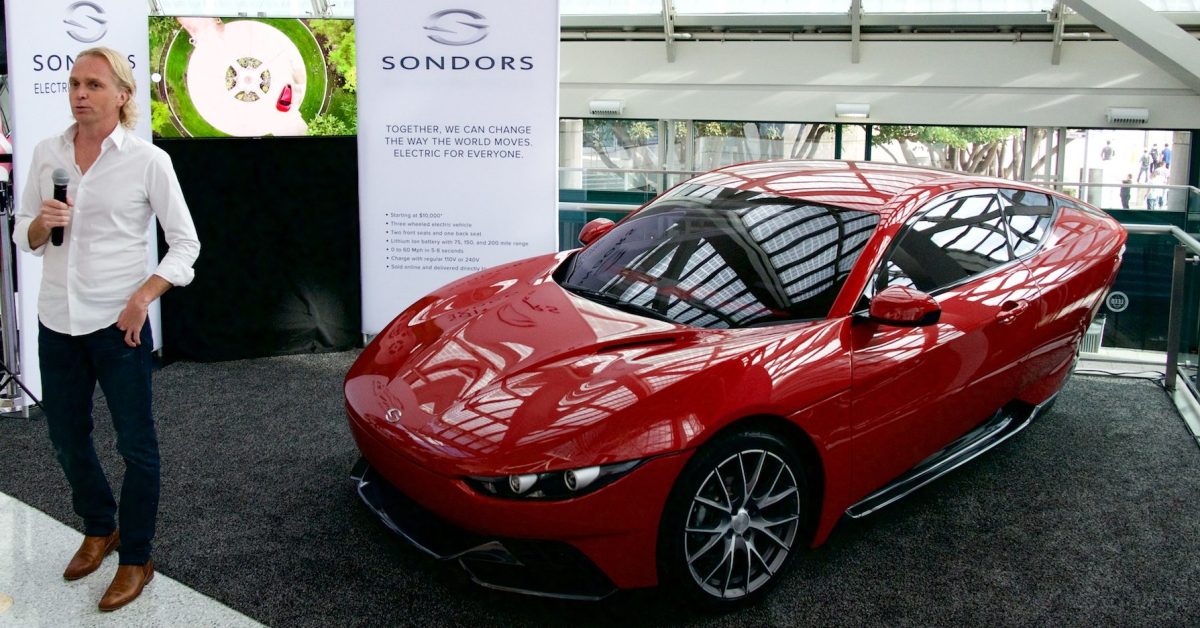
Amid a September calendar full of Drive Electric Month events across the United States — the annual push to move drivers off gasoline and into battery-electric cars — a far stranger chapter of electric mobility quietly resurfaced. A three-wheeled electric car once pursued by SONDORS has turned up for sale on eBay, according to a report from Electrek. The listing matters not because it promises a new product, but because it offers something closer to a museum piece: physical evidence of an electric vehicle program from SONDORS' more ambitious days.
Electrek framed the find as a genuine piece of electric vehicle vaporware history — the kind of artifact that exists in the gap between a company's most confident promises and what it ultimately managed to deliver. For anyone who followed the brand's expansion beyond its established business, the car's reappearance is a rare, tangible reminder of how far those plans once reached.
Why a Three-Wheeled EV Turns Up on eBay at All
Vehicles like this end up on resale marketplaces for a simple reason: they are orphans. When a program stalls before it reaches dealers, there is no distribution channel, no service network and no established resale market to absorb surviving examples. Whatever examples exist sit with owners, former employees or warehouses, leaving a machine too unusual for a conventional auction and too interesting for a scrapyard. eBay, with its long history of surfacing one-off prototypes, abandoned concepts and forgotten industrial curiosities, becomes the natural venue.
That is part of what makes the SONDORS listing compelling. Marketplace listings are not press releases. There is no marketing department smoothing the edges or a media team managing the narrative. What appears is whatever physically remains of the vehicle, presented by whoever happens to hold it — which means the historical record for programs like this is often written in classified ads rather than corporate archives.

The Allure — and Difficulty — of the Three-Wheel Formula
A three-wheeled electric car is a recurring idea in electric mobility, and not by accident. Fewer wheels generally means fewer parts, less weight and, in many markets, a different regulatory pathway than a conventional four-wheeled automobile. Startups have repeatedly reached for the layout as a way to lower the cost and complexity of getting any vehicle to market at all.
But the arrangement carries its own compromises. Three-wheelers raise questions about stability, occupant protection and whether the classification advantage that made them easier to build also makes them harder to sell to ordinary drivers. Those are exactly the kinds of unresolved engineering and business tradeoffs that tend to separate a compelling concept from a car people can actually buy, insure and drive every day.
Vaporware Is a Pattern, Not an Accident
The term vaporware gets thrown around loosely, but it describes a specific phenomenon: a product that generates real excitement, real attention and, in many cases, real customer deposits, without ever arriving in the form promised. The electric vehicle sector of the past decade produced an unusually rich supply of it. Crowdfunding platforms and online reservation systems made it possible to launch an ambitious vehicle program on the strength of a rendering, a spec sheet and a preorder page.
Some of those programs eventually delivered, sometimes years late. Others collapsed entirely. And a few — like the SONDORS three-wheeler — left behind a small number of physical objects that now circulate as collector's items rather than transportation. Each surviving example marks a point where a company's ambition outran its capacity to manufacture, certify and ship.
What a Buyer Is Actually Purchasing
Anyone considering a listing like this should be clear-eyed about what is on offer. This is not a conventional used-car purchase, where history, service records and parts availability are broadly understood. A surviving example of a discontinued, low-volume electric vehicle program arrives with an uncertain support ecosystem, a limited universe of people who know how to work on it, and no manufacturer standing behind it.
What it does offer is provenance — a direct connection to a moment when the company was reaching well beyond its established product line. For the right buyer, that is the entire appeal. The value is historical and emotional rather than practical, closer to acquiring a piece of industrial ephemera than to buying reliable daily transport.
A Story Told in Contrast
There is something fitting about this listing surfacing during Drive Electric Month, when organizations across the country are holding events aimed at helping drivers understand how to leave gasoline behind. Mainstream electric cars are now a routine part of that conversation, with charging infrastructure, incentives and comparison shopping on the agenda.
The SONDORS three-wheeler belongs to an earlier, messier phase of the same transition — a period when the category's future felt genuinely open and when small companies with big ideas could convince people that a completely different kind of vehicle was just around the corner. Some of those bets paid off spectacularly. Many did not.

What the SONDORS Listing Really Represents
A used listing on eBay is a small news event, but it functions as a useful marker. It shows how the electric vehicle industry's first wave of enthusiasm has now aged into something collectible. The products that made it are on the road. The ones that did not are in garages, warehouses and, occasionally, classified ads.
For readers, the practical takeaway is twofold. First, listings like this are often the only remaining record of programs that never reached production, and they deserve more attention than they typically receive. Second, enthusiasm for a compelling EV concept is not the same thing as the ability to build it at scale. The gap between the two is where vaporware lives — and where a three-wheeled SONDORS car just made an unexpected reappearance.
This article is based on reporting by Electrek. Read the original article.
Originally published on electrek.co