A mission concept with a wider scientific menu
The Solar Gravitational Lens, or SGL, is usually discussed as a way to capture detailed images of distant exoplanets. A new preprint argues that the concept may be useful for much more than that. According to the paper, a spacecraft operating in the Sun's gravitational focal region could also produce extremely high-resolution observations of bright compact targets including magnetic white dwarfs and black holes.
The argument comes from Slava Turyshev, a leading advocate of the SGL concept. The paper, currently available on arXiv, emphasizes an advantage that has received less attention in the exoplanet-centered discussion: some astronomical targets create their own light. That changes the technical problem in important ways and could make them attractive early science cases for any future SGL mission.
How the Solar Gravitational Lens works
The idea relies on general relativity. The Sun's mass bends and magnifies light passing around it. In principle, a spacecraft positioned roughly 550 astronomical units from the Sun could exploit that effect as a giant natural lens. For exoplanet imaging, the promise is dramatic: reconstructing megapixel-scale views of Earth-like planets around nearby stars, far beyond the capability of conventional telescopes.
That promise has driven years of interest, but it comes with severe engineering and observational challenges. A mission would have to travel vastly farther than any current planetary probe. It would also need to operate in a difficult optical environment shaped by the Sun's corona. Exoplanets create an additional problem that Turyshev highlights directly in the new paper: photon starvation. Even with the Sun acting as a lens, the signal from a distant, dim exoplanet can be limited enough that the spacecraft would need long observing times to pull usable structure out of the noise.
Targets that emit much more of their own light change that balance. Instead of fighting primarily for enough photons, the challenge shifts toward navigation along the focal line, managing detector dynamic range, and subtracting glare from the solar corona.
White dwarfs as a first example
One of the paper's clearest use cases is a magnetic white dwarf about 10 parsecs away. White dwarfs are compact stellar remnants, roughly Earth-sized, but they can be intensely bright. Turyshev argues that an SGL-enabled observation could push surface mapping of such an object from today's microarcsecond-scale detail down to the nanoarcsecond scale.
If that estimate holds, the payoff would be substantial. The paper says an SGL system could reveal features such as temperature variations across the white dwarf's surface as well as rocky debris in the accretion belt. Those are the kinds of structures that remain effectively inaccessible with present methods.
For stellar astrophysics, that would amount to a step change. White dwarfs preserve information about stellar evolution, magnetic behavior, and in some cases the remnants of planetary systems that once orbited them. Better imaging could help connect theory to direct surface and environmental features rather than relying mainly on indirect inference.
A new look at black holes
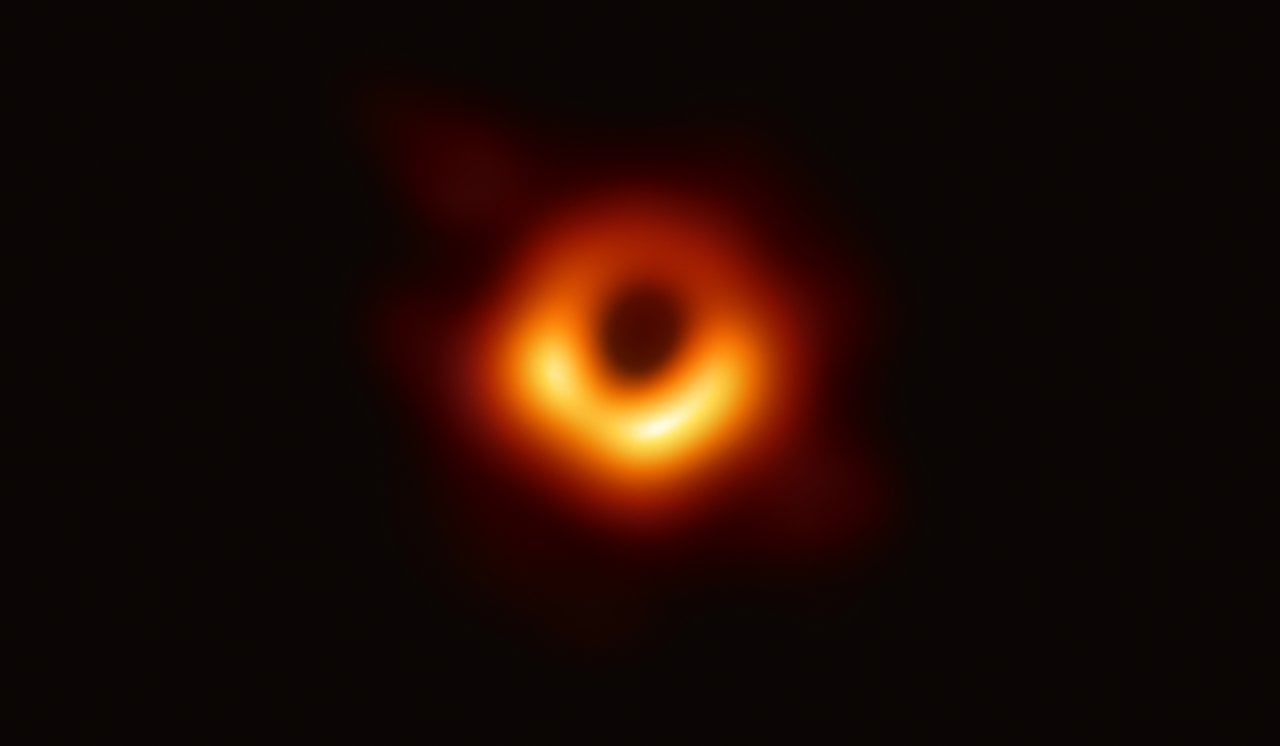
The paper also points to black holes, including M87*, as candidates for sharper imaging. The Event Horizon Telescope's first image of a black hole was a landmark result, but its resolution remained limited to the tens of microarcseconds. Turyshev suggests that an SGL observation could radically improve on that, potentially revealing far finer structure in the photon ring and the environment around the event horizon.
That would not merely produce prettier pictures. Higher-resolution imaging of black hole features could give astrophysicists more leverage in testing models of accretion, plasma behavior, and relativistic light bending near extreme gravity. An SGL mission would not replace arrays like the Event Horizon Telescope, but it could extend the frontier of what direct black hole imaging can resolve.
The paper also discusses compact, bright targets more broadly, reinforcing the same strategic point: the SGL may be most scientifically flexible when it is not treated as an exoplanet-only machine.
Why this matters for mission design
In practical terms, the expanded target list strengthens the case for investing in the concept. Missions with a single headline objective can struggle if that objective depends on especially difficult observing conditions. A platform that could address several major astrophysical questions becomes easier to justify scientifically.
This is especially relevant for the SGL because its challenges are so formidable. Reaching the focal region would require propulsion, navigation, communications, and mission longevity beyond current deep-space norms. The more valuable the science return, the stronger the rationale for tackling those barriers.
The preprint suggests that bright targets could also serve as a way to develop operational methods. Because they are not as photon-starved as exoplanets, they may provide a more forgiving environment for refining focal-line navigation, detector calibration, and image reconstruction techniques. In that sense, white dwarfs or black holes might not only be compelling destinations for observation, but also stepping stones toward the even more ambitious exoplanet program that has dominated SGL discussion so far.
Promise, with the usual caveats
None of this means an SGL mission is close to launch. The paper is a preprint, and the mission concept remains well beyond the execution stage. Its significance is conceptual rather than programmatic. Turyshev is broadening the scientific case and pushing back against the narrow assumption that the SGL lives or dies on exoplanet imaging alone.
That is a useful shift. Space science missions increasingly compete on flexibility, longevity, and the breadth of questions they can answer. A future observatory that could examine habitable worlds, map the surfaces of white dwarfs, and sharpen views of black holes would occupy a singular place in astronomy.
The Solar Gravitational Lens has often been framed as one of the boldest ideas in deep-space observation. This latest paper does not make it easier to build, but it does make the destination look more scientifically crowded. If the Sun can be turned into a telescope, the view may extend well beyond exoplanets.
This article is based on reporting by Universe Today. Read the original article.
Originally published on universetoday.com