SpaceX is set to test a new kind of return vehicle
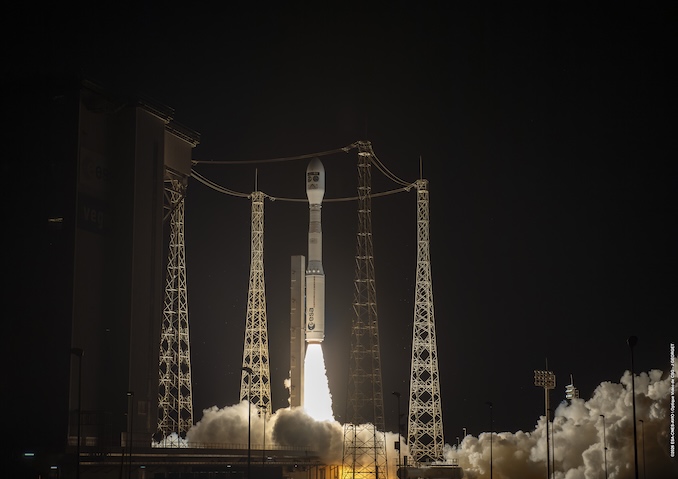
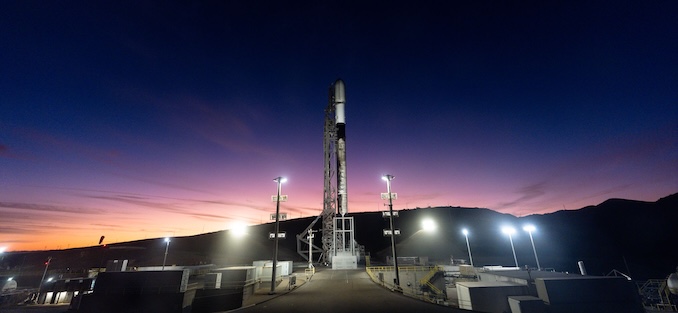
SpaceX planned an early Tuesday launch from Cape Canaveral Space Force Station for the debut mission of a new uncrewed reentry capsule called Starfall, opening a fresh line of development beyond the company’s familiar Falcon 9, Starlink, and Dragon programs. The mission was scheduled to lift off from Space Launch Complex 40 at 6:43 a.m. EDT, according to prelaunch details published by Spaceflight Now, with the flight using Falcon 9 booster B1078 and a weather forecast showing a 95 percent chance of favorable conditions.
The launch stands out not because SpaceX has heavily promoted it, but because it has done the opposite. The company has disclosed very little about Starfall’s exact mission profile, how many spacecraft are flying, or what customers or payloads may ultimately use the system. Even the public mission timeline, according to the report, cuts off after the booster landing event, leaving the spacecraft portion of the flight unusually opaque by SpaceX standards.
That limited disclosure has made Starfall notable as both a hardware debut and a strategic signal. Federal aviation environmental documents and investor-facing material cited in the source report suggest SpaceX is exploring a platform aimed at bringing cargo back through Earth’s atmosphere, potentially serving future in-orbit manufacturing and high-speed transport use cases.
What the public record says about Starfall
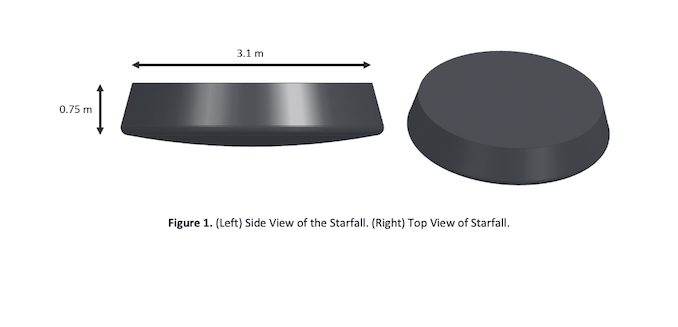
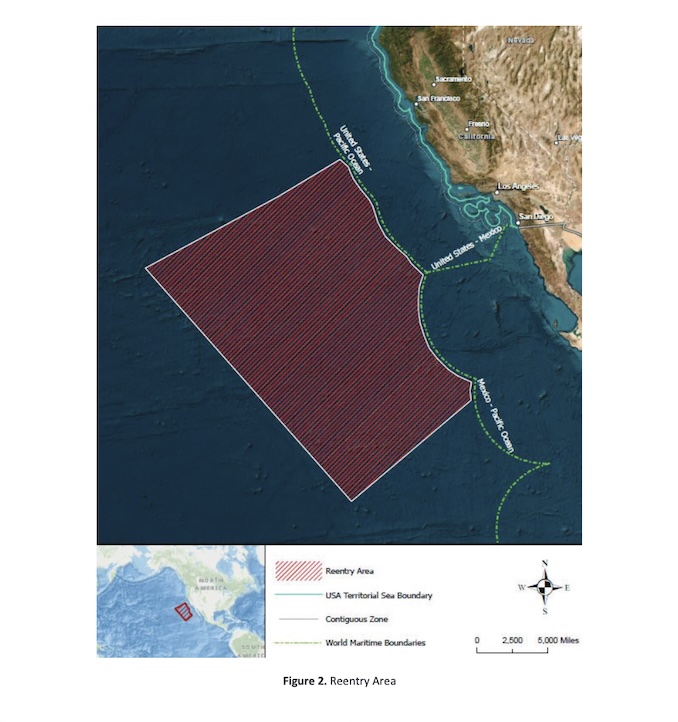
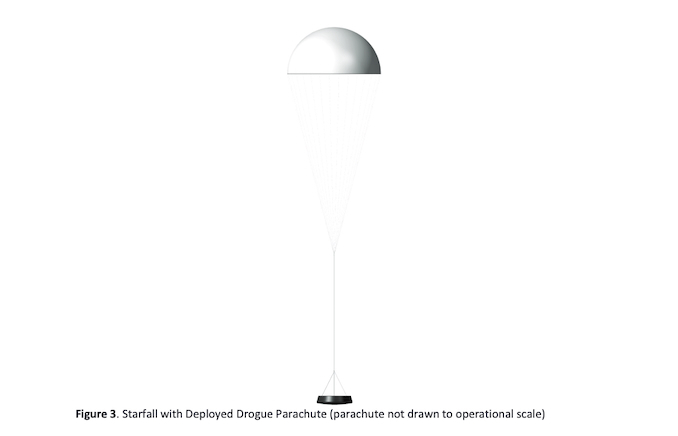
While SpaceX has offered little direct explanation, an environmental assessment published by the Federal Aviation Administration in May provides the clearest outline so far. The document said the company wanted to perform two Starfall reentries to demonstrate capabilities for future transport and delivery of goods through space. It also said Starfall could be launched either into low Earth orbit or on a suborbital trajectory, and that the capsule could fly on either Falcon 9 or Starship-Super Heavy.
Those details matter because they place Starfall somewhere between a conventional orbital spacecraft and a broader logistics system. The vehicle described in the environmental assessment is relatively compact but still substantial: a cylindrical capsule about 0.75 meters tall, roughly 3.1 meters in diameter, weighing about 2,100 kilograms, and capable of carrying up to 1,000 kilograms of cargo. In practical terms, that suggests a platform designed for payload return rather than for crew transport.
Spaceflight Now also reported that SpaceX included a graphic in its initial public offering roadshow presentation that appeared to show a satellite bus with slots for up to four Starfall capsules, labeled “In-orbit manufacturing.” That does not establish an operational business line on its own, but it does indicate the company is at least presenting Starfall in connection with orbital production and cargo handling concepts.
The result is a rare SpaceX launch in which the most important context comes not from a splashy mission announcement, but from supporting documentation and indirect clues.
A quiet launch with potentially broad implications
If Starfall works as intended, it could expand SpaceX’s reach into a part of the space economy that has drawn increasing attention: returning manufactured products, research materials, or other high-value cargo from orbit. Companies and governments have long discussed in-space manufacturing as an area where microgravity can produce specialized materials or components that are difficult to make on Earth. One of the persistent constraints has been the return leg. Launching items up is only part of the business case; getting them back safely and predictably is the other half.
Dragon already provides downmass capability, but it is a larger, more complex spacecraft tied closely to NASA and crewed or station-support missions. A smaller, purpose-built return capsule could give SpaceX a more modular option for cargo recovery. The environmental assessment’s reference to future transport and delivery of goods through space also hints at applications beyond orbital labs, including rapid point-to-point logistics concepts that have circulated for years in both commercial and defense discussions.
None of that is confirmed as an announced service. Still, the available record supports a clear conclusion: SpaceX is testing a reentry system meant to prove new cargo return capabilities, and it sees enough potential in the concept to bring it to flight.
The mission profile still leaves open questions
Important uncertainties remain. The source report said it was not clear whether this mission would include more than one Starfall capsule, even though the FAA’s assessment referenced two Starfall reentries. It is also unclear whether the spacecraft will be placed into low Earth orbit or follow a suborbital path on this first demonstration.
That ambiguity makes the mission harder to evaluate in real time. A successful Falcon 9 ascent and booster landing would only confirm the launch vehicle portion of the operation. The more consequential test is what happens to Starfall itself: deployment, reentry, recovery, and any evidence that the capsule performed as intended.
SpaceX’s decision not to share more may reflect the early-stage nature of the program, the involvement of sensitive commercial plans, or simply the company’s choice to limit attention until the hardware proves itself. Whatever the reason, the lack of detail means outside observers will likely rely on secondary signs, such as regulatory updates or postflight reporting, to understand whether the demonstration met its goals.
Falcon 9 reliability gives the mission a stable starting point
The launch vehicle side of the mission looks comparatively routine. Booster B1078 was set for its 29th flight, having previously supported missions including NASA’s Crew-6, USSF-124, and SES’s O3b mPOWER-B. After stage separation, the booster was expected to target a landing on the drone ship A Shortfall of Gravitas in the Atlantic. If successful, the landing would mark the 157th on that vessel and the 628th booster landing overall for SpaceX, according to the report.
That operational maturity is part of what makes Starfall notable. SpaceX can now introduce new spacecraft systems on top of a launch architecture that is already deeply proven. In effect, Falcon 9’s reusability and cadence provide a lower-risk test bed for new orbital and reentry products.
Why this launch matters
Starfall’s first flight is easy to overlook beside bigger SpaceX headlines, but it may prove more important than its sparse public rollout suggests. The capsule appears aimed at a growing gap in the market: flexible return of cargo from orbit and perhaps, eventually, faster movement of goods through space-linked logistics systems. The first demonstration may not answer every question, but it establishes that SpaceX is moving the concept from paperwork and investor graphics into hardware and flight.
For a company that has repeatedly expanded by solving bottlenecks others treated as fixed, Starfall could become another example of vertical integration in practice. Launch is already routine for SpaceX. The next competitive layer may be what can be brought back.
This article is based on reporting by Spaceflight Now. Read the original article.
Originally published on spaceflightnow.com