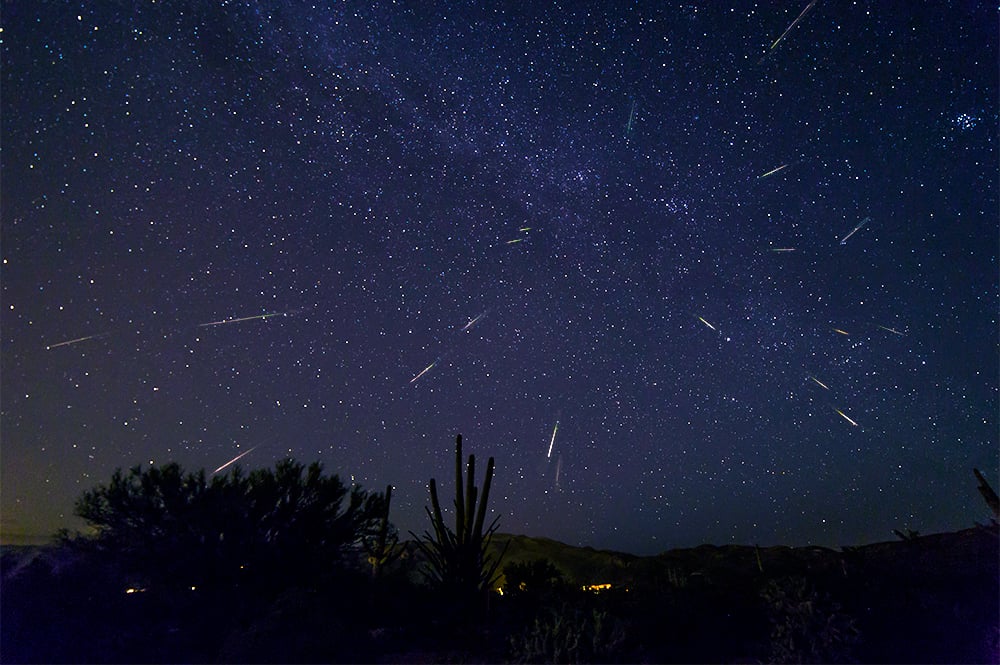
The Perseids are arriving under unusually favorable skies
One of the most dependable annual skywatching events is set up for an especially strong year. According to Universe Today, the 2026 Perseid meteor shower will benefit from a new Moon, a favorable peak time and a broad activity window that should give observers in Europe and North America excellent viewing opportunities. For casual viewers, that means a familiar meteor shower with less moonlight interference than usual. For dedicated observers, it means one of the best Perseid setups in years.
Universe Today reports that the shower is expected to peak on Wednesday, August 13 at 3:00 Universal Time, which corresponds to 11:00 p.m. EDT on August 12. That timing places Europe and North America in a strong position as the Earth turns into the meteor stream. The outlet says the Perseids can reach a Zenithal Hourly Rate of about 100 meteors per hour, a figure that helps explain why the shower is one of the most popular recurring events on the astronomical calendar.
The most important condition this year may be the Moon, or rather its absence. Universe Today notes that the Moon will be effectively "missing in action" for the shower because it will be at new phase while also eclipsing the Sun on August 12. Bright moonlight is one of the main reasons meteor showers underperform for observers on the ground. When the sky is darker, fainter meteors become easier to detect and the shower feels richer, denser and more continuous. In 2026, that natural advantage arrives right when the Perseids are due to peak.
Why the timing favors both sides of the Atlantic
The specific peak time is unusually convenient. Universe Today says Europe and North America will be turning into the oncoming shower stream just past the peak. That matters because meteor visibility changes as the Earth rotates. The outlet explains that there may be a few early meteors in the evening, but the real activity tends to increase after midnight, when an observing site turns forward into the stream of debris. In practical terms, the best viewing usually arrives in the pre-dawn hours, when the geometry between the Earth and the incoming particles is most favorable.
Universe Today also notes that the Perseids often show a broad double peak, making the shower worth watching not just on one night but also a day or two before and after August 13. That expands the opportunity for observers who may face poor weather on the nominal peak date. Meteor shower forecasts are never guarantees for any single location, so a wider window can be as valuable as a high peak rate.
The article also describes how the character of the meteors changes through the night. Evening meteors tend to appear slower and leave longer trails because they are effectively catching up to Earth. By contrast, early morning meteors can look faster and sharper as the observing site rotates into the stream. The Perseids are fast overall, with an approach velocity of about 59 kilometers per second relative to Earth. That speed contributes to the bright, swift streaks that have made the shower a perennial favorite.
A shower with deep historical and orbital roots
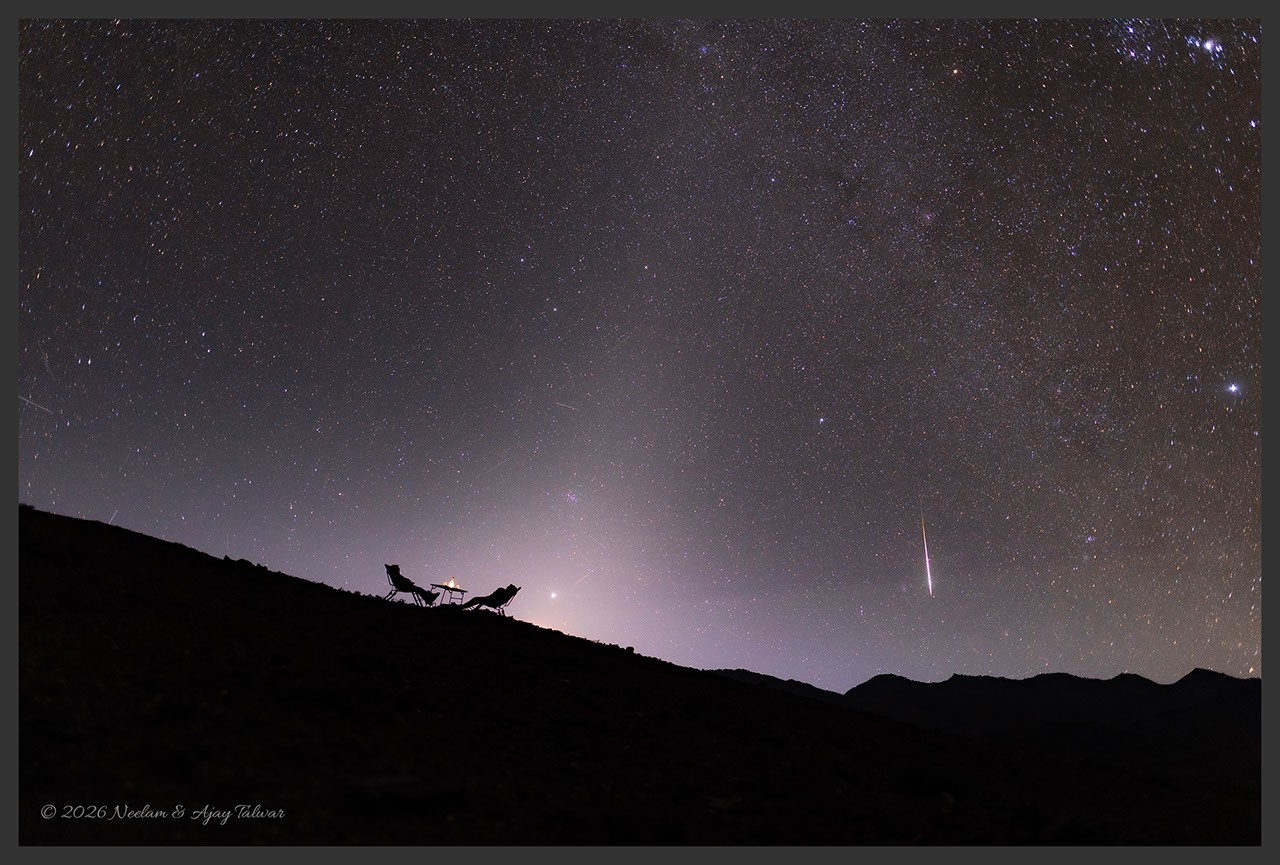
The Perseids are not random flashes. They are the visible result of Earth intersecting debris left behind by Comet 109P/Swift-Tuttle. Universe Today notes that meteor showers occur when our planet moves through ancient trails of cometary material. Even though the meteors can look dramatic, the outlet says the particles responsible are often tiny, with the largest Perseids only around pea-sized and many little more than dust grains.
The connection between the shower and its parent comet has been understood for well over a century. Universe Today says astronomer Giovanni Schiaparelli identified the periodic nature of the annual shower in 1862. The source comet reached perihelion in 1992 and will do so again in 2126. Those orbital facts help anchor an event that can feel ephemeral. The streaks last seconds, but the underlying mechanics stretch across centuries of observation and far longer cycles in the solar system.
The shower also carries cultural history. Universe Today notes that the Perseids are sometimes called the "Tears of St. Lawrence," referring to the Christian saint martyred on August 10 in the year 258. The name remains especially well known in parts of southern Spain. That blend of precise orbital science and long-running human tradition is part of what gives major meteor showers their appeal. They are both technically predictable and emotionally resonant.
2026 is rare for another reason as well
The alignment of the Perseids with a new Moon on August 12 is not just convenient. Universe Today describes it as an uncommon calendar coincidence. The outlet says a new Moon, accompanied by an eclipse, last occurred on August 12 in 1942 and will not happen again until 2045, though lunar phases repeat on given dates across a 19-year Metonic cycle. For observers, this does not change how to watch the shower, but it does make 2026 stand out in the long record of Perseid returns.
There is even an unusual piece of observing trivia attached to this year's setup. Universe Today notes that totality from the August 12 solar eclipse occurs just seven hours before the expected peak of the Perseids. The publication points out the challenge directly: extra credit goes to anyone who manages to capture a Perseid during totality. That is not the central event for most viewers, but it underscores how compressed and remarkable the celestial timing is this year.
What skywatchers should expect
The strongest message from this year's forecast is simple: watch more than once if possible, and stay out late. Universe Today's guidance suggests that the shower will reward patience, especially after midnight, when the radiant climbs and the observing site faces more directly into the stream. With no bright Moon to wash out the sky, even modestly dark locations could provide a memorable show if weather cooperates.
That does not mean every viewer will see 100 meteors in an hour. Zenithal Hourly Rate is an idealized measure tied to dark skies and optimal conditions. Local light pollution, clouds and the position of the radiant all affect what any individual observer experiences. Still, the 2026 Perseids appear to offer the sort of favorable setup that skywatchers hope for and rarely get all at once.
For astronomy enthusiasts, the appeal is obvious. For everyone else, this is one of the easiest recurring celestial events to enjoy without specialized equipment. No telescope is required. The main advantages this year are darkness, timing and a bit of persistence. In a crowded calendar of launches, missions and discoveries, the Perseids remain a reminder that some of the most striking space events are still visible simply by looking up at the right time.
- The Perseid meteor shower is expected to peak on August 13, 2026 at 3:00 UT.
- Universe Today says the shower could reach about 100 meteors per hour under ideal conditions.
- A new Moon on August 12 removes a major source of sky brightness during the peak window.
- Observers in Europe and North America are especially well placed for this year's timing.
This article is based on reporting by Universe Today. Read the original article.
Originally published on universetoday.com