November offers skywatchers a month of changing planetary views, with Saturn available in the evening and Mars, Jupiter, Venus and Mercury taking turns in the predawn sky. The most notable changing arrangement is the early-month approach of Mars toward Jupiter, followed by their pass on Nov. 16.
Saturn leads the evening sky
Saturn is the principal planet for convenient evening observing during the month. It is visible high in the southern sky from mid- to late evening, making it the easiest of the five highlighted planets to seek without staying up late or rising before dawn.
Through a telescope, observers can see Saturn’s famous ring system. The southern side of the rings is tilted by about 6.5 degrees toward Earth’s line of sight, according to the observing guide. That geometry gives telescopic viewers a particular perspective on the planet and its rings.
Mars and Jupiter meet before dawn
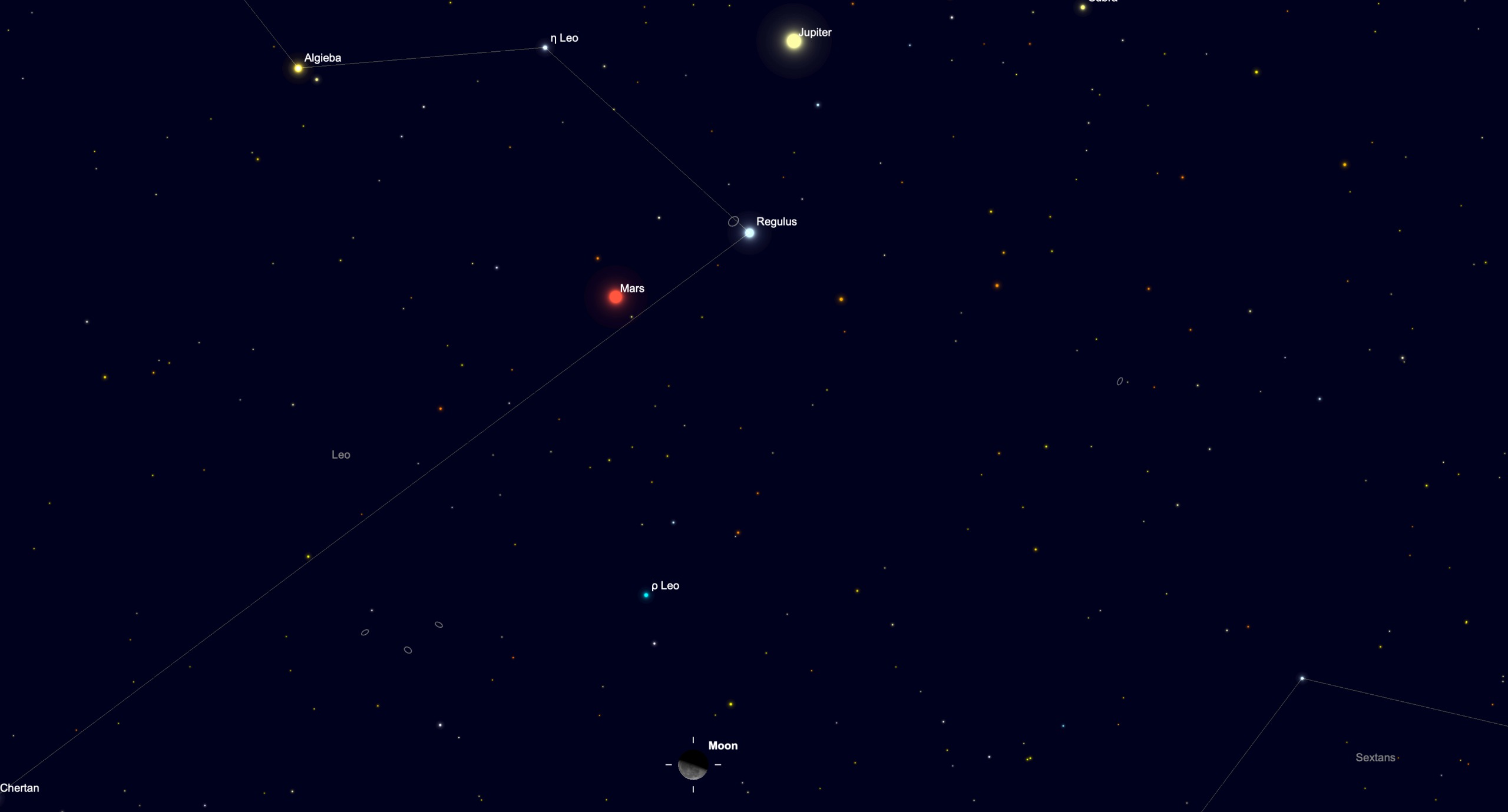
Mars and Jupiter rise above the east-northeast horizon around the middle of the night. By the hours before dawn, they climb high in the southern sky near the Sickle of Leo, an asterism in the constellation Leo.
The pair’s apparent motion is a key event of the month. Mars approaches Jupiter early in November, passes it on Nov. 16, and then continues eastward away from the larger planet for the remainder of the month. Their changing separation offers a straightforward way to follow planetary motion from one clear morning to the next.
A simple estimating tool can help observers judge the distance between objects in the sky: a clenched fist held at arm’s length spans roughly 10 degrees. The guide uses this convention for angular separations, which describe apparent distance on the celestial sphere rather than physical distance in space.
Venus becomes more prominent
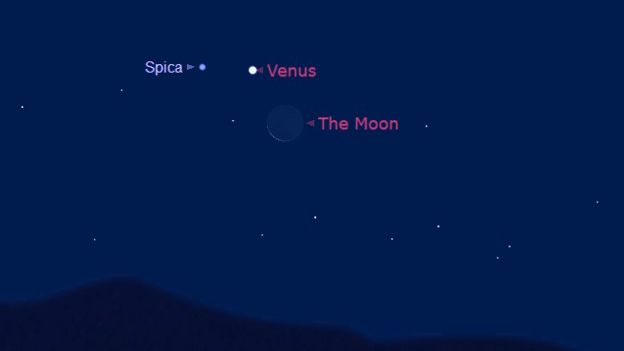
Venus gains visibility in the predawn sky as November progresses. Its growing prominence makes it one of the month’s easiest targets for casual observers looking east before sunrise.
Because the planet is bright, Venus can serve as an anchor for locating the other morning objects. The guide places Mercury far lower and to the left of Venus later in the month, so identifying Venus first can make the lower planet easier to find.

Mercury’s favorable morning appearance
Mercury is hidden near the sun at inferior conjunction on Nov. 4, then emerges into the eastern morning sky after the second week of November. From Nov. 16 through Nov. 26, it rises in the east-southeast before the beginning of astronomical twilight.
The month’s most favorable Mercury viewing arrives on Nov. 20, when the planet reaches its greatest western elongation of 20 degrees from the sun. The guide describes this as Mercury’s best morning appearance of the year for mid-northern observers.
Mercury is often difficult to spot because it remains close to the sun from Earth’s perspective. Its placement low in the brightening sky means observers should choose a location with an unobstructed eastern horizon and look before sunrise, while taking care never to aim optical equipment toward the sun.
How to make the most of the month
- Look for Saturn in the south during mid- to late evening.
- Watch Mars close in on Jupiter before dawn, especially around Nov. 16.
- Use bright Venus as a reference point in the predawn sky.
- Seek Mercury low in the east-southeast from midmonth, with Nov. 20 offering its greatest western elongation.
- Use a clenched fist at arm’s length as an approximate 10-degree measuring guide for sky separations.
Seasonal clock changes can affect planned viewing times. In locations where daylight saving time ends on Nov. 1, clocks move back one hour. Observers should confirm local sunrise and twilight times, which vary by location, before heading out.
The month’s appeal is not a single rare event but the chance to observe several planets on different schedules. Saturn rewards evening sessions, while Mars, Jupiter, Venus and Mercury create a shifting morning lineup. Clear horizons and repeated observations will reveal the changing geometry most clearly.
This article is based on reporting by Space.com. Read the original article.

Originally published on space.com