A long debris feature in a young planetary system
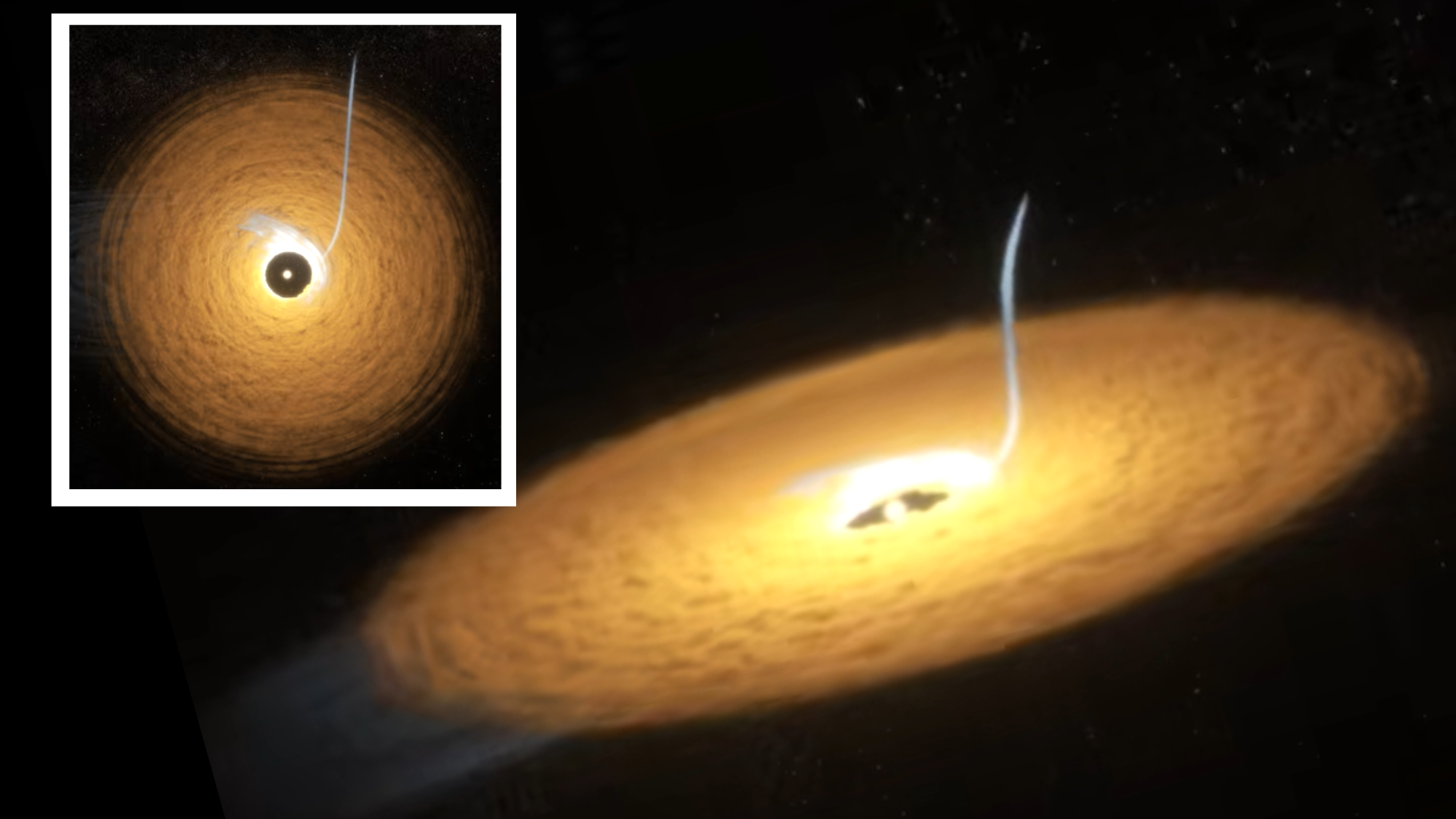
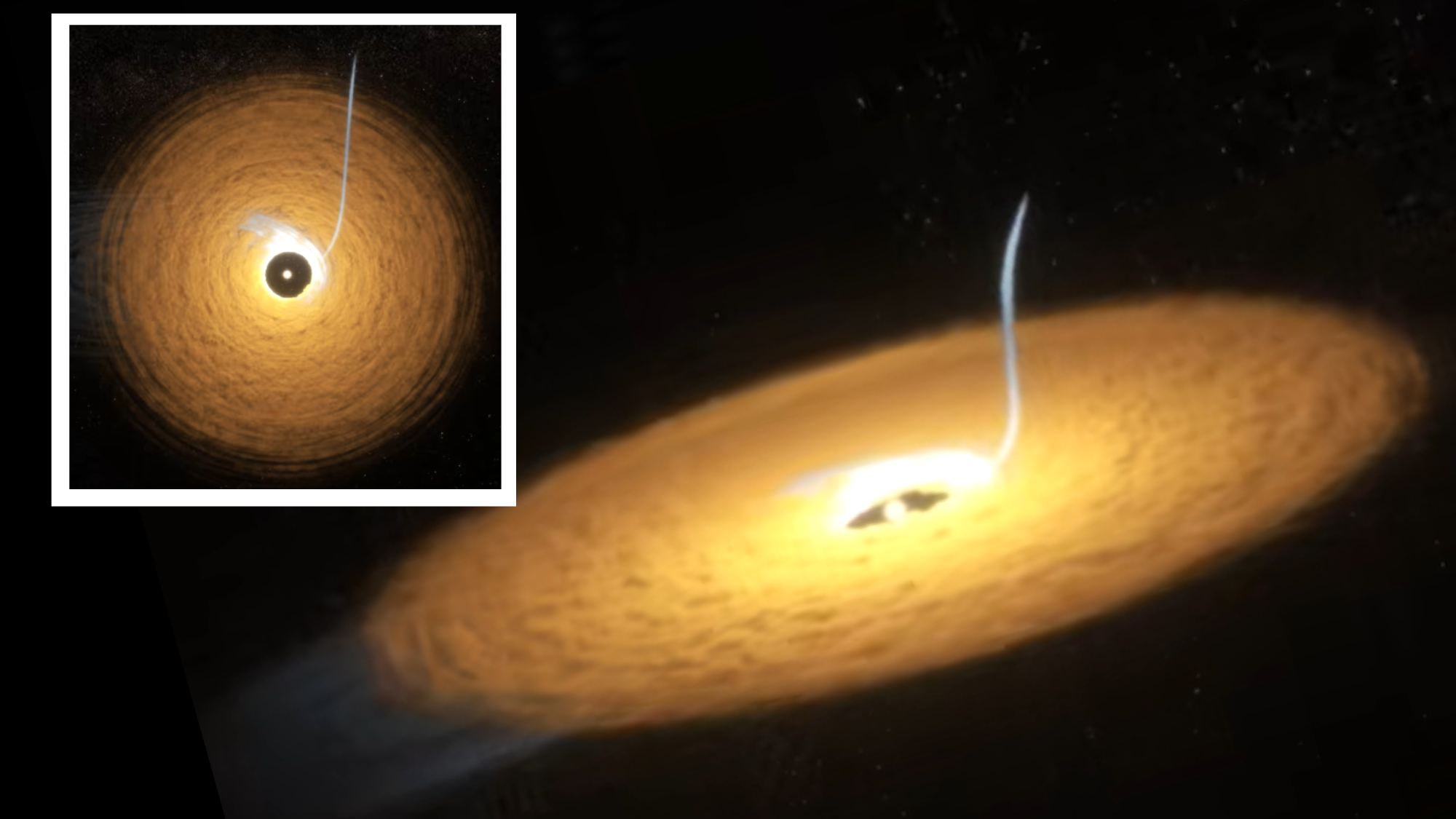
Astronomical observations of the nearby Beta Pictoris system have added evidence for a violent origin of one of its most unusual structures: a narrow, extended feature known as the Cat's Tail.
Using the Hubble Space Telescope, researchers investigated the feature in a planetary system about 63 light-years from Earth. The Cat's Tail extends from Beta Pictoris's debris disk and is so large that, according to the report, it could curl around the Sun-Earth system roughly 500 times.
The team analyzed 14 years of observations and concluded that the feature was likely produced after two bodies about the size of Pluto collided. Such a collision would be an extraordinary event by human standards, but Beta Pictoris is a young system where large impacts remain part of the evolving environment.
A system still shaped by collisions
Beta Pictoris differs sharply from the Solar System in age. Our Solar System is about 4.6 billion years old, while Beta Pictoris is only a few million years old. That youth matters because its dust and icy material still experience the kinds of collisions that were much more common during the early history of planetary systems.
In a mature system, much of the small-body population may have been cleared, captured or settled into comparatively stable structures. A young debris disk can instead preserve evidence of continuing impacts and of the gravitational influence of planets on dust and icy objects across large distances.
The Cat's Tail is a striking example. Its scale is difficult to convey, but the comparison with the Sun-Earth distance illustrates that this is not a local plume around a single object. It is a system-scale structure within the disk around Beta Pictoris.
Why Hubble's long record was important
The new interpretation drew on 14 years of Hubble observations. A long observational baseline can help astronomers distinguish between a temporary-looking feature and a structure whose appearance and evolution carry information about the event that produced it.
The report says the observations helped resolve a long-standing question about the violent conditions that formed the Cat's Tail. Team leader Arin Avsar of the University of Arizona described the feature as the likely aftermath of a collision between large bodies comparable to Pluto.
The result also illustrates the value of combining observations across wavelengths. The Cat's Tail had previously been detected with the James Webb Space Telescope, which observes infrared light, but had remained unseen at shorter wavelengths. That mismatch had puzzled researchers.
Hubble's observations provide a new view of the feature and help connect its visibility to the properties of the dust in the debris disk. The report does not present the result as a direct observation of the ancient impact itself; rather, the debris structure is evidence from which the team infers the collision scenario.
What a giant impact can leave behind
When large bodies collide in a young system, they can generate dust and fragments with a broad range of sizes and trajectories. Light from the star, gravitational forces and the motions inherited from the collision can shape that material into extended features over time.
The Cat's Tail provides a natural laboratory for studying those processes. It offers astronomers a chance to examine how a debris disk responds after a major collision, rather than relying only on models of the early Solar System, whose most dramatic formative impacts occurred billions of years ago.
Beta Pictoris is especially useful because its youth preserves an active, evolving scene. The system contains a debris disk and planets whose gravitational influence can affect material at large distances. The research emphasizes that massive planets can influence surrounding dust and icy bodies out to hundreds of astronomical units.
A window into planetary-system formation
The likely collision does not mean Beta Pictoris is a direct replica of the early Solar System. Every system has its own architecture, population of objects and history. Still, the discovery gives researchers a way to investigate a phase of planetary evolution that the Solar System passed through long ago.
Large impacts are a central part of many accounts of planetary growth. By seeing the resulting debris in another young system, astronomers can test how those events may appear across different wavelengths and how long their signatures can remain detectable.
Continued observations of Beta Pictoris could refine the collision model and reveal more about the dust that makes the Cat's Tail visible. They may also clarify how the feature interacts with the larger debris disk and with the planets in the system.
For now, the Hubble analysis turns an evocatively named feature into a record of planetary violence. The Cat's Tail is not merely a visual curiosity: it is evidence that a young planetary system can retain the aftermath of a collision between worlds on a scale comparable to Pluto.
This article is based on reporting by Space.com. Read the original article.
Originally published on space.com