Hera’s first separate view of Dimorphos
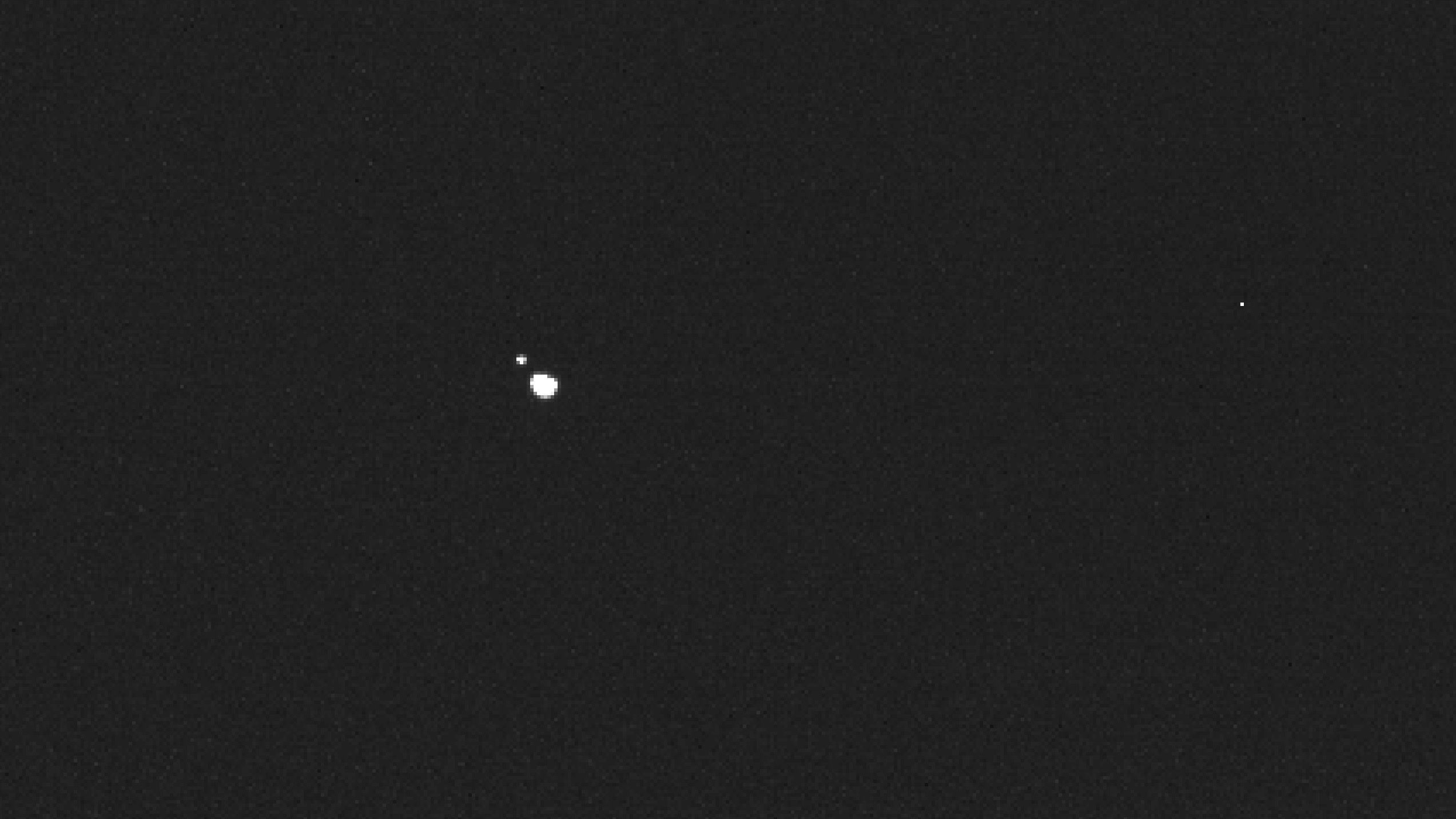
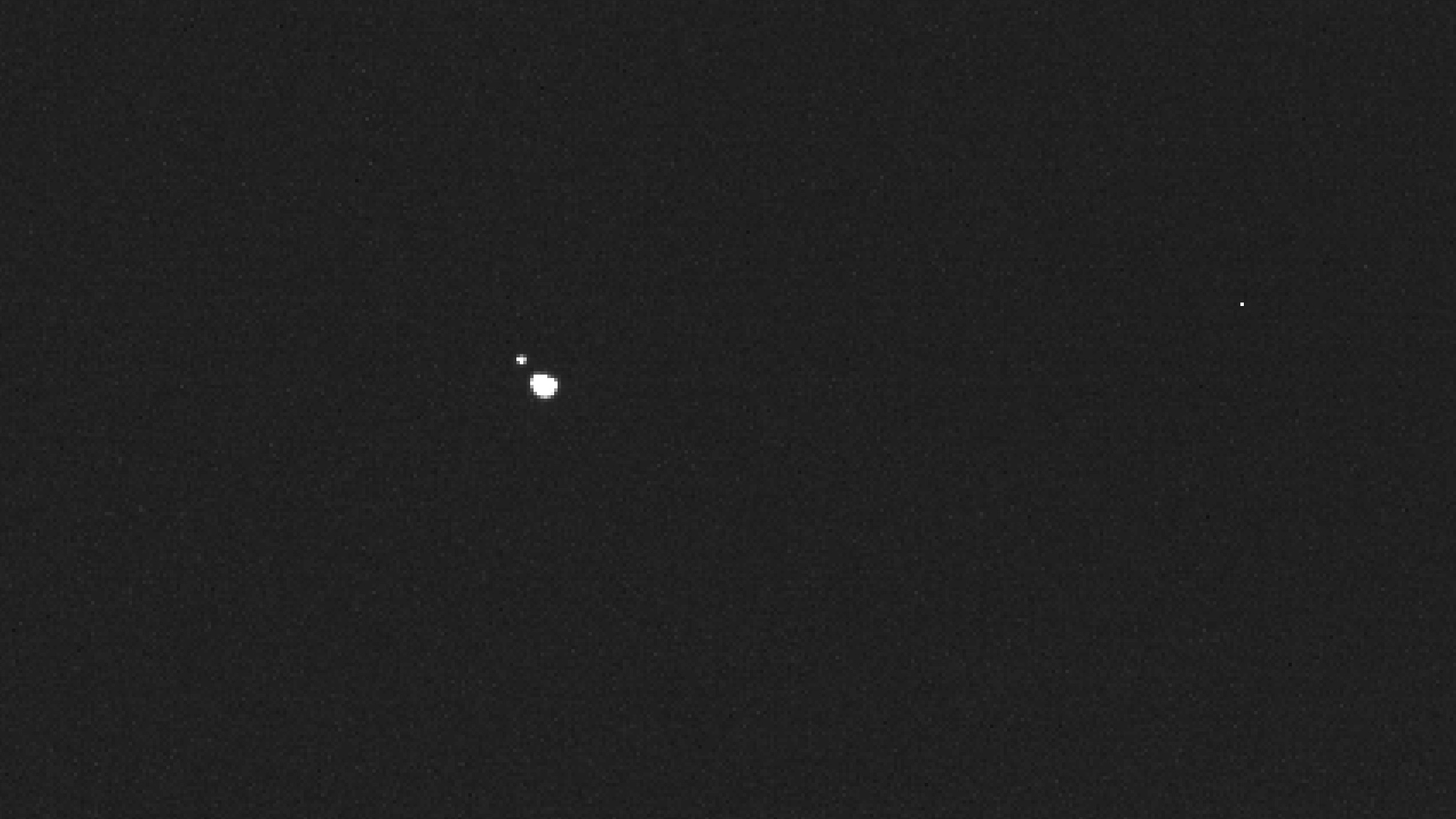
Europe’s Hera spacecraft has captured its first image in which the small asteroid Dimorphos can be distinguished from its larger companion, Didymos. The observation is an early milestone for a mission built to investigate the aftermath of NASA’s 2022 asteroid-deflection demonstration.
The image was taken on Oct. 18 from about 795 miles, or 1,280 kilometers, from the binary asteroid system. At that range, Dimorphos occupies only about one pixel in the image, but it is visibly separated from its parent body rather than appearing as part of a single unresolved point.
“With this image, the smaller Dimorphos asteroid becomes visible for the first time,” Hera project scientist Michael Kueppers said in an ESA statement. Before the observation, the spacecraft had still seen the Didymos system as a single dot.
Following up on DART
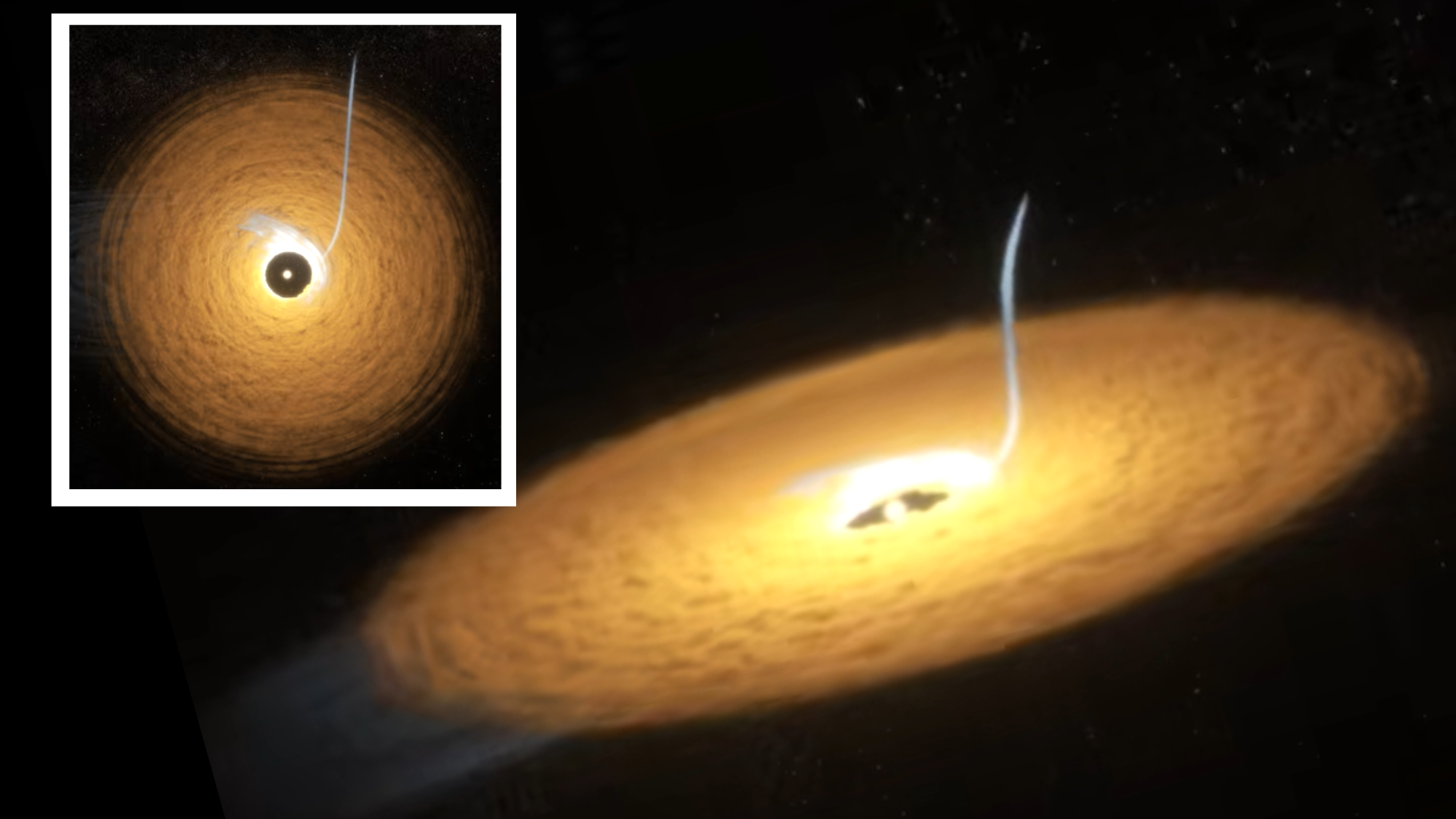
Dimorphos is the target NASA deliberately struck with its Double Asteroid Redirection Test, or DART, in September 2022. The mission changed Dimorphos’ orbit around Didymos, demonstrating that a kinetic impactor can alter an asteroid’s motion.
Hera’s assignment is different but closely connected. It will survey the damage from the DART impact and refine understanding of both the collision and the two asteroids themselves. That follow-up is important for planetary-defense planning because a measured orbital change alone does not fully explain how an asteroid absorbed an impact.
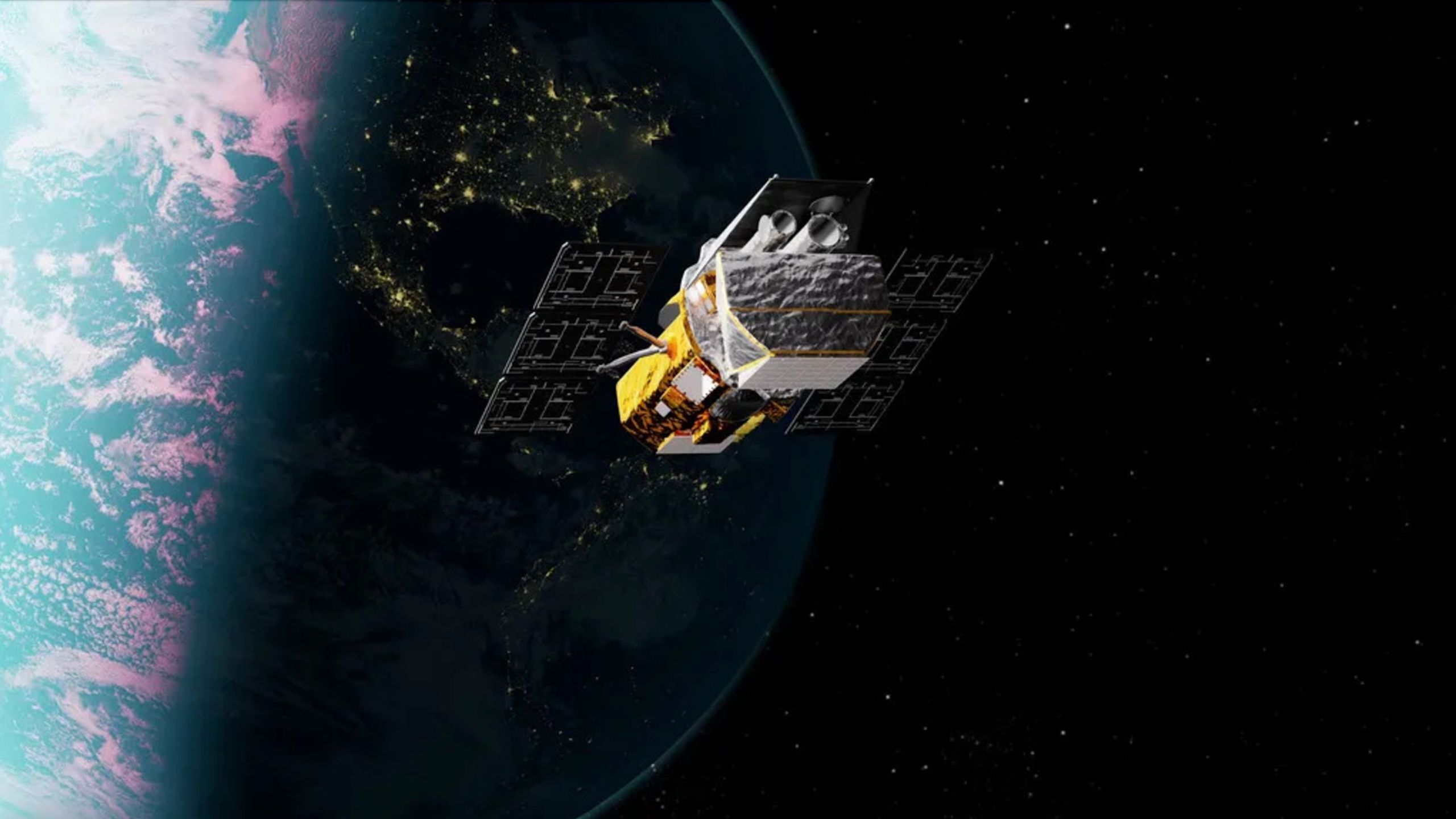
The spacecraft is nearing the end of a journey that began with its October 2024 launch aboard a SpaceX Falcon 9 rocket. The Didymos system is currently about 122 million miles, or 197 million kilometers, from Earth.
Approach operations begin to pay off
Hera performed braking maneuvers earlier in October to slow its approach and set up its rendezvous with the binary system. Its first resolved image confirms that the navigation and approach phase is bringing the target into clearer view.
The mission carries 12 payloads intended to examine the asteroids in detail. Those observations are expected to provide information relevant to how the DART impact changed Dimorphos and to the physical properties of the asteroid pair.
Hera also carries two small cubesats. They are intended to make closer observations and eventually land on Dimorphos, which is about 495 feet, or 151 meters, wide. Together, the main spacecraft and its companion probes are designed to move the investigation from a successful impact demonstration to a more complete physical assessment of the target.
Why the mission matters
Planetary defense depends on understanding not only whether an intervention can change an object’s path, but also how that result depends on the target’s structure and material properties. Hera’s detailed survey of a real, deliberately altered asteroid offers an opportunity to improve that understanding.
The new image is modest in resolution, but it marks the transition from long-distance travel to close investigation. Dimorphos is now a distinct target for Hera’s instruments, and the spacecraft’s upcoming observations will help scientists reconstruct the consequences of humanity’s first asteroid-deflection test.
This article is based on reporting by Space.com. Read the original article.
Originally published on space.com