A familiar galaxy cluster now looks very different
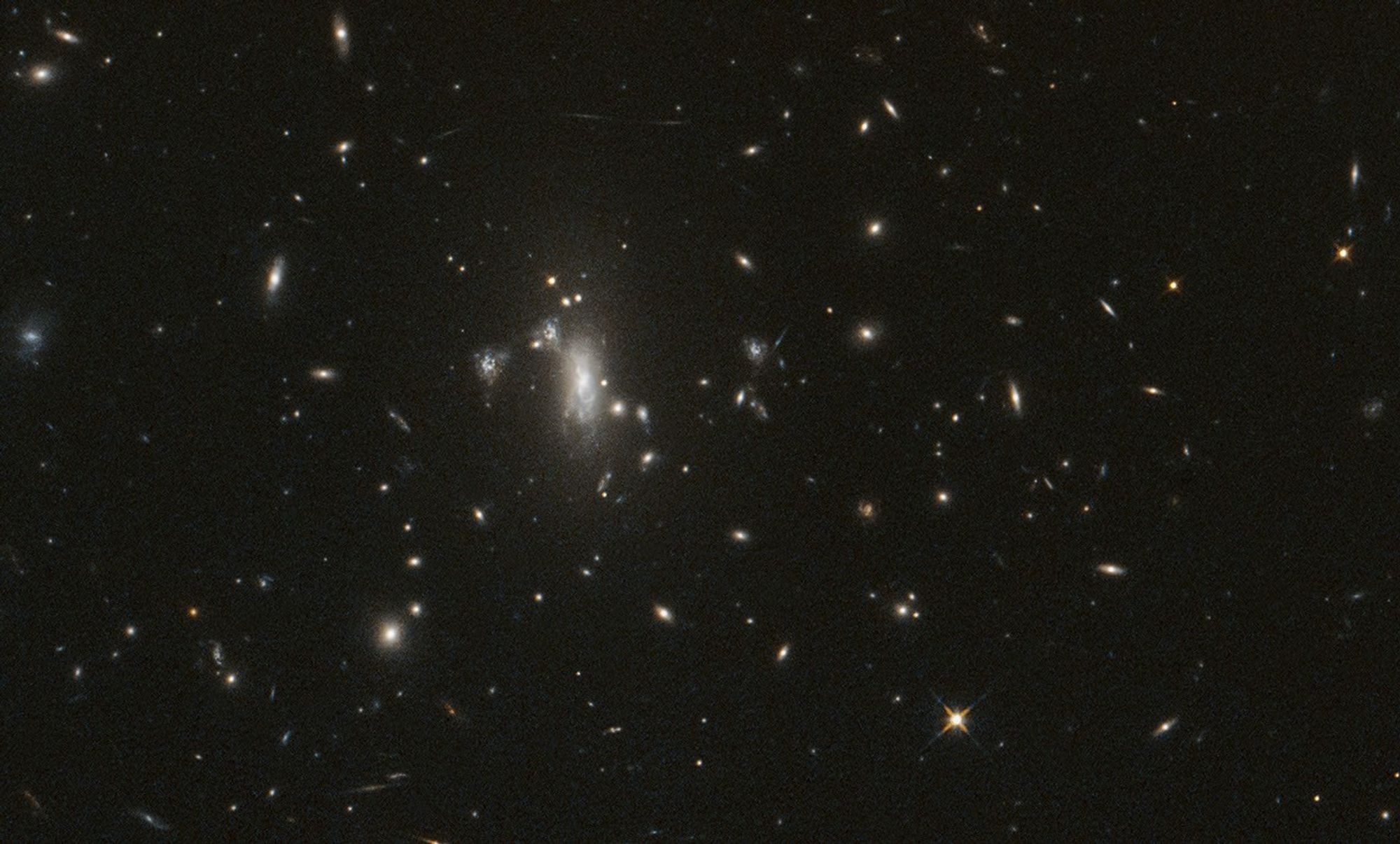
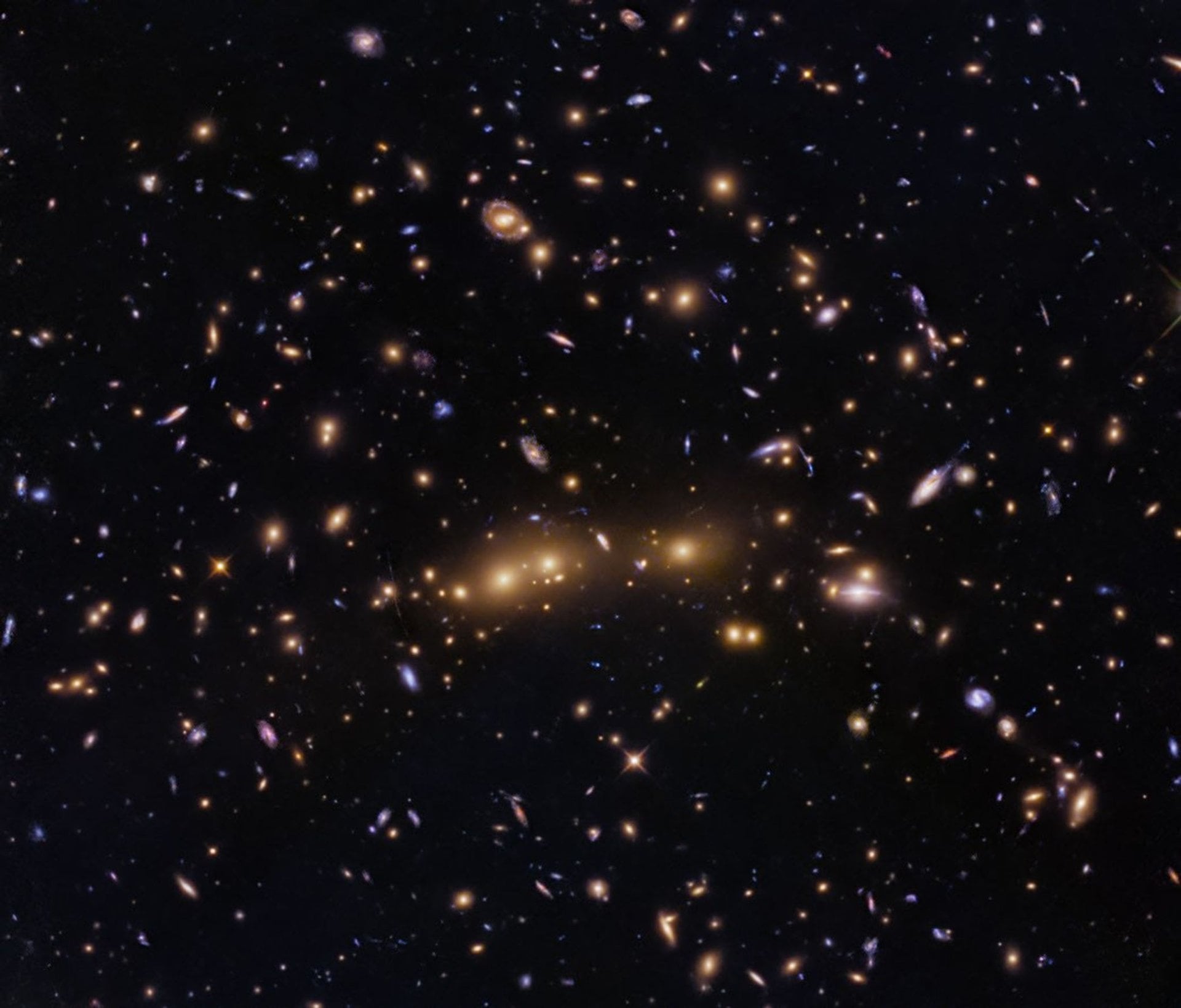
Astronomers using the Hubble Space Telescope, together with X-ray observations from the Chandra X-ray Observatory, have found that CL0016+1609 is not a single galaxy cluster after all. The object, also known as MACS J0018.5+1626, appears to be two galaxy clusters in the process of merging along our line of sight.
That matters because galaxy clusters are among the largest structures in the universe held together by gravity. When two of them collide and combine, they offer researchers a way to study how matter, including dark matter, is distributed on very large scales. In this case, Hubble’s optical view and Chandra’s X-ray data helped turn a bright, heavily studied target into a more dynamic story about structure formation.
The new image released from Hubble centers on a dense swarm of galaxies. The cluster has long been known as a bright X-ray source and has already been studied extensively at X-ray and radio wavelengths. What makes the new work notable is not simply the image quality, but the interpretation: the bright cluster is actually a merger viewed from an angle that makes the two systems overlap from Earth’s perspective.
Why this merger matters
Galaxy-cluster mergers are important laboratories for cosmology because they involve immense quantities of hot gas, galaxies, and dark matter. Researchers behind the Hubble observations specifically requested time on the telescope’s Advanced Camera for Surveys to measure how dark matter is distributed in CL0016+1609.
Hubble cannot directly image dark matter, but it can detect its effects. The key tool is gravitational lensing, in which the gravity of the cluster bends and magnifies light from more distant galaxies behind it. By mapping how background light is distorted, astronomers can infer where unseen mass is concentrated.
That approach is especially useful in a merger, where visible matter and total mass do not always line up in simple ways. A colliding system can help researchers compare the positions of galaxies, hot X-ray-emitting gas, and lensing-derived mass. The result is a better picture of how the merger contributes to the growth of the universe’s large-scale structure.
The scientific value here is not limited to one cluster. Because these collisions are part of the way cosmic structures assemble over time, each well-observed case adds to broader efforts to understand how matter has clumped together across cosmic history.
Hubble’s role in tracing dark matter
The Hubble data in the new image come from more than one observing effort. In addition to the Advanced Camera for Surveys observations, the image also includes data from Hubble’s Wide Field Camera 3 gathered through the Reionization Lensing Cluster Survey, or RELICS.
RELICS used galaxy clusters as natural gravitational lenses to peer deeper into the universe. According to the source material, Hubble’s first infrared images for this target were taken as part of that program, which included 46 galaxy clusters. Those gravitational lenses also helped astronomers identify about 300 candidate high-redshift galaxies.
That wider context helps explain why a target like CL0016+1609 remains valuable even after years of study. A single cluster can serve multiple purposes at once: it can be a subject in its own right, a tool for finding much more distant galaxies, and a test case for mapping dark matter with lensing.
In the released image, those effects are visible in the form of arcs from background galaxies. A faint vertical arc appears to the left of large elliptical galaxies near the center, while a brighter and shorter arc is visible just above and to the right of the same region. These stretched features are signatures of lensing and also reminders that the cluster is acting like a natural cosmic telescope.
A deeper look at a well-known target
CL0016+1609 was already one of the most extensively studied galaxy clusters in X-ray and radio wavelengths. That makes the updated interpretation notable. Rather than introducing an obscure new object, the findings reframe a known system using a combination of observational tools.
This is a common pattern in modern astronomy. Large observatories do not simply produce isolated snapshots. They work best when their data sets are combined. Hubble contributes precise optical and infrared imaging, while Chandra adds information about hot gas that shines strongly in X-rays. Together, those views can reveal physical relationships that are harder to see from one wavelength alone.
For the public, the image is a striking reminder that apparently static sky objects are often caught in the middle of slow but violent processes. Galaxy clusters evolve over immense timescales, but their mergers shape the architecture of the cosmos.
For researchers, the cluster offers another opportunity to refine models of how mass is arranged in one of the universe’s biggest gravitational systems. If the team’s dark-matter measurements improve, they may help clarify how the merger unfolded and how similar systems should be interpreted in future surveys.

What this tells us about the larger universe
The significance of the result is less about a single dramatic event and more about cumulative understanding. The universe’s largest structures did not appear fully formed. They grew by repeated mergers and accretion, with clusters combining into still larger assemblies over time.
By identifying CL0016+1609 as two clusters merging along our line of sight, astronomers gain a more precise case study in that process. The geometry is useful, the lensing signatures are visible, and the object already has a rich history of observations in multiple wavelengths.
That combination makes it a strong target for continued follow-up work. It also shows why Hubble remains scientifically productive even after decades in orbit. The telescope is still contributing to front-line questions about dark matter, the assembly of large-scale structure, and the use of natural lenses to observe galaxies from much earlier in cosmic history.
The image itself may be what first draws attention, but the more important development is interpretive. A bright, familiar cluster has turned into a collision scene, and that shift gives astronomers a better framework for studying both visible matter and the much larger reservoir of matter they can only infer through gravity.
This article is based on reporting by Universe Today. Read the original article.
Originally published on universetoday.com