SpaceX pushes Starlink launch to Tuesday after late scrub
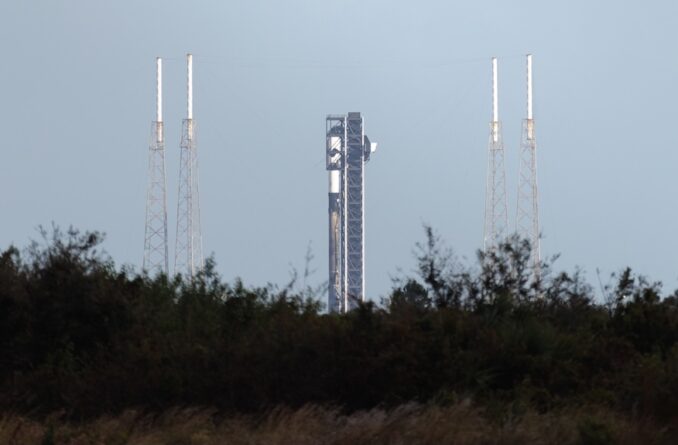
SpaceX scrubbed a planned Falcon 9 launch on Monday, August 10, 2026, delaying another expansion flight for its Starlink broadband constellation and pushing the mission to a new window on Tuesday morning. The company had been preparing to launch the Starlink 10-19 mission from Space Launch Complex 40 at Cape Canaveral Space Force Station before calling off the attempt hours before liftoff.
According to the mission coverage, SpaceX is now targeting liftoff at 10:26 a.m. EDT on Tuesday, August 11. The mission will send another batch of Starlink V2 Mini Optimized satellites into low Earth orbit, adding to a launch cadence that has already become one of the defining operational stories of the commercial space industry in 2026.
Even by SpaceX standards, the pace is unusually high. The source text states that Starlink 10-19 would mark the company's 72nd Starlink satellite flight of the year. After this mission, SpaceX would also have flown 93 Falcon 9 rockets in 2026. Those numbers underscore how far the company has pushed launch operations from occasional headline events toward near-industrial repetition.
A scrub in a year defined by volume
In one sense, Monday's scrub is routine. Launch delays are common, and SpaceX has built much of its reputation on recovering quickly from them. But in another sense, the event shows how tightly packed the company's schedule has become. When a mission slips by a day, it is not just a single launch moving on the calendar. It is part of a much larger transport system that SpaceX now runs almost continuously.
The delayed mission is part of that system. Starlink launches are no longer isolated demonstrations of reusability or showcase events for a new spacecraft. They are the logistics backbone of a growing satellite network that depends on frequent replenishment and expansion. Each flight adds capacity, refreshes orbital assets, and helps SpaceX maintain momentum in a broadband market where scale is itself a strategic advantage.
The launch was initially slated for Monday at 12:20:09 p.m. EDT, but the attempt was scrubbed before that time. A precise reason is not provided in the supplied source text, and the report focuses instead on the revised schedule and weather outlook for the next attempt.

Weather remains mostly favorable
For Tuesday's launch window, the 45th Weather Squadron forecast a 90% chance of favorable conditions at the opening of the window, declining to 75% as the window progresses. The main concern identified in the forecast is the cumulus cloud rule, with the probability of a violation increasing later in the opportunity.
The weather officers described an Atlantic ridge axis sliding southward over the Spaceport, shifting winds to a very light south-southwesterly flow. They also noted that a relatively dry air mass should keep conditions broadly similar to those expected for Monday's attempt.
That forecast matters because a high launch rate only works when turnaround times stay short not just in manufacturing and vehicle processing, but also in the narrower operational constraints of range access and weather. SpaceX has become notably efficient at absorbing those variables, but Florida launch conditions still impose real boundaries on how reliably missions can leave on the first try.
The booster and the recovery plan
The mission will use Falcon 9 first-stage booster B1085, which is scheduled to fly for the 18th time. Its previous missions include NASA's Crew-9, GPS III-7, and Fram2, according to the source text. That flight history illustrates how deeply reuse is now embedded in SpaceX operations. A booster that once would have been treated as a major engineering asset for a handful of flights has instead become a repeatedly cycled workhorse across government and commercial missions.
After stage separation, B1085 is expected to attempt a landing on the droneship A Shortfall of Gravitas, stationed in the Atlantic Ocean off the coast of South Carolina. If successful, the landing would be the 163rd on that vessel and the 647th Falcon booster landing overall.
Those cumulative numbers are not just records for their own sake. They are evidence of how SpaceX has turned recovery operations into an integrated part of launch economics. Reusability reduces the cost per mission only if the company can retrieve, inspect, refurbish, and refly hardware at high tempo. The fact that an 18-flight booster is being tasked with another Starlink deployment shows that reuse is no longer experimental within Falcon 9 operations. It is the baseline.

Why another Starlink mission still matters
Starlink launches can seem repetitive because the company now flies them so frequently, but that repetition is precisely the point. The constellation's scale gives SpaceX leverage in consumer broadband, mobility connectivity, and global communications resilience. Every additional batch of satellites strengthens that network's redundancy and reach.
The Starlink 10-19 mission also reflects a continuing evolution in spacecraft design. The source text identifies the payload as Starlink V2 Mini Optimized satellites, indicating that SpaceX is still refining the configuration it uses to balance capability with the lift limits of Falcon 9. That optimization process matters because constellation economics depend not just on the number of launches, but on how much usable capacity each launch adds.
Seen in that context, a one-day delay does little to change the strategic picture. What stands out more is the sheer regularity with which SpaceX can absorb a scrub, recycle a launch attempt, and keep its deployment campaign moving.
Industrial launch cadence becomes the story
Space launches were once defined by rarity. A scrub meant prolonged uncertainty, and each mission sat apart from the next. SpaceX has spent years changing that model, and 2026 appears to be another proof point. When a company is preparing for its 93rd Falcon 9 mission of the year and its 72nd Starlink launch, the story is less about whether one rocket flies on a specific Monday than about the emergence of launch as a continuous industrial service.
That does not make delays irrelevant. Scheduling, payload delivery, recovery logistics, and weather windows all still matter. But the broader significance lies in operational resilience. SpaceX can treat a scrub as a temporary interruption rather than a major setback because the system around the rocket has become so practiced.
Tuesday's launch attempt will therefore be more than another Starlink flight. It will be another test of the cadence that has made SpaceX the central actor in orbital launch today: frequent missions, reused hardware, offshore recovery, and a constellation buildout that continues almost without pause. Monday's scrub interrupted that rhythm, but only briefly. The revised target on August 11 shows how quickly the company expects to resume it.
This article is based on reporting by Spaceflight Now. Read the original article.
Originally published on spaceflightnow.com