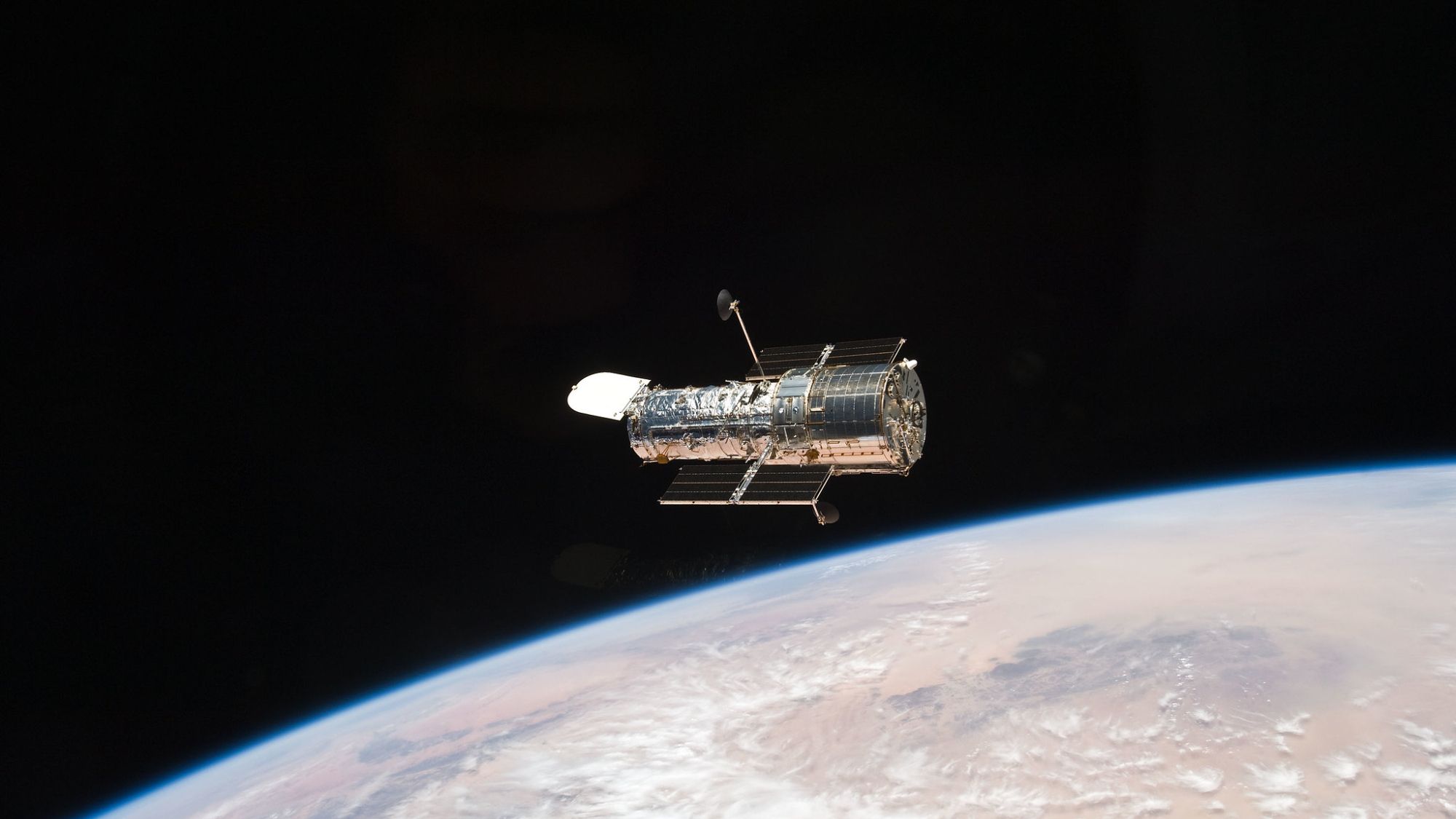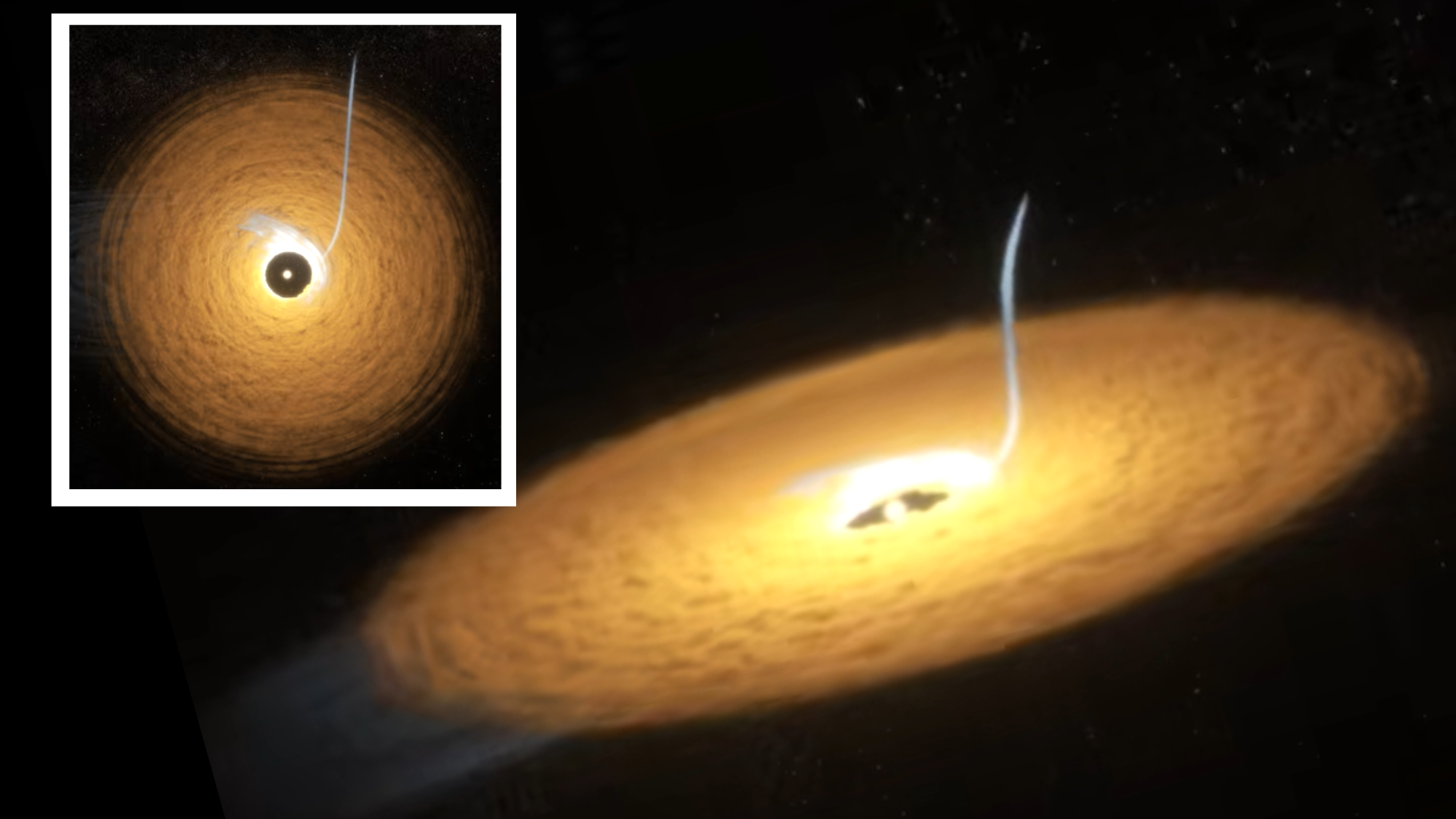
NASA’s Neil Gehrels Swift Observatory reentered Earth’s atmosphere on November 4, ending a 22-year mission that transformed the study of gamma-ray bursts and a late effort to keep the spacecraft in orbit.
According to Space Policy Online, Swift reentered at 7:39 a.m. EST over the North Sumatra region of Indonesia, at approximately 3.4 degrees north latitude and 98.6 degrees east longitude. The observatory had been in space since its 2004 launch.
A rapid-response astronomy mission
Swift was built to respond quickly when a gamma-ray burst is detected. Those bursts are brief, energetic events that can signal some of the universe’s most extreme processes. The spacecraft could rapidly repoint itself, allowing its other instruments to observe the event after the initial detection.
The observatory carried three telescopes that examined the sky across visible, ultraviolet, X-ray and gamma-ray wavelengths. That multiwavelength capability let scientists study transient phenomena from several angles rather than relying on a single kind of observation.
NASA said Swift broadened understanding of a wide range of objects and events. Its observations included active galaxies powered by supermassive black holes, stars experiencing X-ray flares, supernova explosions, and comets and asteroids within the solar system.
In 2017, NASA renamed the mission for Neil Gehrels, Swift’s principal investigator, following his death. The spacecraft’s scientific legacy therefore spans both its original role in rapidly following gamma-ray bursts and its longer record as a flexible observatory for transient and variable cosmic events.

Solar activity shortened the timetable
The mission’s final chapter was shaped by increased solar activity, which caused Swift to lose altitude sooner than expected. Once it became clear that the observatory would reenter earlier than planned, NASA pursued an unusual attempt to rescue it.
In September 2025, NASA awarded Katalyst Space a $30 million contract for a mission intended to grapple Swift and raise its orbit. The proposal faced an inherent challenge: Swift had not been designed for servicing or reboosting and had no dedicated grappling fixtures.
Katalyst’s LINK spacecraft was intended to rendezvous with the observatory and take on the difficult task of connecting with a satellite that was not built to be captured. The effort was notable because it sought to extend the life of an existing science spacecraft rather than simply accept an uncontrolled reentry.
LINK launched on a Northrop Grumman Pegasus XL rocket from Kwajalein Atoll in the Pacific on July 3, 2026. But the mission encountered technical problems shortly afterward, according to the report.
Failures ended the recovery mission
An unresponsive reaction-control-system valve caused LINK to spin up. A subsequent power circuit-switch failure then ended the rescue effort. Without a successful intervention, Swift could not be returned to a higher, safer orbit.
The sequence underscores the difficulty of attempting orbital servicing with spacecraft that were not designed for it. A mission must not only reach the target spacecraft; it must also maintain control, navigate a close approach and carry out the planned interaction reliably enough to change the target’s trajectory.
For Swift, the recovery concept was especially demanding because the observatory was an aging science platform without hardware intended for a servicing vehicle. The failure of LINK did not diminish the mission’s scientific contribution, but it closed off an attempt to preserve that capability beyond its anticipated end.

An end to a long-running observatory
Swift’s reentry closes the operational life of a spacecraft launched when rapid follow-up of gamma-ray bursts was central to its design. Over more than two decades, its ability to shift attention quickly made it useful for observing many kinds of changing or short-lived phenomena.
The observatory’s end also illustrates how solar activity and orbital decay can reshape mission planning. NASA and Katalyst moved from recognizing an accelerated loss of altitude to launching a dedicated rescue spacecraft in less than nine months, but the servicing mission’s own failures prevented a final extension.
Swift is now gone, but the data and discoveries associated with its visible, ultraviolet, X-ray and gamma-ray observations remain part of its legacy. Its reentry marks the end of a specific spacecraft, while also providing a recent example of the technical and operational limits involved in rescuing an unprepared satellite already nearing the end of its orbit.
This article is based on reporting by spacepolicyonline.com. Read the original article.
Originally published on spacepolicyonline.com