Britain’s latest Ukraine support package centers on know-how, not just hardware
The United Kingdom is moving another step beyond the model of simply shipping finished weapons into Ukraine. According to Defense One, a new technology-sharing agreement will allow Ukrainian manufacturers to produce a British-designed radar jammer known as Stone Cloak, a system intended to improve the survivability and effectiveness of long-range strike drones operating against Russian targets.
The reported agreement is notable less for the size of the device than for what it signals. Allied military support to Ukraine has increasingly shifted from direct donations of missiles, vehicles, and other equipment toward the transfer of designs, production methods, and technical expertise that Ukrainian industry can absorb and scale locally. In a war shaped by rapid iteration, that may prove more consequential than any single delivery package.
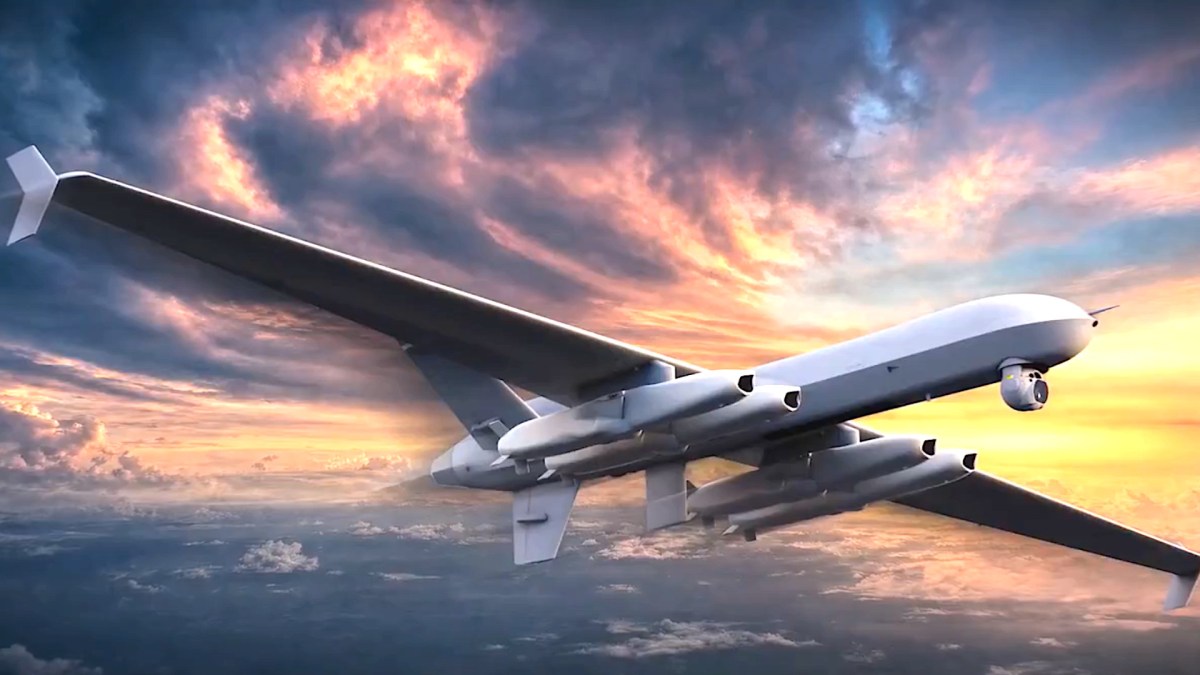
Stone Cloak, described as roughly the size of a computer tablet, has already been used in British-built form on some Ukrainian long-range strike drones this year. The new arrangement would let Ukraine mass-produce the system itself, which should make it easier to distribute across a wider set of drone units without waiting on foreign manufacturing pipelines.
Why a jammer matters in drone warfare
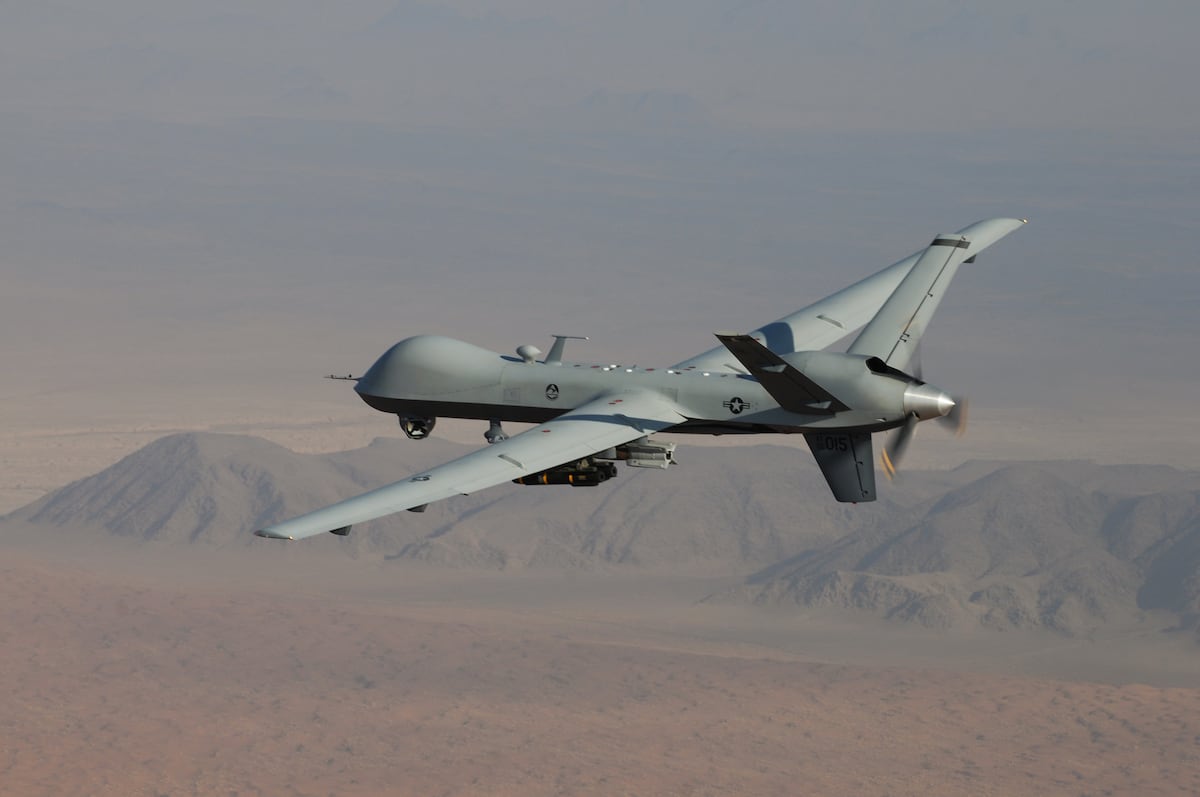
The basic purpose of a radar jammer is to make it harder for enemy air defenses to detect, track, or engage an aircraft. Defense One reports that Stone Cloak is a digital jammer designed to help Ukrainian drones penetrate Russian air-defense networks. That is an especially important mission area because long-range drones only create operational pressure if they can reach defended targets with enough reliability to justify their cost and deployment.
Jeffrey Fischer, a retired U.S. Air Force officer quoted by Defense One, said the full details of Stone Cloak are not yet public but that the system will likely increase mission effectiveness against at least some Russian air defenses. That is a cautious assessment, but it fits the broader role electronic warfare now plays in the conflict. On both sides, drones are no longer just airframes with explosives or sensors attached. They are components in a fast-moving contest of detection, spoofing, jamming, shielding, and adaptation.
In that environment, even incremental improvements to electronic protection can have outsized battlefield effects. A drone that can survive one extra defensive layer may reach a logistics hub, radar site, ammunition storage point, or command node that would otherwise remain out of range in practical terms. The strategic value lies in cumulative probability, not in any single flight.
From donor supply chains to Ukrainian production
The more important development may be industrial. Ukraine has built a large and increasingly sophisticated drone-manufacturing base during the war. As that base matures, foreign partners can contribute not only finished systems but also specialized subsystems that Ukraine can integrate and replicate domestically.
That model addresses a classic wartime bottleneck. Imported military aid is limited by donor stockpiles, political calendars, procurement lead times, and export constraints. Licensed or shared production can reduce several of those limits at once, especially for compact electronic systems that are easier to manufacture in volume than large complex platforms.
Defense One frames the British move as part of a broader trend in which allied donations have progressed from missiles to designs because Ukrainian manufacturing now outpaces some donor systems for speed and scale. If that pattern holds, future assistance packages may increasingly resemble industrial partnerships rather than one-direction shipments.
Such agreements also let Ukraine iterate faster. Domestic production means engineers and operators can feed battlefield lessons back into manufacturing more directly. In drone warfare, where both offensive and defensive methods can change in weeks rather than years, that loop matters. A locally built jammer can potentially be modified, tested, and reissued much faster than a foreign-made system that must move through longer approval and logistics chains.
Exercises and experimentation are shaping the next wave of systems
The Stone Cloak announcement was made as Ukrainian President Volodymyr Zelenskyy visited Portsmouth during the annual Sea Breeze exercise. According to the report, Ukrainian, U.S., and British sailors paid special attention this year to countering Russian air defenses. That detail underscores how operational learning is now spread across a mix of battlefield experience, multinational exercises, and technical exchange.
Defense One also highlights a point that has become central to allied adaptation: Ukraine’s combat experience is feeding back into NATO thinking rather than flowing only the other way. The article cites the Hedgehog 2025 exercise in Estonia, where a Ukrainian team reportedly exposed significant gaps in NATO drone warfare concepts. That dynamic is important. Ukraine is not simply a recipient of Western systems; it is also an engine of tactical and technical feedback, particularly in the fields of drones and electronic warfare.
For partners like the U.K., that makes co-development more valuable than static support. Systems can be stress-tested against lessons drawn from active, high-intensity combat. For Ukraine, it means access to larger research budgets, more controlled experimentation, and technologies that can then be reworked for local production.
A broader shift in the war’s military technology economy
The Stone Cloak story is a compact example of how the military technology economy around Ukraine is changing. Early in the war, urgency favored direct transfers of whatever allies could spare. Over time, the conflict has become a competition in manufacturing depth, software iteration, electronic survivability, and design diffusion. The side that learns faster and industrializes those lessons more effectively gains an advantage.
That is why the transfer of a jammer design can matter beyond the specific device involved. It reflects a support strategy built around enabling Ukrainian capacity rather than only backfilling Ukrainian shortages. In practical terms, it suggests future assistance could increasingly focus on the pieces that make autonomous and remotely piloted systems harder to stop: guidance, sensing, networking, and electronic protection.
Much remains unknown about Stone Cloak’s technical details and battlefield performance. The source material does not disclose its frequencies, methods, or measurable effects, and those omissions are unsurprising for an active military system. But even with those limits, the larger direction is clear. Britain is not only helping Ukraine field drones. It is helping Ukraine build more of the invisible electronics that determine whether those drones reach their targets at all.
This article is based on reporting by Defense One. Read the original article.
Originally published on defenseone.com