NIST moves to formalize AI model testing
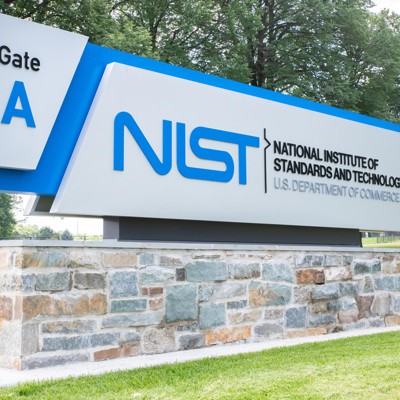
The U.S. National Institute of Standards and Technology has launched a new artificial intelligence evaluation platform aimed at giving researchers and developers a more structured way to test model performance and safety. The program, called AI Technology Evaluation, or AITE, was announced on July 27 and is designed as a voluntary testing vehicle in which models are assessed inside an isolated environment using blind data.
The initiative matters because it addresses a growing problem in AI governance and deployment: many claims about model capability are difficult to compare across labs, vendors, and use cases. Benchmark inflation, uneven test conditions, and the use of public datasets that may already have been absorbed into training pipelines can make headline performance numbers less meaningful than they appear.
AITE is intended to offer a more controlled alternative. According to the source text, the platform will provide common data, metrics, and scoring so developers can better understand how their systems perform. The test data supplied through the platform is not meant to become training data, an important design choice for keeping evaluations independent.
What AITE is set up to do
NIST describes the system as an isolated testbed where AI models can be evaluated against a range of commands while processing blind data. That structure is meant to generate objective insights into both capability and safety-related behavior. Rather than relying only on open, widely circulated benchmarks, the platform uses datasets that are not publicly accessible.
The practical effect is straightforward: models are less likely to be judged on material they may already have seen, and researchers gain a more defensible basis for comparing results. In AI evaluation, that is a meaningful distinction. A benchmark is most useful when it reveals how a model handles genuinely unfamiliar tasks, not how well it reproduces patterns from data that may already be embedded in its weights.
AITE will begin with image-analysis tasks for large vision-language models across three domains: quantum science, genomics, and public safety. NIST says more tasks will be added later. The initial focus reflects a pragmatic choice. Vision-language systems are increasingly important in both commercial and government settings, yet evaluation standards for domain-specific performance remain uneven.

Why blind data changes the conversation
The most consequential element of the platform may be its use of blind datasets. In AI, public benchmarks are useful for standardization, but they also create incentives to optimize directly for the test. That can blur the difference between real generalization and benchmark-specific tuning. By using original datasets that are not publicly available, AITE aims to reduce that distortion.
Data providers participating in the program are expected to submit original, nonpublic datasets along with meaningful tasks suited to those datasets. Model developers, in turn, submit their models for testing against that material. NIST’s role is to provide the testing infrastructure and common scoring framework.
This setup has two implications. First, it gives data owners a path to contribute domain-specific evaluation material without turning it into a public training resource. Second, it gives model developers a way to obtain third-party performance signals that may carry more credibility than self-reported benchmark results.
That does not make AITE a universal answer to AI evaluation. Much depends on dataset quality, task design, and whether the chosen scoring methods reflect the kinds of failure that matter in practice. But as a framework, it pushes evaluation toward more realistic and more difficult testing conditions.
A federal role in voluntary AI safety infrastructure
The launch also fits into a broader federal strategy centered on voluntary cooperation with major AI developers. The source text describes AITE as the latest step in the Trump administration’s approach to advancing model safety through voluntary model submissions. It follows a Commerce Department announcement in May about a renegotiated arrangement involving Google DeepMind, Microsoft, and xAI to evaluate models through the Center for AI Standards and Innovation.
That context is important. The U.S. government is not simply issuing guidance from the sidelines; it is building shared testing infrastructure intended to shape how model quality and safety are measured. Voluntary programs can move faster than formal regulation, especially in a field where model architectures and deployment patterns shift rapidly. At the same time, their influence depends on whether leading developers choose to participate and whether the resulting evaluations are treated as credible by the wider ecosystem.
NIST’s institutional role gives the effort added weight. The agency has long been central to measurement, standards, and evaluation frameworks across technical domains. Applying that tradition to AI is a logical move, particularly as policymakers, agencies, and enterprise buyers look for better tools to compare systems beyond marketing claims.

What the first phase signals
The choice of initial domains offers clues about how NIST sees the near-term evaluation challenge. Quantum science and genomics both involve specialized knowledge and complex data interpretation, making them useful test cases for whether vision-language models can perform reliably in expert contexts. Public safety adds a more operational dimension, where mistakes may carry more immediate consequences.
By starting there, AITE appears to be positioning itself not just as a generic benchmark hub, but as a venue for task-specific, higher-stakes assessment. That is potentially significant for government procurement and research funding, where agencies increasingly need evidence that a model can perform under constrained, domain-relevant conditions.
The first evaluations are scheduled to begin in August 2026, so the initial results may arrive soon. Those outcomes will likely determine whether AITE becomes a niche technical program or a more central reference point in U.S. AI oversight and model comparison.
What to watch next
The immediate question is participation. A voluntary evaluation framework is only as influential as the quality of the datasets submitted and the caliber of the models it attracts. If leading developers see value in independent scoring on blind tasks, AITE could become an important signal for buyers, regulators, and researchers. If participation is limited, its impact may remain narrower.
Another question is expansion. NIST has said more tasks will be added over time. If the platform grows into additional modalities and sectors, it could help establish a more durable common language for discussing model performance. That would be particularly useful in an industry where the phrase “state of the art” is often asserted more easily than it is measured.
For now, AITE represents a concrete shift from broad AI-safety discussion toward operational evaluation infrastructure. In a market crowded with benchmarks and competing claims, a blind-data testbed run by NIST could become one of the more important experiments in making AI assessment more rigorous.
This article is based on reporting by Defense One. Read the original article.

Originally published on defenseone.com