Pentagon nominates new leader for a major Army theater command
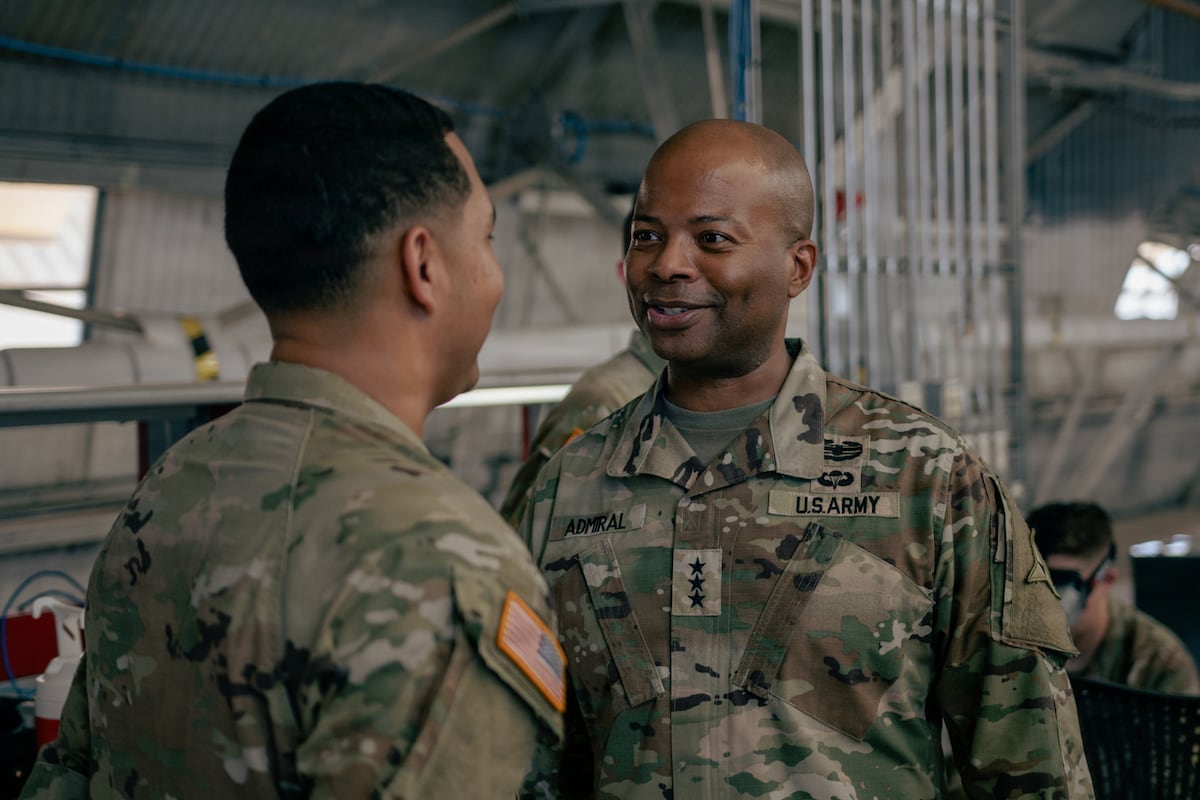
The Pentagon has nominated Lt. Gen. Kevin D. Admiral to become the next commander of U.S. Army Europe and Africa, placing him in line for one of the Army’s most consequential overseas leadership roles at a moment of wider turbulence in senior military appointments.
If confirmed, Admiral would succeed Gen. Christopher Donahue, who left the post earlier in July after about 18 months in command. Since Donahue’s departure, Maj. Gen. Christopher Norrie has been serving as acting commander. The nomination was reported by Defense News and described as part of a broader pattern of top-level leadership changes under Defense Secretary Pete Hegseth.
U.S. Army Europe and Africa, often shortened to USAREUR-AF, oversees a large and strategically sensitive area of responsibility. The command sits at the center of Army coordination across Europe and Africa and links directly into NATO land-force planning. That makes the nomination notable not only as a personnel move, but as a signal about command structure and civil-military priorities during an active reshaping of the Pentagon’s upper ranks.
The role extends beyond the Army’s own chain of command
According to the source report, Admiral would also serve as commander of NATO’s Allied Land Command if confirmed. In that role, he would coordinate with 104 countries in USAREUR-AF’s area of responsibility. The dual-hatted structure underscores why the position matters beyond internal Army management. It bridges U.S. operational leadership with alliance coordination, training, planning and land-force integration.
That overlap is especially important in a theater where the Army’s mission depends heavily on interoperability, reassurance missions, multinational exercises and coordination with partner militaries. Even when the job changes hands quietly, the command itself remains a central node in how the United States organizes land power with allies.
The nomination also comes with an unusual detail: Admiral would remain a three-star officer in a role that had previously been held at the four-star level. The report does not explain the rationale for that decision, but it stands out as one of the clearest structural signals in the announcement. A reduction in rank attached to a theater-level command can reflect shifting priorities, personnel strategy, or the broader organizational changes occurring at the department level.
Who Kevin Admiral is
Admiral currently serves as commander of III Corps and Fort Hood, Texas, according to the report. His recent senior assignments also include leading the 1st Cavalry Division at Fort Hood and in Poland, as well as serving as director of force management in the Office of the Deputy Chief of Staff, G-3/5/7.
That background combines large-unit operational leadership with Army staff experience. The 1st Cavalry Division posting and his work in Poland are especially relevant to the Europe-facing side of the new role, while his force-management experience suggests familiarity with the institutional side of the Army, including organization and readiness questions that can shape theater performance as much as field operations do.
Because the nomination still requires confirmation, the announcement does not yet amount to a formal transfer of command. But the Pentagon’s choice offers a clear indication of the experience profile it wants in the post: a senior ground commander with both operational and headquarters credentials, and with recent exposure to European missions.
A command change inside a wider leadership shakeup
Defense News tied the nomination to a broader wave of senior-level turnover under Hegseth. The report says the defense secretary in April asked Army Chief of Staff Gen. Randy George to step down and retire before the typical end of a four-year term. It also says Hegseth has removed more than a dozen senior military leaders since taking office, including former Chairman of the Joint Chiefs of Staff Gen. C.Q. Brown and former Chief of Naval Operations Adm. Lisa Franchetti.
Within that context, the Admiral nomination carries added weight. A normal succession would still matter for a theater command spanning Europe and Africa, but a succession that arrives amid repeated high-level removals inevitably raises questions about continuity, institutional balance and the Pentagon’s decision-making tempo.
The source material does not speculate beyond that, and there is no claim in the supplied text that the Admiral nomination itself is controversial. Still, the surrounding pattern is part of the story. Leadership transitions are occurring not in isolation but during a period when the department’s senior ranks are being actively reworked.
Why this post matters now
USAREUR-AF is one of the Army’s most visible commands because it operates at the intersection of deterrence, alliance management and regional contingency planning. It is also a command whose footprint stretches across two distinct geographic areas under one headquarters construct. That requires balancing Europe’s high-intensity alliance obligations with a wide African portfolio that includes partner engagement and theater coordination.
The Defense News report does not enumerate current operations or policy changes under the command, so the significance here comes from structure rather than a newly announced mission. The theater commander sets tone, priorities and relationships across a very large network of military and diplomatic stakeholders. When that role changes hands, especially under unusual rank conditions and during a broader reshuffling, allies and observers take notice.
The nomination could therefore influence how partner militaries read the Pentagon’s current approach to leadership and command emphasis. Even without a change in formal mission, personnel decisions at this level can shape planning culture, communication channels and the tempo of alliance engagement.
What happens next
The next step is confirmation. Until then, Norrie continues as acting commander, and Admiral remains in his current role at III Corps and Fort Hood. If the nomination is approved, he would assume both command of U.S. Army Europe and Africa and leadership of NATO Allied Land Command.
For the Army, the nomination is a reminder that leadership structure is itself a policy signal. The selection of a theater commander communicates not just who will run a headquarters, but how the Pentagon wants that headquarters positioned inside its larger strategy. The fact that the job would be filled by a three-star rather than a four-star officer makes that signal more pronounced.
At minimum, the nomination marks the latest chapter in a significant reordering of senior U.S. military leadership. At a more strategic level, it places a seasoned ground commander on track to oversee one of the Army’s most important alliance-facing commands at a time when command relationships and leadership choices are being watched closely.
This article is based on reporting by Defense News. Read the original article.

Originally published on defensenews.com