A new accusation links the Ukraine war to the Caspian Sea
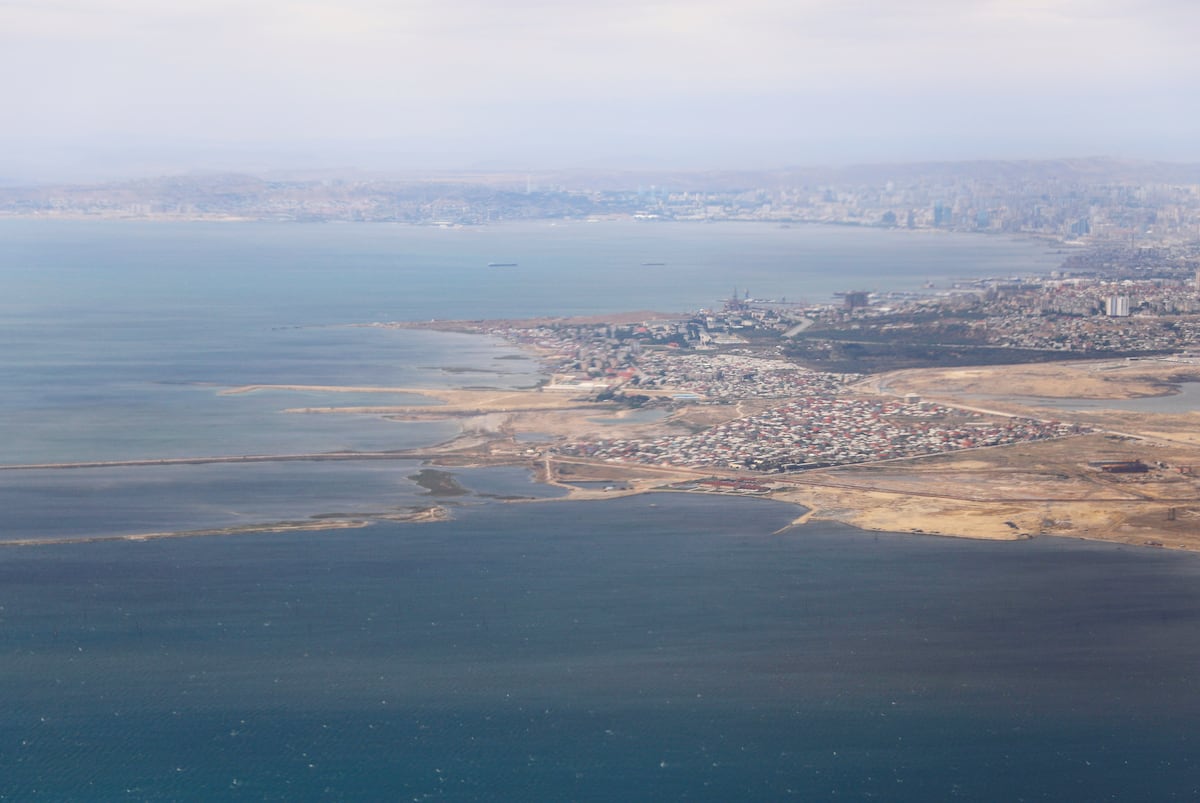
Iran says a Ukrainian attack on an Iranian commercial vessel in the Caspian Sea killed one sailor and injured another, opening a new line of confrontation in a war whose consequences have increasingly spilled beyond the main battlefield. Tehran condemned what it described as a hostile act and summoned Ukraine’s chargé d’affaires to formally protest the incident.
According to Iran’s Foreign Ministry, the strike caused an explosion aboard the vessel. Iranian state news agency IRNA reported that Tehran characterized the incident as a “hostile and criminal” attack. The government said it would defend its national interests and security, language that signals both diplomatic escalation and an effort to frame the event as more than a one-off military action.
The accusation matters because it extends the logic of the Russia-Ukraine war into a sensitive body of water that borders multiple regional states. The Caspian Sea is not the central theater of the conflict, but it sits at the intersection of Russian, Iranian, and broader regional security interests. A reported Ukrainian strike there, especially on a commercial vessel, would represent an expansion in both geography and political symbolism.
Why Tehran and Kyiv are already on a collision course
Iran and Ukraine have not been neutral to each other throughout the war. The supplied report notes that Kyiv has had to counter Iranian-designed drones used by Moscow. That background is essential to understanding why this incident is being treated in Tehran as part of a larger pattern rather than an isolated maritime event.
From Ukraine’s perspective, Iranian military technology has been part of the pressure it faces from Russia. The report says Kyiv has also offered its drone interception expertise to countries in the Middle East that have suffered strikes from Iran. That detail places Ukraine’s position in a broader regional frame: it is not just fighting Russia, but also responding to the downstream effects of Iranian systems used in that fight.
Tehran, by contrast, is presenting the vessel strike as evidence that Kyiv is deliberately widening the war. Iran accused Ukraine of seeking to expand the conflict. That charge is politically useful for Tehran because it casts Iran as the aggrieved party and shifts attention away from the long-running dispute over Iranian support to Russia.
The result is a sharp diplomatic collision built on opposing narratives. Ukraine views Iranian involvement through the lens of drone warfare and military support to Moscow. Iran is presenting the reported attack as unlawful aggression against its own shipping and sovereignty.
Zelenskyy adds a second layer: alleged Russian support for Iranian strikes
The confrontation became more consequential because it coincided with new comments from Ukrainian President Volodymyr Zelenskyy. The report says Zelenskyy stated that Kyiv had observed Russia passing satellite observations in the Middle East to Iran, allegedly enabling Tehran to direct strikes in the region.
That claim broadens the stakes well beyond the vessel incident. If accurate, it would suggest not just political alignment between Moscow and Tehran, but active intelligence support tied to operational targeting. Zelenskyy said Ukraine had recorded “active Russian satellite surveillance” of Gulf states and U.S. military facilities located there since the beginning of July, and that those images later appeared in Iran.
He further said there was a “clear correlation” between Russian satellite imagery of those sites and subsequent Iranian strikes, both in preparation for the attacks and in assessing the damage afterward. As described in the source text, Zelenskyy specifically referenced observation on July 19 and 20 that included four air bases: two in Bahrain, one in Jordan, and one in Kuwait.
Those claims are significant because they connect three layers of conflict at once: the war in Ukraine, Iran’s regional military activity, and the security posture of Gulf states and U.S. facilities in the Middle East. Even without independent verification in the supplied material, the allegation itself changes the political meaning of the incident. It suggests Kyiv is trying to show that its fight with Russia is bound up with a wider network of military cooperation affecting other regions.
A strike, a protest, and a widening field of risk
Zelenskyy had earlier said that Ukrainian forces struck a Russian warship and vessels used to transport Iranian-linked military cargo in the Caspian Sea. That assertion is central to the dispute because it implies a military rationale from Kyiv’s side, even as Iran says the vessel was commercial and the attack killed a sailor and wounded another.
The difference in description is not a minor semantic gap. It goes to the legal and political framing of the event. A vessel carrying military cargo connected to Russia’s war effort occupies one category in wartime argument. A commercial Iranian vessel becomes another. In the supplied account, those competing narratives remain unresolved, but both are shaping the immediate fallout.
What is clear is that the diplomatic response was swift. Iran summoned Ukraine’s chargé d’affaires to register its protest, a move used to convey formal state displeasure without immediately severing relations. Tehran’s language also indicates that it sees the incident as part of a direct security challenge rather than merely a bilateral misunderstanding.
The episode also raises the risk of miscalculation. The Caspian Sea has not been insulated from the wider strategic currents around Russia and Iran, but a claimed Ukrainian strike there introduces another potential point of friction. It complicates an already tangled picture in which military support, intelligence sharing, drone warfare, and maritime transport are all interacting across multiple theaters.
For now, the immediate facts in the supplied reporting are limited but serious: Iran says one sailor was killed and another injured in an explosion caused by a Ukrainian attack; Tehran has lodged a formal protest; and Zelenskyy has linked the event to a larger pattern of Russian-Iranian coordination involving satellite imagery and regional strikes. Taken together, those claims suggest that the boundaries of the Ukraine war are under increasing strain.
Whether this becomes a short-lived diplomatic clash or a more durable escalation will depend on what follows. But even at this early stage, the reported incident stands out for one reason: it compresses maritime security, regional intelligence claims, and the politics of the Russia-Iran relationship into a single episode. That is a sign not of a contained war, but of one whose effects continue to radiate outward.
This article is based on reporting by Defense News. Read the original article.
Originally published on defensenews.com