The Marine Corps has taken delivery of its last MV-22B Osprey
The U.S. Marine Corps has received the final MV-22B Osprey in its planned fleet, closing out deliveries at 359 aircraft and marking the end of a major acquisition chapter for one of the service’s most distinctive and debated aircraft programs.
The handover comes roughly two decades after the MV-22 first reached initial operational capability. According to the report, the tiltrotor is expected to remain in Marine Corps service through 2055, even as the service begins looking toward a future successor under its Next Generation Assault Support, or NGAS, effort.
That combination of final delivery and long service tail captures the Osprey’s place in U.S. military aviation. Production for the Marine Corps is ending, but the aircraft’s operational role is not. Instead, the platform now shifts more fully into a sustainment and modernization phase, while planners consider what could eventually replace its unusual blend of helicopter-like access and fixed-wing speed.
A platform built to bridge two aircraft types
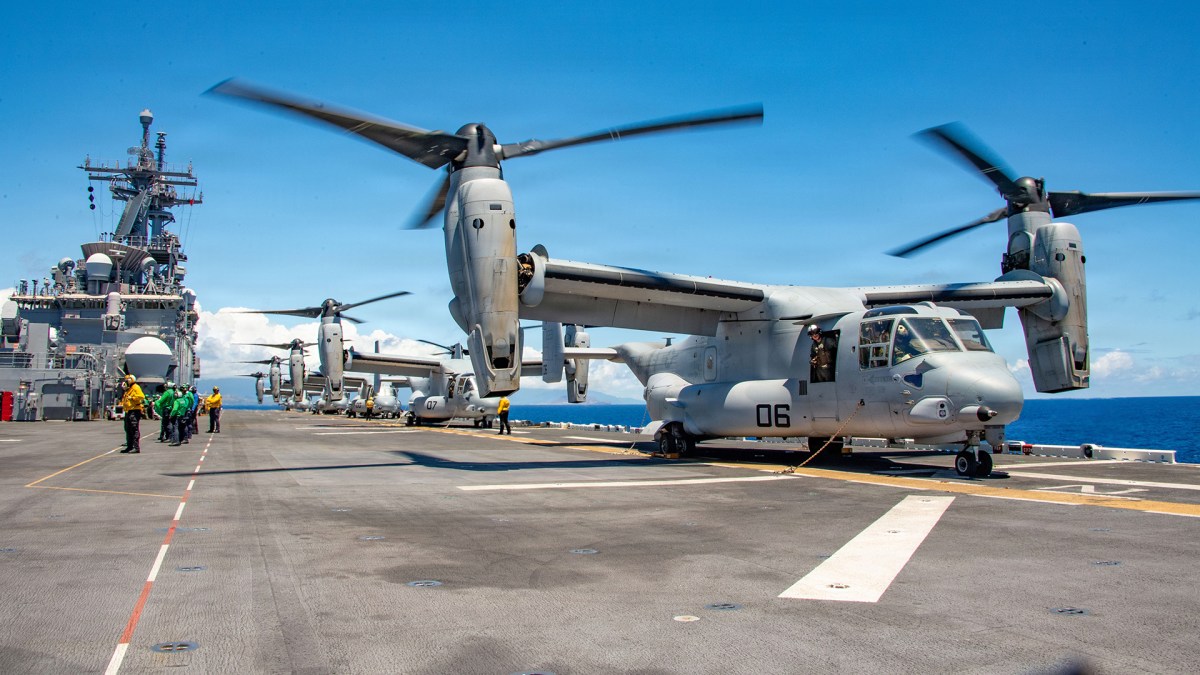
The MV-22B was developed to bridge the gap between rotary-wing and fixed-wing flight. It can take off and land vertically like a helicopter, then convert for faster forward flight with greater range. That combination has long been central to its value proposition, particularly for a Marine Corps that often needs to move forces between ships, remote bases and austere landing zones.
After entering service in 2007, the MV-22B became the backbone of Marine combat air assault capability, primarily replacing the CH-46. The report describes it as self-deployable and capable of flying itself around the globe, while also landing on ships and in tight locations where fixed-wing transport aircraft cannot operate.
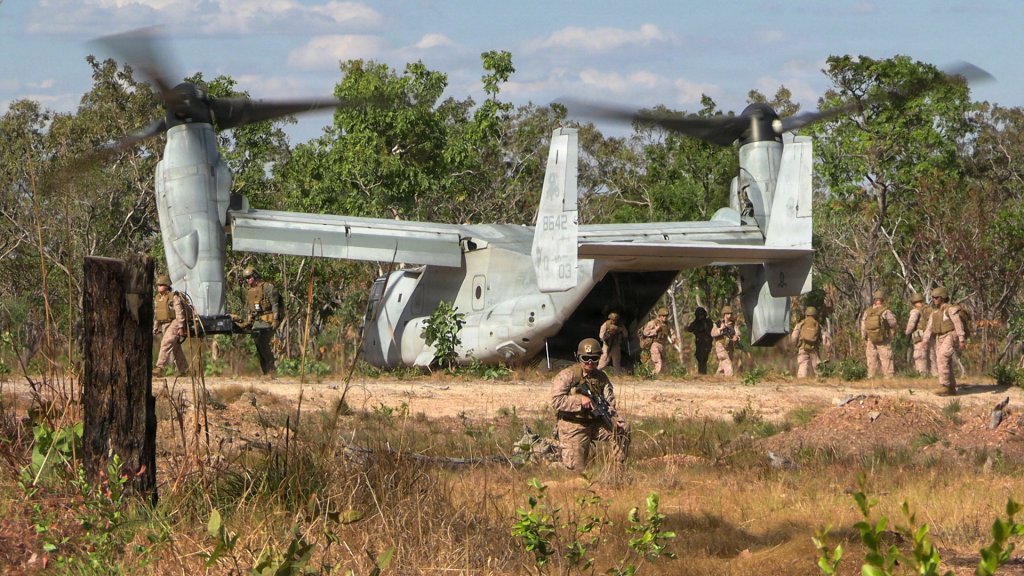
For the Corps, that has translated into more than a technical upgrade. It has shaped how commanders think about distance, timing and maneuver. The aircraft’s speed and reach allow Marine units to connect dispersed forces faster than traditional helicopters can, while still preserving the ability to deliver people and supplies into places without runways.
Lt. Gen. William Swan, the Marine Corps’ Deputy Commandant for Aviation, said the MV-22B fundamentally changed how the Marine Air-Ground Task Force generates combat power. In his account, the aircraft expanded commanders’ decision space by linking ships, bases and distributed forces in ways previous generations could not.

From controversial program to operational mainstay
The Osprey has long drawn scrutiny because of its complex development history and the risks associated with a novel tiltrotor design. Yet the Marine Corps has continued to build doctrine and operational assumptions around the platform. The final delivery underscores that, despite years of controversy, the aircraft became embedded in the service’s force design rather than remaining a niche experiment.
By the Marine Corps’ own accounting cited in the report, the MV-22B fleet has flown more than 686,500 hours across 114 operational deployments. Those missions have included combat operations, contested logistics, medical evacuation and humanitarian assistance.
That list reflects the aircraft’s broad utility. In expeditionary operations, range and shipboard compatibility are especially valuable. In humanitarian missions, the ability to reach damaged or isolated areas without conventional airfield support can make the platform useful beyond combat settings. In contested logistics, the Osprey’s speed offers a way to move personnel and material across wider operating areas.
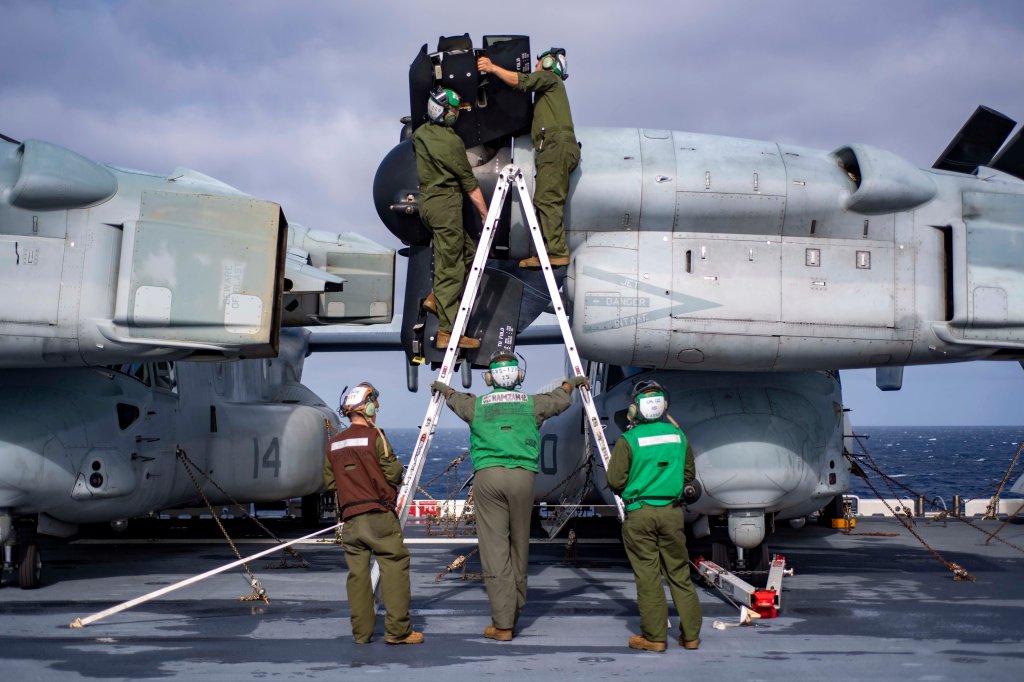
The Marine Corps’ final delivery therefore is not just a procurement milestone. It is also an indicator that the service believes the platform has matured into a long-duration operational asset, one worth sustaining for nearly three more decades.
What comes next for Marine assault support
Even with the Osprey projected to serve until 2055, the Marine Corps is already signaling that it wants a follow-on capability. The report identifies NGAS as the replacement effort now in view. That is notable because it shows how far ahead the service must plan when fielding aircraft that sit at the center of expeditionary operations.
The challenge for any successor will be substantial. The Osprey’s appeal lies in a specific mix of characteristics: vertical takeoff and landing, ship compatibility, long range and far higher speed than conventional rotary-wing aircraft. Replacing it will require more than matching one performance metric. A future aircraft will have to preserve the operational concepts the Osprey enabled, or propose a different concept persuasive enough to displace them.
For now, no replacement is entering service. The Corps will continue to rely on the existing MV-22B fleet, which means sustainment, readiness and fleet management become more important as production closes. The end of deliveries typically shifts attention toward maintenance pipelines, upgrades and long-term availability.
The broader significance is that a defining Marine aviation program has crossed into a new phase. The final aircraft has arrived, but the system it belongs to remains central to U.S. Marine operations. The Osprey is no longer a fleet still being built out. It is now a fully delivered force that the Corps expects to keep flying into the middle of the century.
- Total Marine Corps MV-22B deliveries have closed at 359 aircraft.
- The aircraft first entered service in 2007 and is expected to remain in use through 2055.
- The fleet has logged more than 686,500 flight hours across 114 operational deployments.
This article is based on reporting by twz.com. Read the original article.
Originally published on twz.com