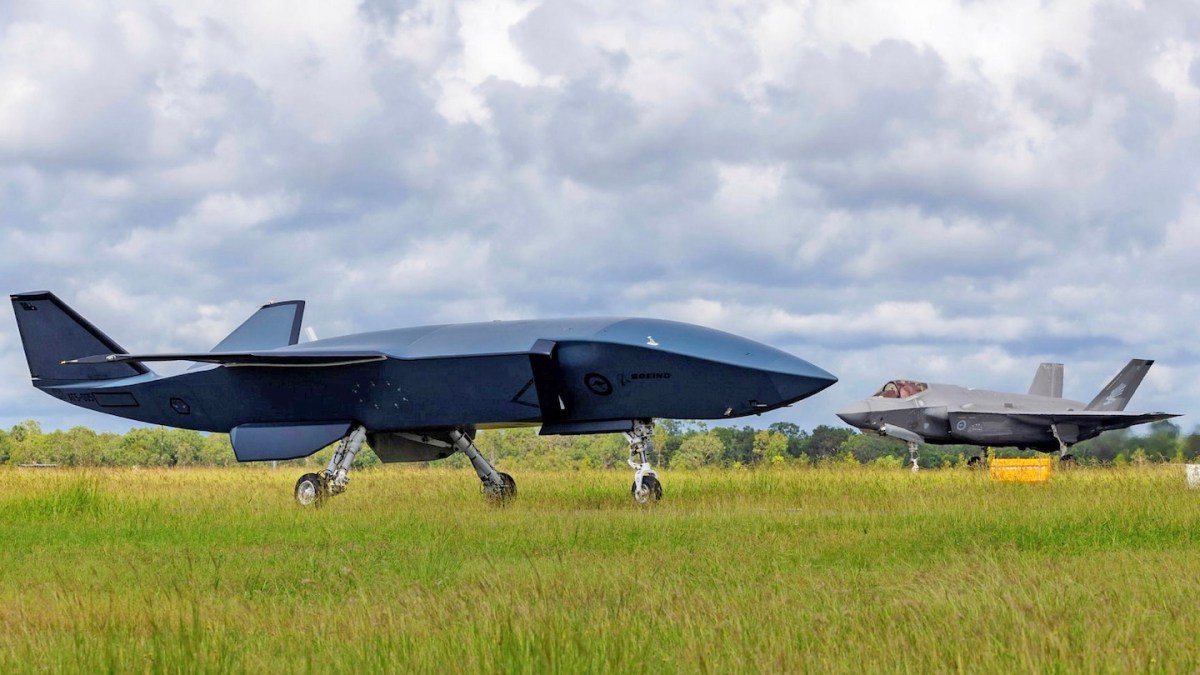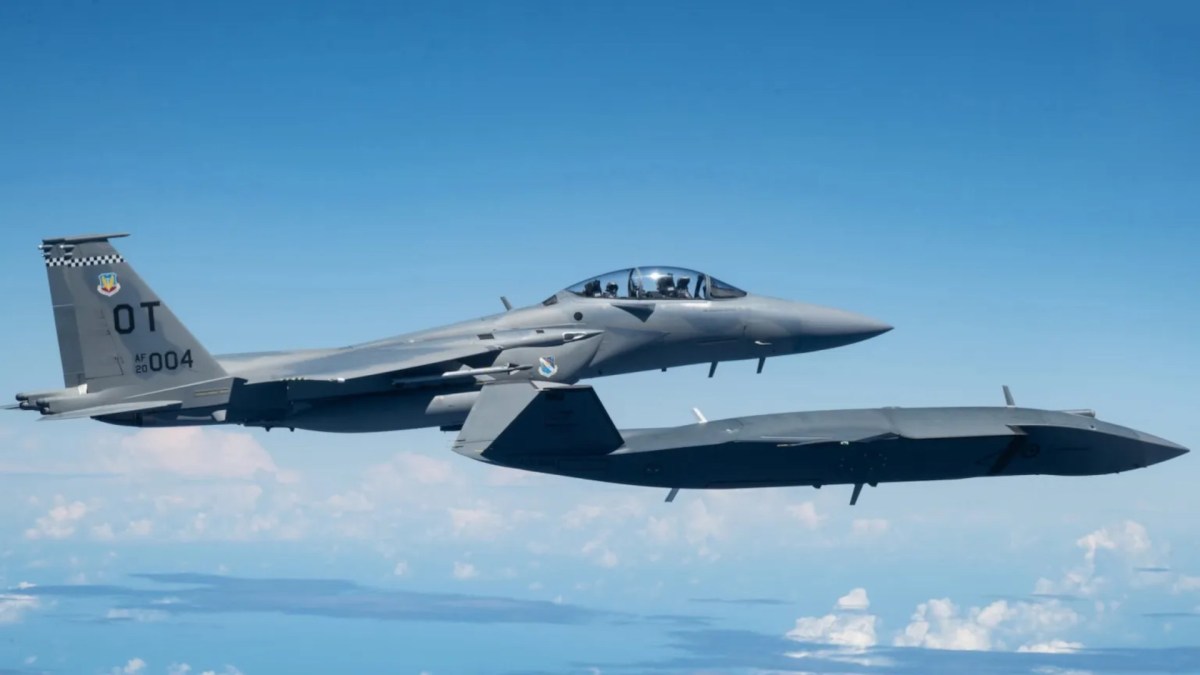
MQ-28 integration is moving from concept to operational relevance
The U.S. Air Force’s top officer in the Pacific has offered one of the clearest signs yet that Australia’s MQ-28 Ghost Bat program is becoming more than a national uncrewed aircraft effort. Gen. Kevin Schneider, head of Pacific Air Forces, said the service is “threaded in tight” with Australia’s work on the aircraft, and his remarks point toward a future in which American personnel could potentially command Australian MQ-28s.
That would be a meaningful shift in allied airpower integration. Loyal wingman and collaborative combat aircraft concepts are often discussed in terms of autonomy, survivability, and cost. But the harder strategic question is interoperability: whether partner nations can actually share these systems in a fast-moving conflict rather than merely operate similar platforms side by side. Schneider’s comments suggest the United States and Australia are trying to answer that question early, while concepts of operation are still taking shape.
What Schneider actually said
The remarks were tied to Exercise Valiant Shield 2026, where the MQ-28 participated in a major multinational setting. Schneider said much of the interaction during the exercise occurred within the U.S. test community, specifically involving the Air Force formation studying future Collaborative Combat Aircraft operations. He described the exchange between American and Australian development efforts as strong, emphasizing that information flow within testing and concept development is already substantial.
That matters because early experimentation often shapes the eventual doctrine more than procurement announcements do. If operators and test units learn how to task, monitor, and integrate uncrewed aircraft in combined operations before fleets scale up, they reduce the risk that future systems become nationally isolated assets. For allied militaries in the Indo-Pacific, where distance, tempo, and force distribution are central planning problems, that kind of interoperability may be as valuable as the aircraft itself.
The reporting also notes that this close integration could open the door to American personnel ordering Australian MQ-28s around in the future. The phrasing is important: it does not mean such arrangements already exist as a standing operational reality. But it does mean senior leadership is publicly entertaining a level of control-sharing that would have been seen as ambitious not long ago.
Why the Ghost Bat matters to the U.S.
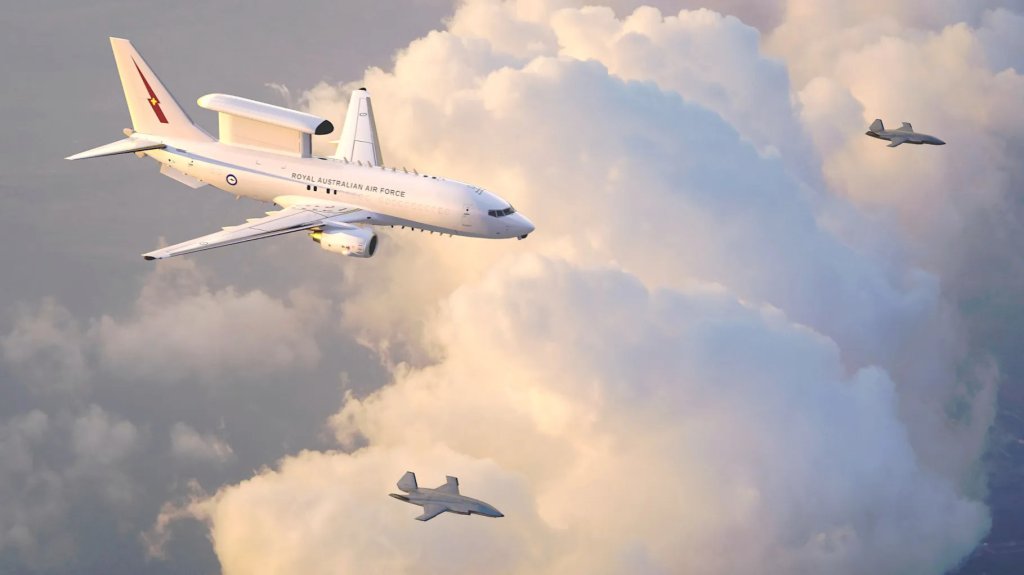
The MQ-28 was developed in Australia as a highly capable uncrewed aircraft intended to operate alongside crewed fighters and other assets. The U.S. Air Force is pursuing its own Collaborative Combat Aircraft strategy built around new drone fleets designed to extend combat mass, absorb risk, and support crewed platforms with sensing, strike, and other mission functions.
The source text identifies the Air Force’s initial CCA force as a mix of General Atomics FQ-42 Dark Merlin and Anduril FQ-44 Fury drones. That program is still evolving, which is exactly why the MQ-28’s presence in allied exercises matters. It gives U.S. planners and operators a live reference point for command relationships, tactics, and human-machine teaming issues that will likely shape their own fleets.
Just as important, the Air Force’s Experimental Operations Unit at Nellis Air Force Base is explicitly tasked with developing concepts of operation and the associated tactics, techniques, and procedures for CCAs. Schneider’s comments indicate that this unit was closely involved with the Australians during Valiant Shield. In practical terms, that means the U.S. is not merely observing an allied technology demonstration. It is using the MQ-28 effort as part of its own learning process.
Interoperability is the real strategic prize
The long-term significance of this cooperation lies in command and control. Shared or cross-national tasking of autonomous or semi-autonomous aircraft raises technical, doctrinal, and political questions. Communications links must be trusted. Authorities for weapons, surveillance, and mission retasking have to be clearly defined. Data standards, mission software, and air-tasking procedures have to align closely enough that the aircraft can contribute usefully under pressure.
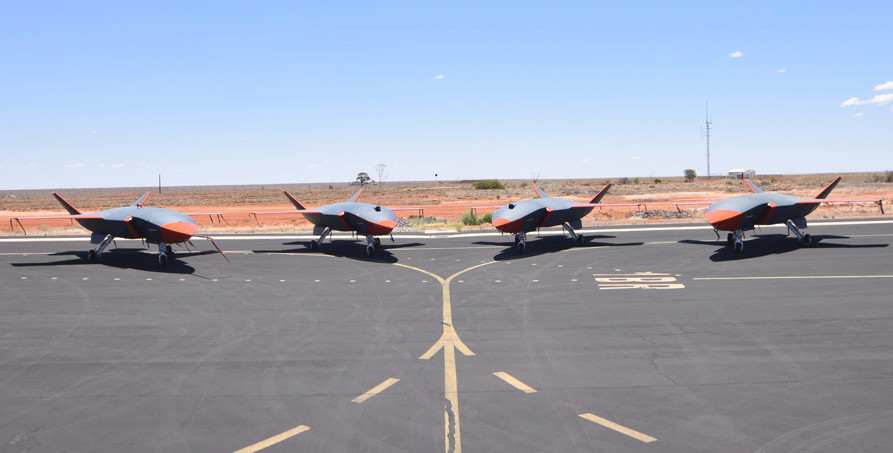
If the U.S. and Australia can solve those problems, the result is more than bilateral symbolism. It would create a template for coalition drone operations in the Indo-Pacific, where distributed forces may need to share sensing, escort, decoy, and strike-support tasks across national lines. In a region where allied integration is often discussed as a deterrent advantage, the ability to move from shared planning to shared control could materially increase combat flexibility.
There is also an industrial dimension. The United States is investing heavily in its own CCA ecosystem, but allied programs can still influence requirements and operating concepts. If the MQ-28 demonstrates useful ways to integrate uncrewed aircraft with crewed forces, that experience could shape how U.S. systems are fielded and employed. The reverse is also true: U.S. experimentation may help validate or refine Australia’s path.
Still early, but no longer theoretical
None of this means cross-commanded loyal wingman operations are imminent at scale. The source text describes a strong development relationship and a possible future rather than a finished framework. There are still major questions about authorities, software integration, autonomy boundaries, resilience under electronic warfare, and how much decision-making can or should be delegated in coalition combat settings.
Even so, Schneider’s framing is revealing because it moves the discussion beyond abstract alliance language. He tied cooperation to a named exercise, a specific U.S. unit, and the Air Force’s concrete CCA planning effort. That gives the story more weight than a generic statement of partnership. It suggests the United States sees direct value in folding Australian experimentation into its own operational design work.
- PACAF chief Gen. Kevin Schneider said the U.S. Air Force is closely integrated with Australia’s MQ-28 effort.
- The MQ-28 participated in Exercise Valiant Shield 2026, giving U.S. test units a chance to work alongside the program.
- The cooperation could eventually enable American personnel to direct Australian uncrewed aircraft in combined operations.
For now, the MQ-28 Ghost Bat remains a platform to watch not only because of its performance, but because of what it may reveal about the next stage of allied airpower. The important development is not simply that autonomous aircraft are entering service. It is that close partners are beginning to explore whether those aircraft can be shared as operational tools in a coalition fight. If that becomes routine, it would mark a significant change in how air forces think about sovereignty, control, and combat mass in the age of collaborative autonomy.
This article is based on reporting by twz.com. Read the original article.
Originally published on twz.com