A factory buildout tied to a bigger munitions push
Lockheed Martin has broken ground on a new 87,000-square-foot production facility in Troy, Alabama, a move the company says will help it quadruple the rate of Terminal High Altitude Area Defense interceptor production. The expansion is one of the clearest recent indicators that U.S. missile manufacturing is moving from short-term surge language to long-term industrial buildout.
The company said the new site, called Building 47, will nearly double current production space for THAAD interceptors and also support future work tied to the Next Generation Interceptor program. Lockheed chief executive Jim Taiclet described the project as an example of the company making major capital investments ahead of finalized contract certainty.
Why THAAD matters now
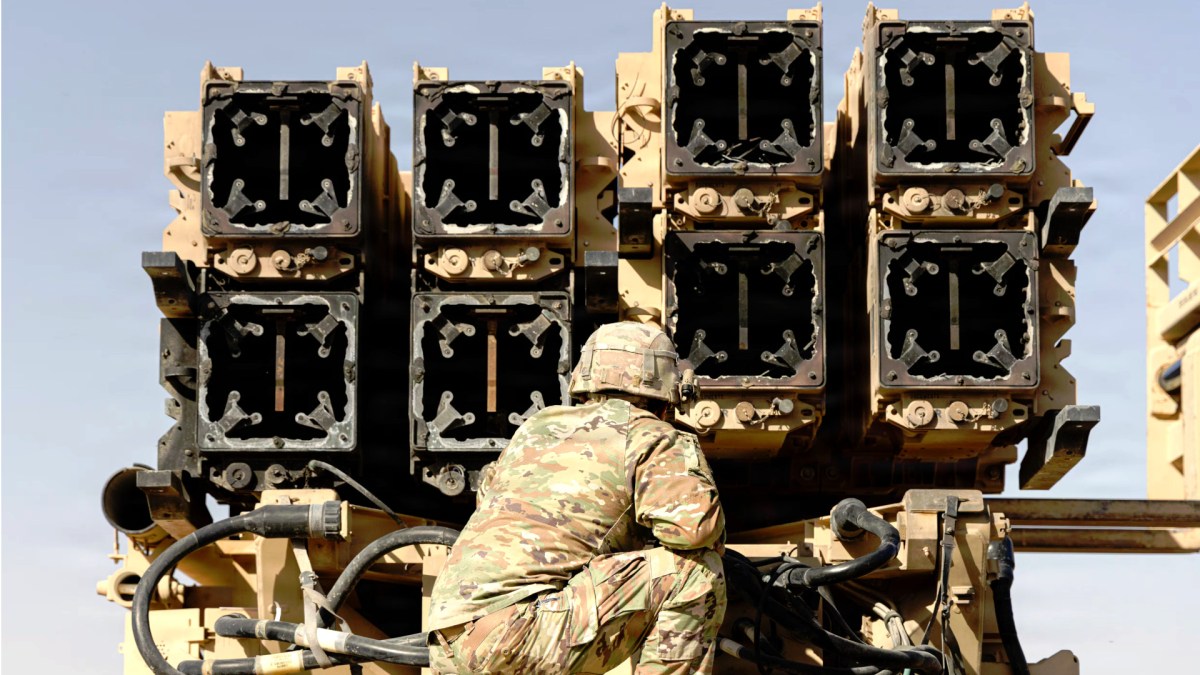
THAAD is a key part of the United States’ layered missile defense architecture, designed to intercept ballistic missiles in their terminal phase. Expanding interceptor output fits a broader Pentagon priority shaped by recent wars, regional missile threats and pressure to rebuild and deepen stockpiles.
Breaking Defense reported that the Trump administration has made munitions capacity a central issue following the war in Ukraine and ongoing conflict with Iran. In that environment, missile production is no longer just a procurement line item. It has become an industrial policy question involving factory space, supplier readiness and the willingness of prime contractors to spend their own capital in anticipation of sustained demand.

Multiyear deals are the incentive structure
The Pentagon’s strategy appears to hinge on giving major defense firms stronger demand signals through multiyear agreements. According to the report, the department has signed multiyear framework agreements with Lockheed for THAAD interceptors and the Precision Strike Missile, and it has also issued a multibillion-dollar undefinitized contract for Patriot PAC-3 missiles. Those arrangements still depend on congressional approval during the fiscal 2027 budget process, but they are designed to reduce uncertainty enough for industry to expand capacity before all appropriations are final.
That matters because missile manufacturing cannot be expanded instantly when a crisis peaks. Facilities, workforce pipelines and component supply chains all take time to scale. By the time governments urgently need more interceptors, the industrial bottleneck may already be locked in. Building now is an attempt to avoid that lag.
Lockheed’s spending signals confidence
Taiclet said Lockheed plans to spend between $8 billion and $9 billion through 2030 on new or modernized facilities for expanded munitions production. Of that, roughly $900 million to $1.1 billion is expected to go toward the Troy site, while about $1.25 billion has already been spent on other projects including a Munitions Acceleration Center in Camden, Arkansas.
Those figures suggest this is not a one-program adjustment. It is part of a much broader effort to harden production capacity across multiple missile lines. For Lockheed, that creates upside if the Pentagon’s demand forecasts hold. It also creates risk if budget politics or changing strategic priorities weaken long-term orders. The company appears to be betting that the demand environment will remain strong.
Industrial expansion as defense policy
The deeper story is that missile defense is increasingly being shaped by factory economics. For years, U.S. officials and lawmakers have voiced concern that the defense industrial base could not replenish advanced munitions quickly enough in a prolonged conflict. New buildings do not solve every bottleneck, but they are one of the few visible markers that capacity is being added rather than merely discussed.
There is also a signaling effect. An enlarged THAAD footprint tells allies, adversaries and suppliers that Washington expects missile defense demand to stay elevated. That signal can influence subcontractors’ own investment decisions and make it easier to sustain labor and materials commitments deeper in the supply chain.
What to watch next
The significance of Building 47 will depend on whether the promised production increase is matched by stable procurement and execution. Congress still has to approve funding tied to several multiyear arrangements. Suppliers have to keep pace. And the defense sector’s broader labor constraints remain real.
Still, groundbreakings matter when they mark a change in posture. This one suggests the era of treating missile production shortfalls as a temporary problem may be ending. The United States and its largest defense contractors are starting to build as if high interceptor demand is not an exception, but a durable feature of the strategic landscape.
This article is based on reporting by Breaking Defense. Read the original article.
Originally published on breakingdefense.com