A new Navy unmanned vessel competition is already in legal trouble
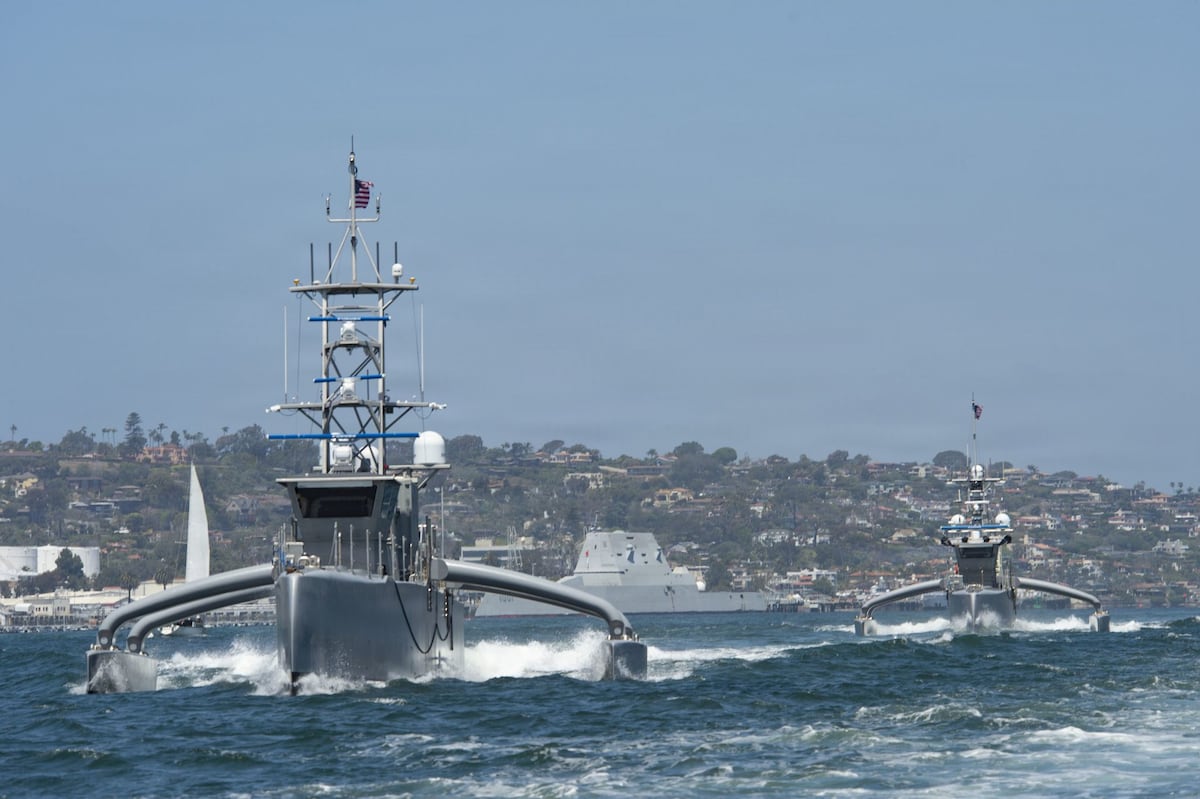
Two defense technology companies, Blue Water Autonomy and Saildrone, have filed lawsuits in federal court after being excluded from the U.S. Navy’s Medium Unmanned Surface Vessel Family of Systems program. The cases add immediate legal and procurement pressure to one of the Navy’s current efforts to expand its unmanned surface fleet.
According to the supplied source text, both companies allege that they were pushed out of contention after the Navy failed to follow its own requirements and made errors in its evaluation process. Blue Water’s complaint specifically argues that the decision rested on overly restrictive evaluation criteria, a misreading of its proposal, and conclusions it says were inconsistent with the request for prototype proposals and with statutory requirements.
Large sections of the legal filings were redacted, so the public record described in the source text does not fully explain what the Navy found deficient in either proposal. The Navy, for its part, declined to comment because the matter is in litigation. That leaves the broad outline clear even if the technical dispute remains opaque: two companies that wanted a place in the next round of unmanned vessel testing believe the government changed, misapplied, or mishandled the rules of the competition.
Why the MUSV program matters
The Medium Unmanned Surface Vessel effort is not a minor side project. It sits inside a larger Navy push to field robotic and autonomous systems that can perform more than one mission type and operate as part of a broader fleet architecture. The program opened on March 26 after the Navy canceled the Modular Attack Surface Craft program, a previous solicitation focused on unmanned surface vessels built to carry large containerized payloads, including payload weight comparable to the Mark 70 Mod 1 Payload Delivery System.
That earlier MASC effort was described in the source text as a more mission-specific program. By contrast, the new MUSV Family of Systems program is meant to address a wider set of requirements and mission profiles. Rebecca Gassler, identified in the source text as portfolio acquisition executive for the Navy’s robotic and autonomous systems, said that broader mission focus was the reason for shutting down MASC and moving to the new structure.
The distinction is important because it shows the lawsuits are not only about individual contract losses. They land in the middle of a transition in how the Navy is structuring unmanned vessel acquisition. The service appears to be moving from a narrower, single-need concept toward a more flexible and scalable framework. When that kind of shift happens, evaluation criteria, proposal interpretation, and continuity for incumbent or near-incumbent bidders become especially sensitive points.
What the competition required
The MUSV solicitation closed on April 17. Based on the source text, the Navy evaluated participating companies on four broad areas: business plan, manufacturing plan, test plan, and technical design. Companies selected to continue were then expected to prepare for an on-water test using a surrogate vessel, scheduled for the end of the fiscal year.
On June 1, the Navy announced the seven companies chosen for at-sea testing: Sea Machines, Leidos, Saronic Technologies, Galliano Marine Services, PacMar Technologies, Birdon, and Huntington Ingalls Industries. Blue Water Autonomy and Saildrone were not among them.
That list shows how competitive the field already is. It includes both established defense players and newer autonomy-focused firms, reflecting the hybrid structure of today’s maritime robotics market. For the Navy, the immediate objective is likely to compare practical design maturity and operational readiness across a diverse supplier base. For companies left out, however, exclusion at the testing stage can sharply reduce their position in future procurement rounds, especially in a program still defining the next generation of unmanned surface capability.
Blue Water’s claim highlights a transition risk
Blue Water Autonomy’s position appears especially notable because the company had previously been selected to participate in the now-canceled Modular Attack Surface Craft program. The source text says Blue Water had already begun developing its Liberty vessel under that earlier effort and had invested money into production before the MASC program ended.
From Blue Water’s perspective, the move from MASC to MUSV did not simply reset the field. The company says it was prevented from continuing into the new competition before it could take part in the on-water surrogate-vessel test that would help demonstrate its viability for future MUSV work. That creates a procurement fairness issue at the center of its complaint: whether the transition from one program to another was conducted in a way that gave bidders a consistent and properly administered path.
Saildrone’s lawsuit points to similar dissatisfaction, even if the supplied source text provides fewer specifics about its argument. Together, the cases suggest the legal challenge may test not only individual scoring decisions, but also how the Navy handled its pivot from one unmanned surface concept to another.
What comes next for the Navy and industry
The litigation does not necessarily stop the MUSV effort outright, but it does raise the possibility of delays, procedural reviews, or pressure to justify the evaluation process in greater detail. In fast-moving acquisition programs, especially those linked to autonomy and emerging naval concepts, that can matter as much as the underlying technology. A fleet modernization effort depends on trust in the selection process as well as confidence in the selected systems.
For the Navy, the stakes are operational and institutional. It wants a broader unmanned surface vessel capability after canceling a narrower predecessor. For industry, the stakes are strategic. Winning a place in testing can shape future access to production contracts, fleet experimentation, and long-term relevance in a market that is still consolidating around a few winners.
The public facts currently available remain limited because of redactions and the Navy’s refusal to comment on pending cases. But the picture is already clear enough to matter: a procurement the Navy intends as a major step in unmanned maritime capability is now being contested in court by two companies that say the government did not play by its own rules.
What is established from the supplied source
- Blue Water Autonomy and Saildrone filed lawsuits in the U.S. Court of Federal Claims after being excluded from the MUSV program.
- The MUSV solicitation followed the cancellation of the Modular Attack Surface Craft program announced in 2025.
- The Navy selected seven companies for at-sea testing on June 1.
- The Navy said it could not comment because the litigation is pending.
This article is based on reporting by Defense News. Read the original article.
Originally published on defensenews.com