Boxer ARG Reunites in CENTCOM
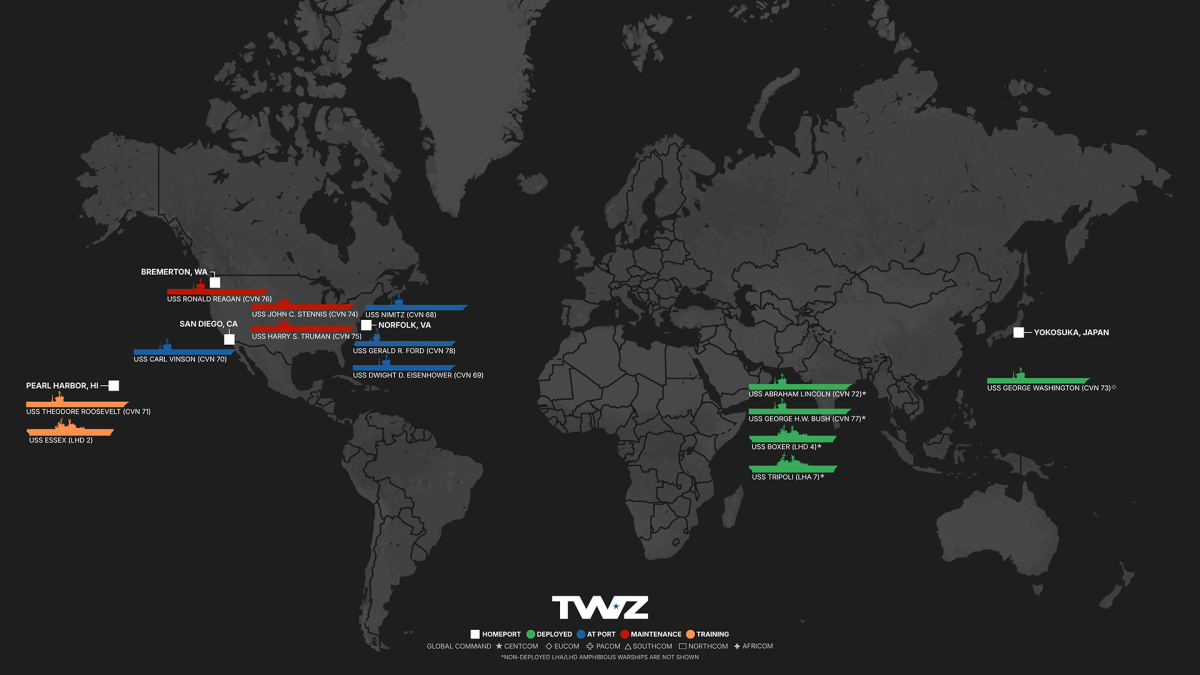
The amphibious assault ship USS Boxer (LHD 4) has finally arrived in the U.S. Central Command (CENTCOM) area of responsibility (AOR), months after reports of a surge deployment in March to reinforce troops in the Middle East during the war against Iran. Boxer deployed on March 18 and transited the Pacific westbound before entering the Indian Ocean in early May, but never crossed into the CENTCOM AOR. Rather than continue to the Middle East, the ARG disaggregated: Boxer doubled back to Singapore and the South China Sea, where USS Portland (LPD 27) was still operating, while USS Comstock (LSD 45) moved on to CENTCOM. Boxer and Portland transited the Malacca Strait northbound in late June and have now re-aggregated with Comstock in the AOR.
Four Big-Deck Warships on Station
The U.S. now has four big-deck warships on station in the Middle East – two aircraft carriers, USS Abraham Lincoln (CVN 72) and USS George H.W. Bush (CVN 77), and two amphibious assault ships, USS Tripoli (LHA 7) and USS Boxer – representing a step up in naval force posture while negotiations with Iran develop. In contrast, the U.S. appears to be drawing down its forward-deployed strategic bomber forces, with the last B-52 Stratofortress bombers departing RAF Fairford last week, according to plane spotters.

USS Nimitz at International Naval Review
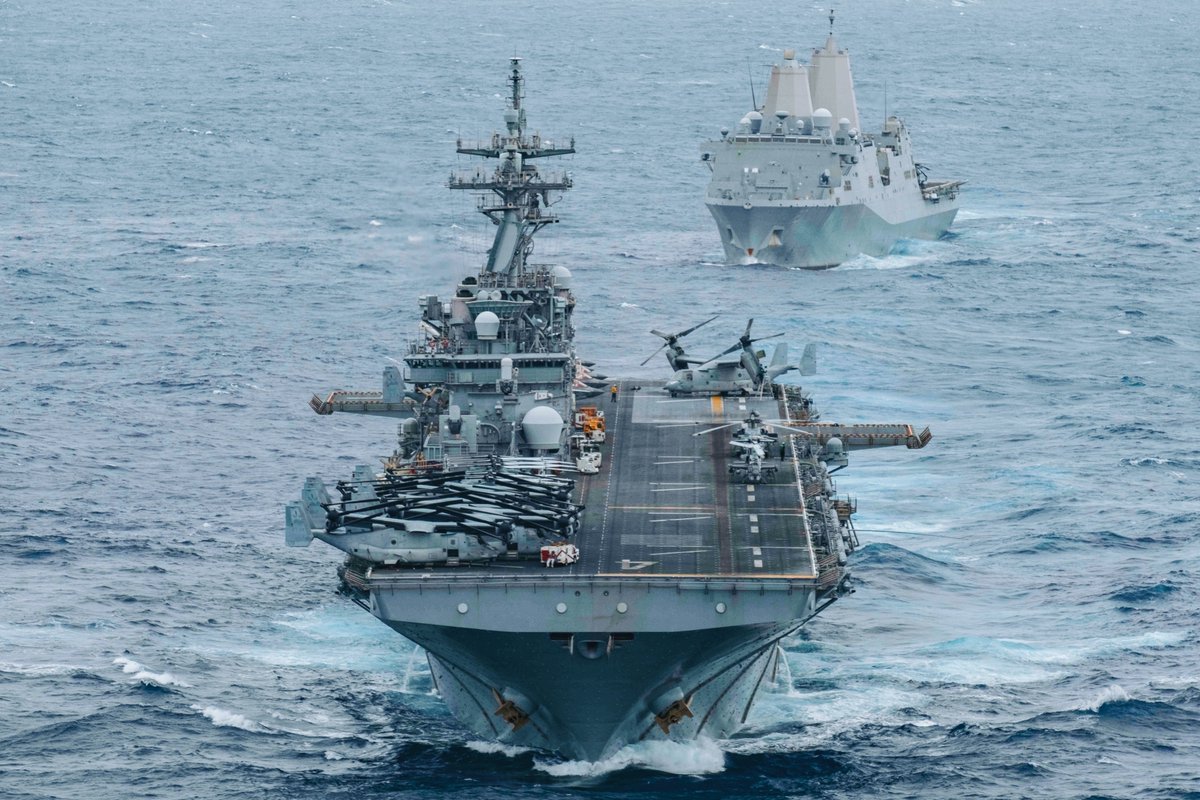
USS Nimitz (CVN 68), on her final transit, arrived in New York City on July 3 and anchored off the coast of Stapleton, Staten Island, ahead of the International Naval Review (INR) 250 on July 4. Nimitz sat at anchor in New York Harbor during INR 250, the pinnacle event of the Navy’s celebration of America’s 250th birthday and the largest international maritime event in U.S. history, which featured over 70 U.S. and allied naval vessels and tall ships. Before pulling into New York, Nimitz departed Mayport, Florida, last week.
Weekly Carrier Tracker Context
This update is part of TWZ’s weekly carrier tracker monitoring America’s flattop fleet, including deployed Carrier Strike Groups (CSG) and Amphibious Ready Groups (ARG), using publicly available open-source information. The tracker provides a snapshot of the global disposition of U.S. naval power, highlighting shifts in force posture and readiness.
Implications for Middle East Posture
The concentration of four big-deck warships in the CENTCOM AOR underscores the U.S. commitment to maintaining a robust naval presence amid ongoing diplomatic efforts with Iran. The re-aggregation of the Boxer ARG adds significant amphibious assault capability, including the ability to deploy Marines and conduct helicopter-borne operations. Meanwhile, the departure of B-52 bombers from RAF Fairford suggests a potential shift in strategy, possibly relying more on naval aviation and less on strategic bomber rotations.
Historical Context
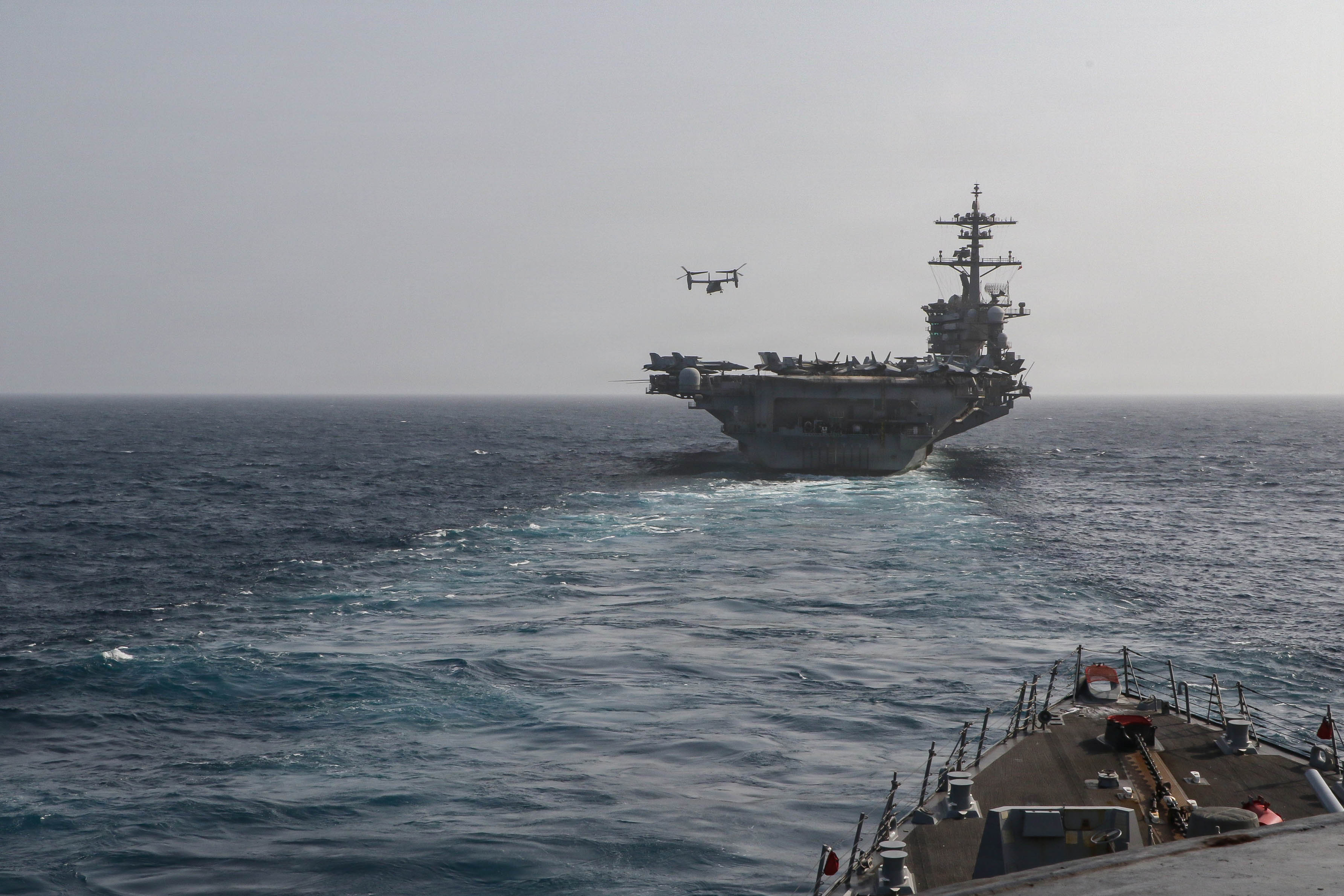
The Boxer’s journey highlights the complexities of naval deployments, with the ARG initially disaggregating before reuniting in theater. This flexibility allows the Navy to respond to multiple contingencies simultaneously, such as maintaining a presence in the South China Sea while reinforcing the Middle East. The presence of two aircraft carriers and two amphibious assault ships provides a formidable power projection capability, with the ability to launch air strikes, conduct amphibious landings, and support special operations.
As negotiations with Iran continue, the U.S. naval posture will likely remain a key factor in deterring aggression and reassuring allies. The upcoming decommissioning of USS Nimitz, after a storied career, marks the end of an era, but the new generation of carriers and amphibious ships ensures the U.S. Navy remains the world’s premier maritime force.
This article is based on reporting by twz.com. Read the original article.

Originally published on twz.com