RIMPAC Turns Logistics Into a Technology Experiment
The U.S. military is using the 2026 Rim of the Pacific exercise to test whether autonomous vessels, mobile 3D printers, and artificial intelligence can make it easier to sustain forces across the vast distances of the Pacific. The effort targets a basic but difficult problem: when parts break far from major supply hubs, repairing equipment quickly can be harder than the mission itself.
That challenge is not new, but the scale of the Pacific gives it unusual urgency. Thousands of miles of ocean separate ships, bases, and resupply points, and those distances become a larger operational burden in any contested environment. At RIMPAC, military officials say they are trying to find out whether advanced manufacturing and uncrewed transport can reduce that burden by producing and delivering needed components closer to where forces are operating.
Rear Adm. Michael Mattis described the effort as the U.S. military92s largest advanced manufacturing demonstration so far. Speaking during a media event at the U.S. Pacific Command Joint Advanced Manufacturing Center, he said the exercise is being used to pilot what theater-wide advanced manufacturing might look like for the joint force.
RIMPAC is large enough to make that a meaningful test bed. According to Mattis, this year92s exercise includes 38 countries, 31 surface vessels, five submarines, more than 30,000 personnel, nearly 180 aircraft, and over 1,100 personnel involved in landings. That scale makes sustainment a practical stress test rather than a lab exercise.
Combining Manufacturing, Autonomy, and AI
The experiment is being coordinated by Fleetwerx and the Naval Postgraduate School92s Consortium for Advanced Manufacturing Research and Education. Marine Lt. Col. Michael Radigan said the work brings together what he called a trifecta of advanced manufacturing, autonomous systems, and artificial intelligence to deliver the parts the joint force needs.
In practical terms, the concept is to move digital designs and manufacturing capability closer to the point of need instead of relying entirely on conventional supply chains. If a component fails, a unit may be able to produce the replacement locally or regionally, then move it by autonomous or semi-autonomous means to a ship or remote position. That is the vision the services are now trying to evaluate under realistic operating conditions.
Radigan used a consumer-tech analogy to describe the ambition, saying the goal is manufacturing on demand at high speed and with high quality, even in contested environments. The choice of comparison underscored the military92s larger interest in compressing the time between identifying a need and getting a usable part into the hands of the operator.
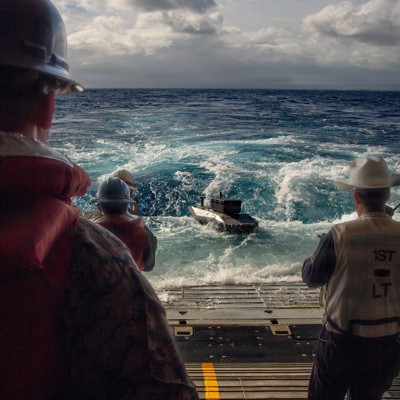
The source text also references an autonomous Typhoon surface vessel delivering parts for a 3D printer aboard the USS Essex. That example captures the logic of the exercise. Instead of depending on a long resupply chain, the military is testing a more distributed system in which manufacturing and delivery can be broken into modular steps, some of them automated.
Why the Pacific Changes the Equation
Military logisticians often refer to the Pacific92s tyranny of distance because geography alone can slow repairs, replenishment, and force movement. A broken component that might be easy to replace near a continental depot can become a major operational problem when the nearest support node is separated by ocean, limited transport availability, or vulnerable lines of communication.
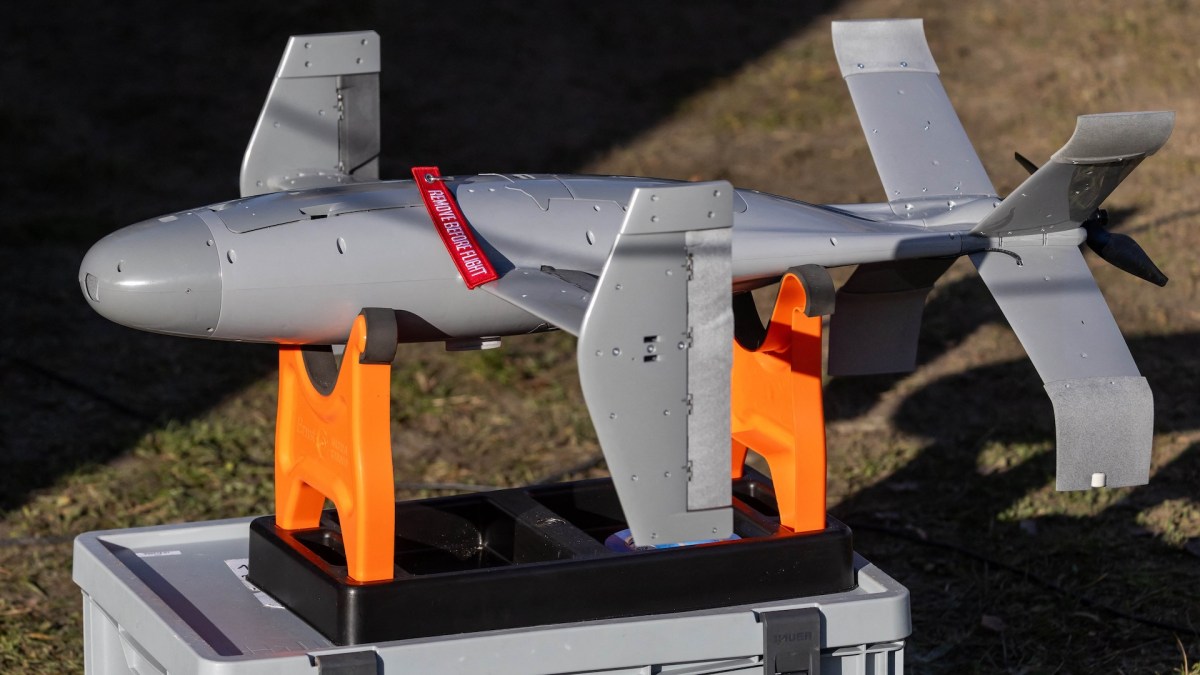
That is why advanced manufacturing has attracted growing attention in defense planning. A printer that can be deployed forward, or even dropped into position, changes the structure of the logistics problem. Instead of asking how fast a physical spare can travel from a warehouse, commanders can ask whether raw material, digital design files, and local fabrication capability are enough to restore readiness faster.
The autonomous-systems piece matters for similar reasons. Moving supplies with self-driving surface vessels or other uncrewed platforms could reduce risk to personnel and keep cargo flowing even when conventional transport is stretched. In principle, it could also support smaller, more dispersed formations that are harder to target but more difficult to sustain with traditional methods.
Artificial intelligence enters the picture as a coordinator and optimizer. Although the source text does not spell out the technical details, officials frame AI as part of the system that helps connect manufacturing, demand, and delivery. In a theater where time and distance both impose costs, any tool that improves routing, prioritization, or part selection becomes potentially valuable.
From Demonstration to Doctrine
The larger question is whether these technologies can move from promising demonstration to dependable wartime practice. Military experiments often show what is possible under controlled conditions. The harder task is proving repeatability, reliability, quality assurance, and interoperability across services and allied forces.
RIMPAC offers a rare venue to start answering those questions because it combines multinational participation with maritime scale. If the military wants to know whether advanced manufacturing can support a distributed force, it needs to test not just printers or drones in isolation, but the entire chain connecting design, certification, production, transport, and end use.
Quality is especially important. A replacement part delivered quickly is only useful if it performs to the required standard. That means advanced manufacturing programs must solve not just speed and proximity, but also validation and trust. The source material emphasizes high-quality parts, reflecting awareness that logistics innovation cannot come at the expense of operational safety.
The same is true for autonomy. An uncrewed vessel that can move parts between nodes is valuable only if it can do so reliably in realistic conditions. Exercises like RIMPAC are therefore as much about identifying failure points as demonstrating success.
What the Test Signals
Even at this early stage, the RIMPAC effort signals a broader shift in how the military thinks about sustainment. Logistics is no longer treated solely as warehousing and transport. It is becoming a technology domain in its own right, shaped by software, automation, digital manufacturing, and distributed operations.
That shift aligns with the operational demands of the Indo-Pacific, where resilience may depend on the ability to keep forces supplied without relying on a few fixed hubs. A network of local fabrication, autonomous delivery, and AI-assisted coordination could, if it works, make that posture more practical.
The 2026 exercise does not prove that the problem has been solved. But it does show where the Pentagon is putting effort: shortening supply chains, decentralizing production, and testing whether new tools can overcome one of the oldest obstacles in military operations. In the Pacific, distance will not disappear. The bet at RIMPAC is that smarter manufacturing and delivery systems can make it hurt less.
This article is based on reporting by Defense One. Read the original article.
Originally published on defenseone.com