From disruption to institutional control
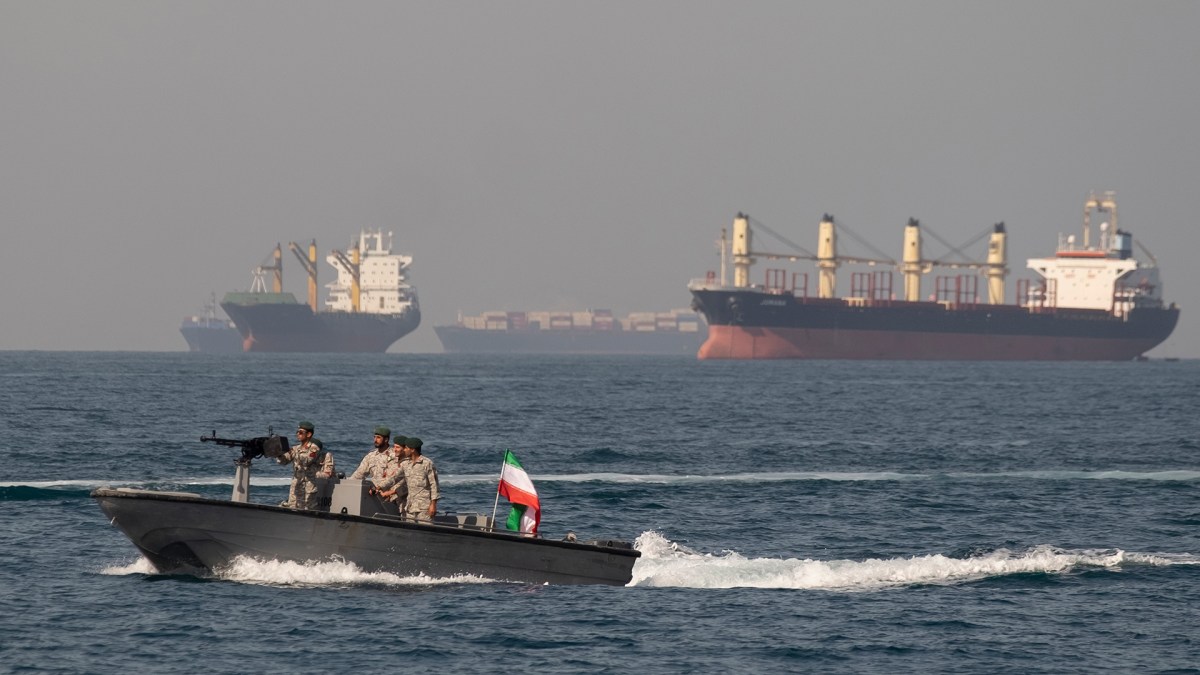
Iran is reportedly seeking to turn its influence over the Strait of Hormuz into something more durable than temporary wartime disruption. According to The War Zone’s account of reporting by The New York Times, Tehran is in discussions with Oman about a joint arrangement that would impose fees on ships transiting the strategic waterway. If pursued, the move would represent a shift from coercive control in crisis to an attempt at long-term economic and political normalization of that control.
The distinction matters because the Strait of Hormuz is not just a regional route. It is one of the most strategically important maritime chokepoints in the world, and any change in how passage is managed can carry global economic consequences.
The proposal is being framed carefully
One of the most notable features of the reported discussions is the emphasis on charging for services rather than simply imposing tolls for transit. That is presented in the source as a legally significant distinction. A straightforward toll system could be viewed differently under international maritime norms than a fee structure attached to services. The apparent effort to stress that difference suggests the proposal is being shaped not only for revenue, but for defensibility.
Iran and Oman border both sides of the Gulf of Oman, through which ships must pass to enter or leave the Strait. That geography gives the two countries unusual leverage over access, and a joint arrangement would carry more weight than a unilateral Iranian demand. Oman’s role is especially important because it is a U.S. ally and has, according to the report, moved from initially rejecting a joint partnership to discussing a share of the revenue.
A postwar bargaining environment
The timing is also significant. The source says Pakistani and Qatari negotiators are in Tehran trying to secure a deal to officially end the war that began on February 28. In that setting, any effort by Iran to formalize new financial claims over the waterway sends a clear message: even if open conflict recedes, Tehran may intend to preserve strategic gains in another form.
That could complicate diplomatic efforts. A peace framework is one thing; a new fee system layered onto one of the world’s most sensitive shipping routes is another. It suggests that de-escalation on paper may not restore prior operating conditions in practice.
Economic effects go well beyond the region
The article notes that Iran’s closure of the Strait produced severe global economic impacts and prompted the Trump administration to create Project Freedom, a short-lived military effort to protect ships trying to leave the Persian Gulf. That alone underlines how quickly any disruption in the Strait reverberates far beyond the Gulf.
A formalized fee regime could have a different effect from an outright closure, but it would still alter the cost structure and legal politics of transit. Even if the fees were presented as payment for services rather than passage itself, commercial shipping operators would still have to account for them. Over time, that could turn a temporary geopolitical crisis into a semi-permanent commercial burden.
Oman’s position could be decisive
The reported willingness of Oman to discuss revenue sharing is one of the story’s most consequential details. Oman has long occupied a careful diplomatic position in Gulf affairs, and its participation would provide regional and political cover that Iran alone does not have. The report also says Omani officials indicated they could use influence with neighboring Gulf states and the United States to advance the idea, having recognized the economic upside.
If accurate, that would make the proposed system more than a bilateral experiment. It would become a test of whether economic incentives can pull regional actors toward accepting a new maritime status quo that Washington opposes.
Why the distinction between war and precedent matters
States often gain temporary leverage during conflict. The larger question is whether they can convert that leverage into precedent. Iran’s reported approach appears aimed at exactly that conversion. By moving from direct closure to a regulated fee structure, Tehran could try to turn exceptional wartime control into a more normalized instrument of state power.
That would be difficult to reverse. Once revenue streams, service justifications, and regional partnerships begin to form around a system, opposition becomes more complicated than simply demanding a return to prior practice. The debate shifts from emergency response to legal interpretation, commercial adjustment, and negotiated accommodation.

A strategic signal, not just a shipping issue
The proposed fee arrangement should therefore be read as more than a maritime administration question. It is a strategic signal about how Iran may intend to operate after the current conflict phase. Rather than relying only on episodic disruption, it may be looking for mechanisms that institutionalize influence while reducing the appearance of outright obstruction.
The rest of the region, and the United States, will have to decide whether such a system is treated as an unacceptable challenge to freedom of navigation or as a reality to be bargained around. Either way, the underlying issue is no longer only whether the Strait stays open. It is whether access to one of the world’s most important waterways can be reshaped into a fee-bearing system under Iranian influence.
This article is based on reporting by twz.com. Read the original article.
Originally published on twz.com