Aerostar is pushing a balloon-drone concept toward military relevance
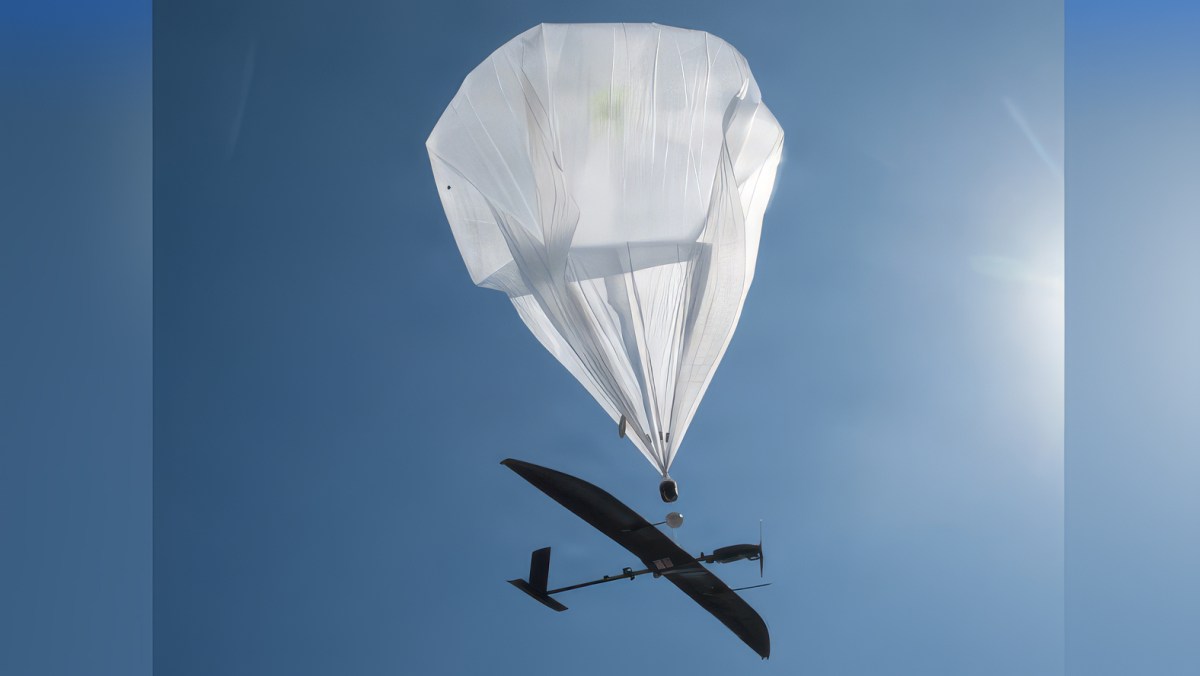
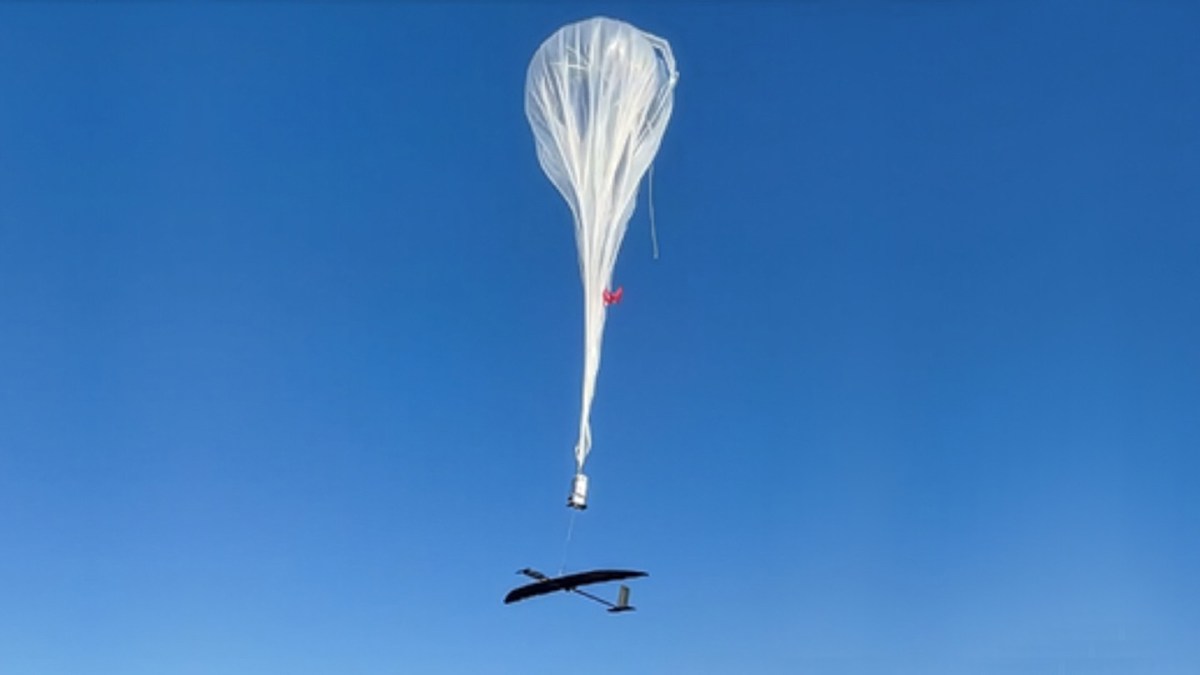
Aerostar says recent testing of its high-altitude Lightning balloon as a launch platform for a surveillance drone could lead to a larger “mothership” architecture for future military operations. The idea is straightforward but strategically significant: use stratospheric balloons to carry, position, and support uncrewed aircraft over wide areas for long periods, then deploy those aircraft when surveillance, relay, jamming, or strike functions are needed.
That concept places balloons back into a military technology conversation that has changed sharply in recent years. Once treated as niche or specialized systems, high-altitude balloons are increasingly being discussed as relatively low-cost, persistent platforms that can complement satellites, aircraft, and traditional drones. Aerostar’s pitch is that the balloon is not the end system. It is the host layer for multiple mission tools.
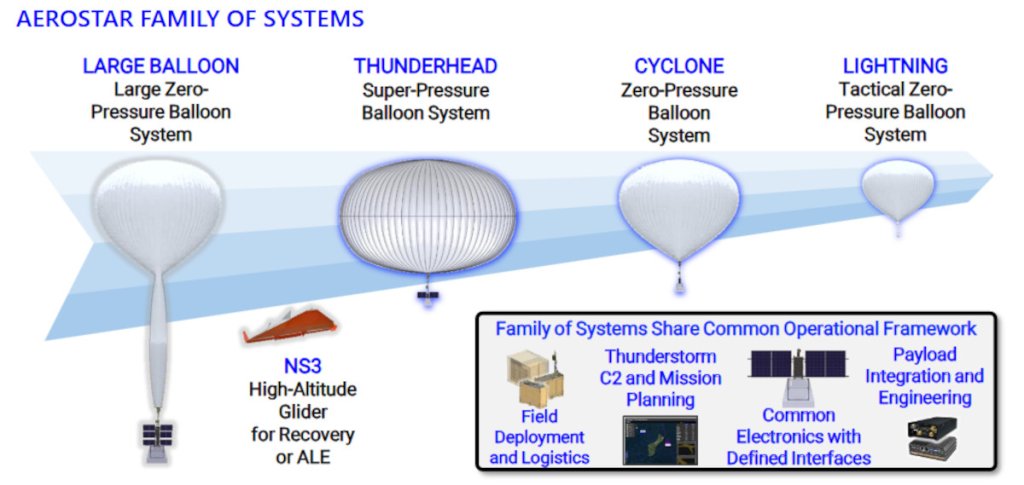
According to reporting from The War Zone based on Aerostar statements, the company’s recent test paired its smaller Lightning balloon with a single Apollo-R uncrewed aerial system from Icarus. In the current setup, the Lightning carries one drone. But Aerostar says the architecture can scale to its larger Thunderhead platform, which the company says could carry multiple Apollo-R aircraft or other payloads.
Persistence is the selling point
The military appeal of the concept starts with endurance. Aerostar’s balloons are described as modern high-altitude designs with GPS-assisted navigation systems that can travel to an area of interest and, in many cases, maintain general position despite prevailing winds by changing altitude. The company says control can be maintained through satellite communications and line-of-sight links, including relay through a mesh network made up of multiple balloons.
If that works as advertised in operational conditions, the result is a platform that can stay on station for days or even weeks. That kind of persistence is difficult and expensive to achieve with crewed aircraft, and even many drones face limitations tied to fuel, launch logistics, and basing. A balloon-hosted architecture offers a different tradeoff: slower movement and a more exposed profile in exchange for loiter time, broad-area coverage, and potentially lower operating cost.
For modern militaries, persistence has become one of the defining requirements of reconnaissance and targeting. The side that can keep watching tends to gain an advantage in finding mobile units, tracking changes, and feeding real-time information into command networks. Aerostar’s concept is clearly aimed at that operational need.
From surveillance to electronic warfare and strike
The broader ambition is not limited to intelligence gathering. Aerostar envisions balloon motherships carrying payloads for electronic warfare jamming, signal relay, and even attacks on targets. That turns the balloon from a surveillance asset into something more like a high-altitude node in a distributed combat network.
The value of that networked role is easy to see. Signal relay can extend communications across difficult terrain or contested regions. Electronic warfare payloads could interfere with adversary sensors and communications. A launch platform for uncrewed aircraft could place drones closer to their operating area without requiring a nearby runway or forward base.
Each of those missions matters more in a battlespace where forces are dispersed, mobility is high, and infrastructure may be vulnerable. A balloon operating high in the stratosphere could serve as a connective layer between systems on the ground and drones operating below, while also keeping some distance from the most immediate tactical threats.
The company’s own framing suggests it sees the balloon not as a replacement for existing platforms, but as a multiplier that extends what drones and sensors can do. A mothership configuration would let one high-altitude platform support multiple subordinate aircraft, distributing sensors or effects over a wide area.
Why armies are interested in this class of system
The War Zone notes that the U.S. Army and other branches of the U.S. military are actively pursuing related capabilities, while countries including China and Ukraine have also been developing and fielding comparable ideas to varying degrees. That makes Aerostar’s project part of a broader international trend rather than a standalone experiment.
The trend is being shaped by a few hard battlefield lessons. First, inexpensive systems that stay aloft for long periods can have outsized strategic value if they improve situational awareness. Second, layered uncrewed systems can complicate enemy planning by forcing responses at multiple altitudes and ranges. Third, not every mission needs a fast or exquisite platform if persistence and coverage matter more than speed.
Balloons also offer an alternative path in an era when militaries are trying to stretch budgets while expanding surveillance and communications capacity. Satellites remain critical, but they are costly and not always as flexible or replaceable as commanders might want. Traditional aircraft bring speed and responsiveness, but they come with higher operating demands. A balloon-based architecture occupies a different point in the cost-capability spectrum.
The technical and operational questions ahead
Even so, the path from promising test to fielded capability is not simple. Aerostar’s public comments establish the concept, but many practical questions remain unanswered. Survivability is one. A high-altitude balloon may be persistent, but it can also be conspicuous or vulnerable depending on the adversary and the air defense environment. Command and control resilience is another issue, especially if the concept depends on satellite links or a mesh network under contested conditions.
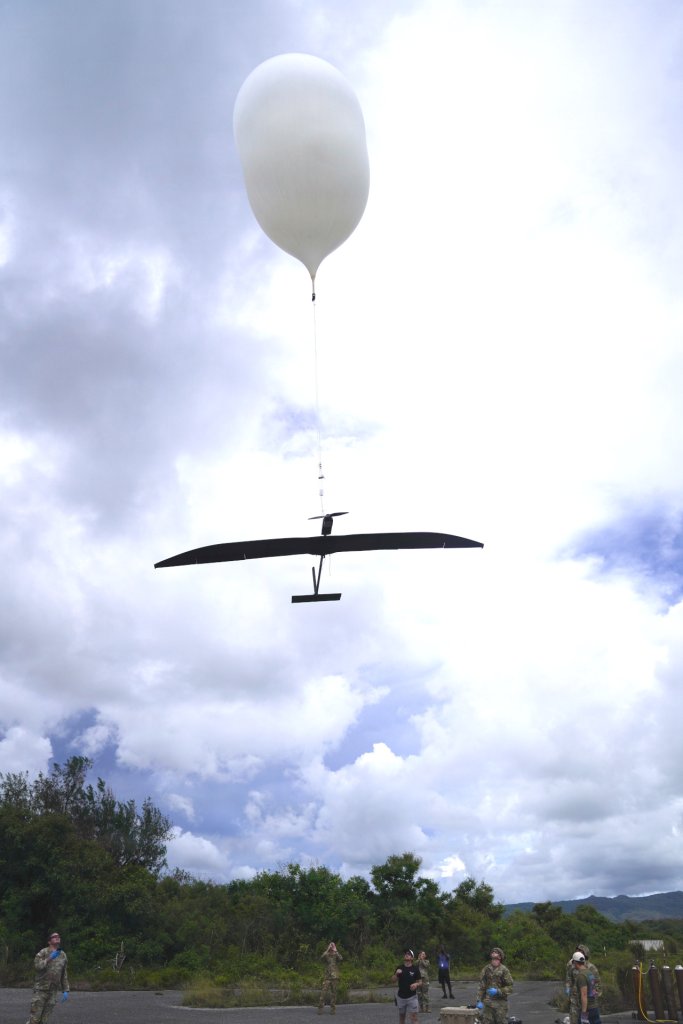
Payload integration also matters. Carrying one drone is different from managing multiple aircraft, multiple sensors, and multiple mission sets from a single balloon-hosted architecture. Launch, recovery, routing, and deconfliction all become more complicated as the system scales.
Then there is the problem of mission fit. Balloon motherships may be well suited to permissive or semi-contested environments, or to missions where long dwell time is worth the risk of reduced maneuverability. They may be less suitable in heavily defended airspace unless their altitude, operating profile, and supporting systems provide enough protection or ambiguity.
Those challenges do not negate the concept. They define the work required to turn it into a credible military tool.
A sign of where defense innovation is heading
The more important takeaway is that defense innovation is moving toward layered, modular architectures rather than single exquisite platforms. Aerostar’s balloon-drone proposal fits that direction. A balloon provides endurance and position. Drones provide local sensing or action. Networking ties the system together. Different payloads can change the mission without changing the entire platform.
That approach reflects how militaries increasingly think about resilience and scale. Instead of relying on a small number of expensive assets, they are exploring mixes of cheaper, more distributed systems that can be fielded in larger numbers and adapted for different tasks. High-altitude balloons, once peripheral, now fit into that logic.
Aerostar’s test does not prove the full mothership vision. But it does show the concept is moving from abstract proposal toward practical experimentation. If further testing demonstrates reliable deployment, communications, and operational endurance, stratospheric balloon motherships could become a more serious part of the future surveillance and electronic warfare toolkit.
For now, the company’s message is that the balloon should be seen less as a passive platform and more as an adaptable aerial base. In a defense environment increasingly defined by persistence, networking, and modular payloads, that is a proposition militaries are likely to keep examining closely.
This article is based on reporting by twz.com. Read the original article.
Originally published on twz.com