Navy puts a kamikaze drone boat into a major live-fire exercise
The U.S. Navy has confirmed that its Global Autonomous Reconnaissance Craft, or GARC, uncrewed surface vessel took part in its first live-fire training event during RIMPAC 2026, attacking the decommissioned amphibious assault ship ex-USS Peleliu during a sinking exercise. The disclosure marks an important step in how the service is moving uncrewed surface vessels from experimentation toward operationally relevant roles.
The event matters partly because it follows closely behind what the U.S. military has described as the first public combat use of kamikaze drone boats. In that context, the RIMPAC demonstration was not just another test shot. It placed the system inside one of the Navy’s most visible multinational training environments and attached it to a mission set with obvious battlefield implications: using a low-profile autonomous craft to deliver an explosive strike against a ship target.
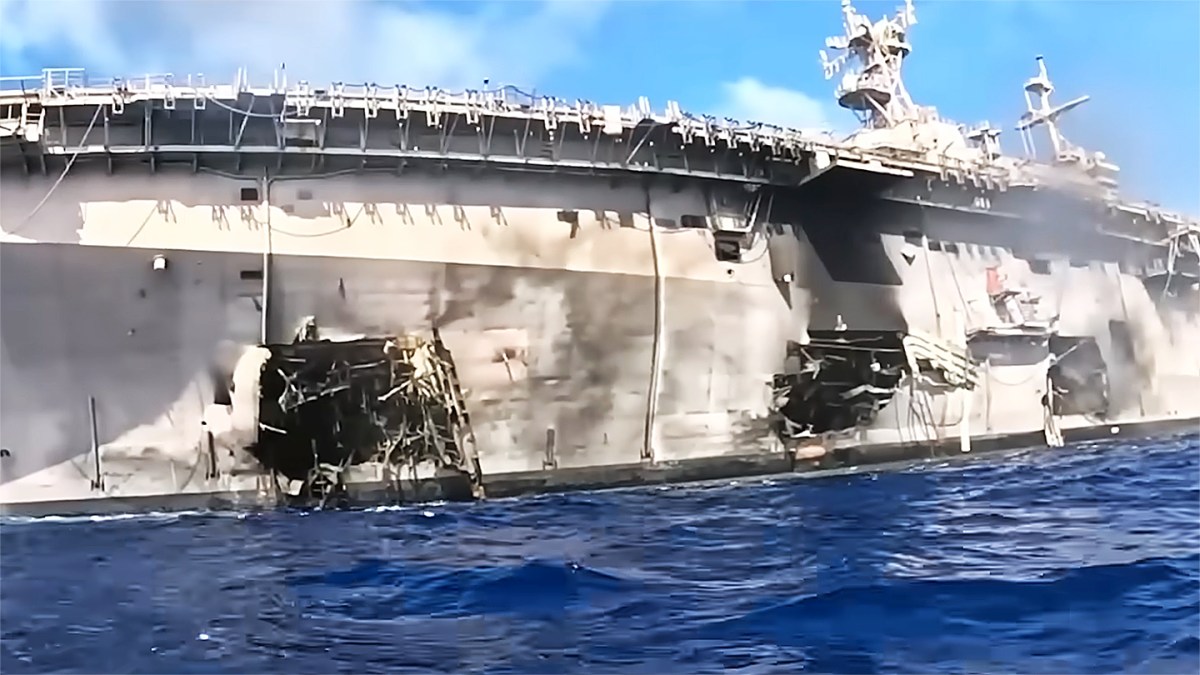
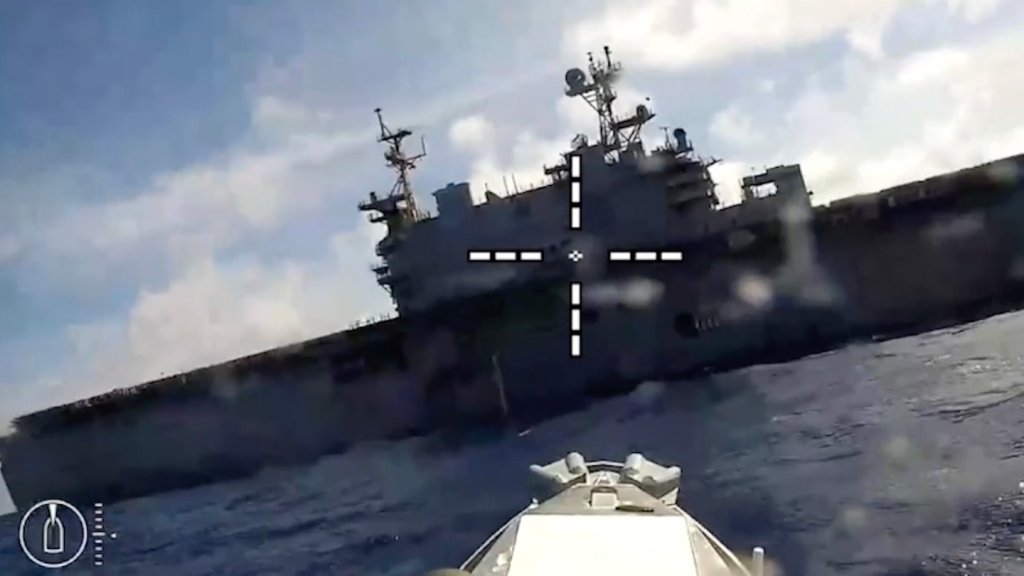
According to the Navy, the live-fire attack occurred as part of the July 17 sinking exercise targeting the former USS Peleliu, a Tarawa-class amphibious assault ship. Video released on July 24 showed uncrewed surface vessels operating around the target in the Pacific, though the specific platform was not initially clear from the footage alone.
That changed when Sarah Weinstein, a Surface Warfare Officer serving as the first commanding officer of Unmanned Surface Vessel Division 32, said in a LinkedIn post that her unit had been given the opportunity to execute the Navy’s first GARC live fire during RIMPAC 2026. That statement effectively tied the vessel seen in the exercise to the GARC platform and framed the shot as a milestone for the new unit.
Why the Peleliu attack stands out
Sinking exercises are designed to stress weapons, targeting methods, and battle-damage assumptions against real hulls. In this case, the GARC strike was only one part of a broader attack sequence against a ship that had already absorbed significant damage. Video from the exercise showed the former Peleliu with visible destruction around the waterline and water already entering the ship.
Even so, the drone boat’s contribution is notable because it demonstrates a role that is both tactically flexible and comparatively low-cost in concept. A small autonomous craft can be used to close with a target, exploit confusion after earlier strikes, and attack vulnerable areas near the waterline. That combination makes the platform relevant not only for fleet experimentation but also for future thinking around distributed maritime operations and contested littoral warfare.
The timing adds to the significance. Uncrewed systems have been gaining attention across all services, but maritime drones carry a distinct strategic appeal. They can be fielded in numbers, push risk away from crews, and potentially complicate an adversary’s defensive picture. Showing one in a multinational exercise against a large ship target sends a clearer message than a developmental trial conducted in isolation.
A new unit built around uncrewed vessels
The GARC is a product of Baltimore-based BlackSea Technologies and is described in the report as the major platform used by Unmanned Surface Vessel Division 32, or USVDIV-32. The Navy established that unit earlier this year and says it is responsible for maintaining and implementing unmanned vessels. The service also says the division’s sailors regularly train with multiple platforms, with GARC being the most common.
That institutional detail is easy to overlook, but it may be just as important as the single live-fire event. New hardware matters less if it remains detached from doctrine, sustainment, and crews. By creating a dedicated division and giving it ownership of regular training, the Navy is signaling that these systems are becoming part of an organizational structure rather than remaining one-off prototypes.
USVDIV-32 also gives the Navy a place to refine tactics, maintenance routines, operator training, and integration concepts. A live-fire strike in RIMPAC suggests the service is beginning to test not only whether the craft can hit a target, but also how it can be incorporated into a larger maritime kill chain alongside crewed ships, aircraft, and allied forces.
What the footage suggests
The exercise video, as described in the report, showed the perspective from a second drone boat inspecting damage on the ship after the broader sequence of fires. That detail matters because it points to more than a simple one-way attack concept. It suggests the Navy is exploring how uncrewed vessels can contribute to reconnaissance, damage assessment, and possibly coordination roles around the target area.
That kind of layered use would fit the GARC name itself, which emphasizes reconnaissance as well as attack. In practice, a platform that can scout, observe, and then be configured or tasked for a terminal strike offers more flexibility than a system with only a single mission profile. The report does not provide technical specifications or payload details, so the exact extent of that flexibility remains unclear. But the training scenario indicates the Navy is at least experimenting with multiple operational functions around the same target set.
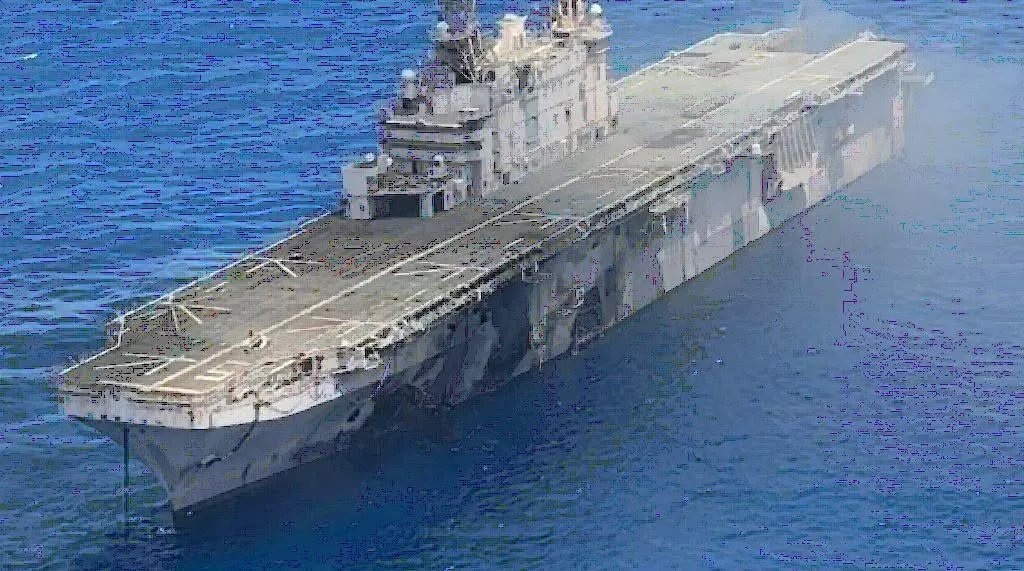
The visuals also underscore how these systems may be used after larger weapons have already opened the target. Rather than serving only as a first-wave tool, a drone boat could become part of a finishing sequence, exploiting accumulated damage and striking at close range where manned platforms would face higher risk.
What this means for naval operations
The Navy has been under pressure to prove that its investment in uncrewed systems can deliver practical combat value. The GARC live-fire event does not settle larger questions about survivability, communications resilience, autonomy limits, or cost effectiveness. But it does show movement from abstract promise to a concrete training application in one of the world’s best-known maritime exercises.
That matters in strategic terms because the appeal of autonomous surface craft is not limited to one scenario. They can be used to probe defenses, complicate targeting, extend surveillance, and impose new burdens on larger ships that were designed around different threat assumptions. A successful live-fire event at RIMPAC gives the Navy a public example of progress as it works to normalize those concepts.
It also reinforces a broader pattern in military technology: autonomous and semi-autonomous systems are increasingly valuable not because they replace every existing platform, but because they create new combinations with existing force structure. A drone boat working alongside aircraft, conventional missiles, and crewed ships can expand the range of attack geometries and tactical choices available to commanders.
For now, the confirmed facts are limited but meaningful. The Navy says the GARC took part in its first live-fire training attack during RIMPAC 2026. The target was the ex-USS Peleliu. The attack was carried out by USVDIV-32, a newly established unit built around unmanned vessels. And the demonstration happened only weeks after the military publicly acknowledged combat use of kamikaze drone boats.
Taken together, those details suggest the Navy is accelerating the transition of explosive uncrewed surface vessels from experimental assets to tools it expects sailors to train with, operationalize, and eventually rely on in more demanding environments.
This article is based on reporting by twz.com. Read the original article.
Originally published on twz.com